Calabria has no single headline sight that would overshadow everything else – which, paradoxically, makes it harder to plan. The region has nearly 790 km of coastline, three national parks, Greek ruins, Byzantine churches and villages dug into steep hillsides. If you are wondering what to do in Calabria, start by dividing the region into five areas – from Tropea and the Coast of the Gods, through the Strait of Messina, to the Ionian coast and the mountains. Below are 25 places that genuinely deserve a spot in your plans, with a note on how much time each area needs.
Contents
- How to use this list – Calabria in five areas
- Coast of the Gods – Tropea, Capo Vaticano and Pizzo
- Costa Viola and the Strait of Messina – Scilla and Reggio
- Aspromonte and Greek-speaking Calabria
- The Ionian coast – Gerace, Locri, Stilo and Le Castella
- Mountains and northern towns – Sila, Cosenza, Pollino
- Riviera dei Cedri – Diamante and the Arcomagno
- How to plan your route
How to use this list – Calabria in five areas
Calabria is long and narrow: over 240 km from north to south as the crow flies, and mountains fill its interior. In practice a single base rarely covers the whole region. From Tropea you can explore the Coast of the Gods and reach Scilla, but Pollino or Le Castella are full-day trips in their own right.
That is why the list is ordered by geography rather than as a ranking. The numbers help you find your way around; they do not indicate importance.
| Area | Places on the list | Good base | Time needed |
|---|---|---|---|
| Coast of the Gods | 1–5 | Tropea, Pizzo, Capo Vaticano | 3–4 days |
| Costa Viola and the Strait | 6–10 | Scilla, Reggio Calabria | 2–3 days |
| Aspromonte and Greek Calabria | 11–13 | Reggio Calabria, Bova | 1–2 days |
| Ionian coast | 14–19 | Locri, Soverato, Catanzaro Lido | 2–3 days |
| Mountains and the north | 20–25 | Cosenza, Camigliatello Silano, Scalea | 3–4 days |
Coast of the Gods – Tropea, Capo Vaticano and Pizzo
This is Calabria’s most popular stretch and, for many visitors, their first taste of the region. The nearest airport is Lamezia Terme, and regional trains run efficiently along the coast. In food terms, this is the land of sweet red onions (cipolla rossa di Tropea) and spicy, spreadable ’nduja sausage from nearby Spilinga, most often served on crunchy bruschetta or with local caciocavallo cheese.
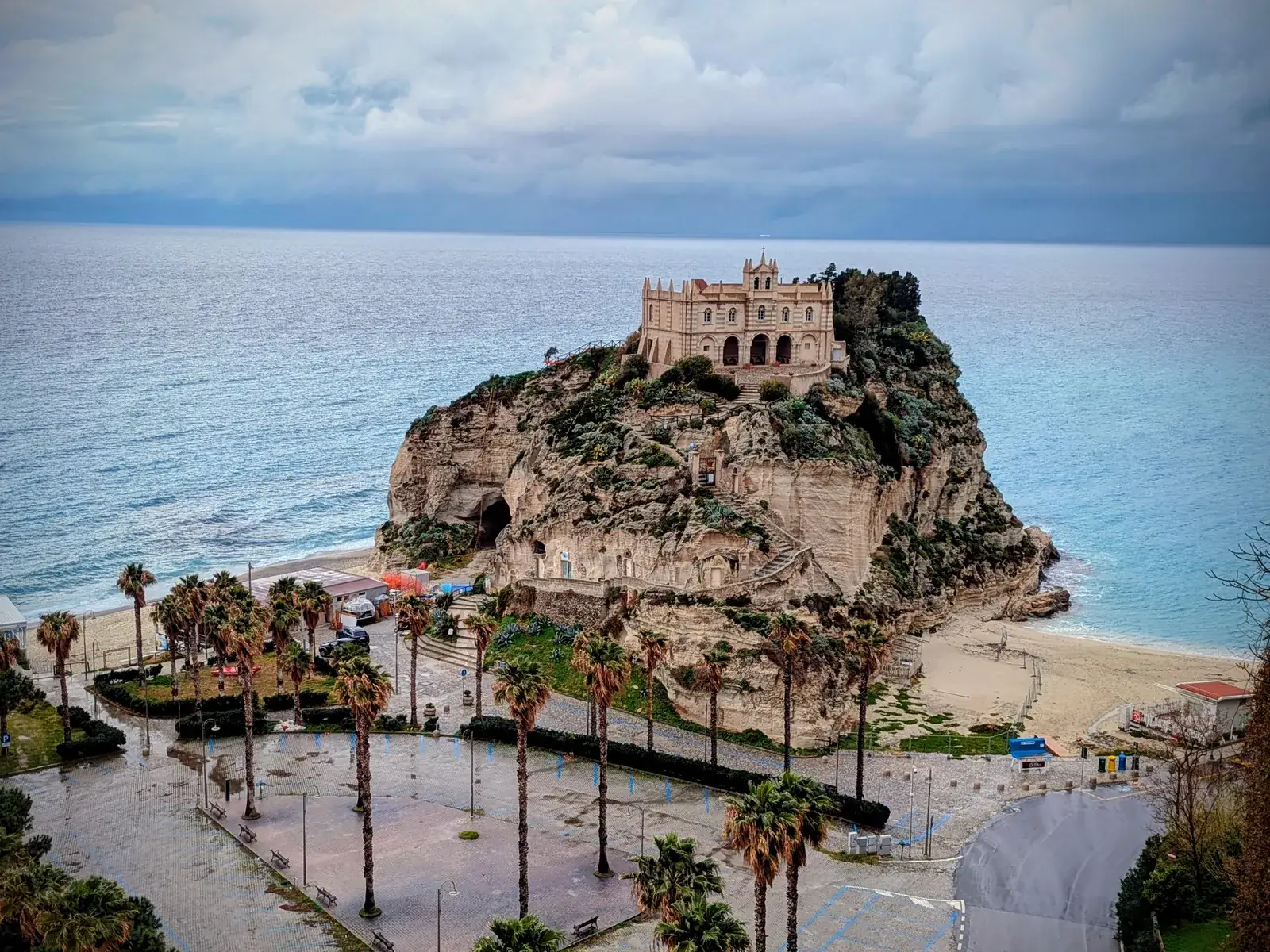
1. Tropea. The old town rises on a sandstone cliff, with beaches washed by the clear Tyrrhenian Sea below. Tropea was named Borgo dei Borghi in 2021, and its 12th-century Norman cathedral holds the icon of the Madonna di Romania. In the evening, walk to the Belvedere at Piazza del Cannone – on a clear day Stromboli rises on the horizon.
2. Santa Maria dell’Isola. The sanctuary on the rock is one of the most recognisable symbols of Calabria. The site began as a hermitage for Basilian monks, and you reach the church up steps cut into the rock.
3. Capo Vaticano. This headland in the municipality of Ricadi is all cliffs, coves and a viewpoint by the lighthouse. Capo Vaticano is known for the Grotticelle and Praia i Focu beaches, and many of its bays are best seen from a boat.
4. Pizzo and Castello Murat. Pizzo is a small town on a tuff cliff, famous for tartufo – an ice-cream truffle with a liquid chocolate centre. In the Aragonese fortress above the harbour, Joachim Murat – Napoleon’s brother-in-law and former King of Naples – was executed by firing squad in 1815.
5. Piedigrotta Church. A kilometre from the centre of Pizzo, right by the sea, stands a chapel carved into a tuff cave. Tradition links it to Neapolitan sailors shipwrecked in the 17th century, and its rock sculptures were carved from around 1880 by Angelo Barone, and later by his son Alfonso.
Costa Viola and the Strait of Messina – Scilla and Reggio
South of Palmi the coastline turns steep, and at sunset the sea takes on violet tones. Further on, the Strait of Messina opens up with Sicily on the other side. Reggio Calabria has its own airport (Tito Minniti), which makes the city a good starting point for exploring the south.
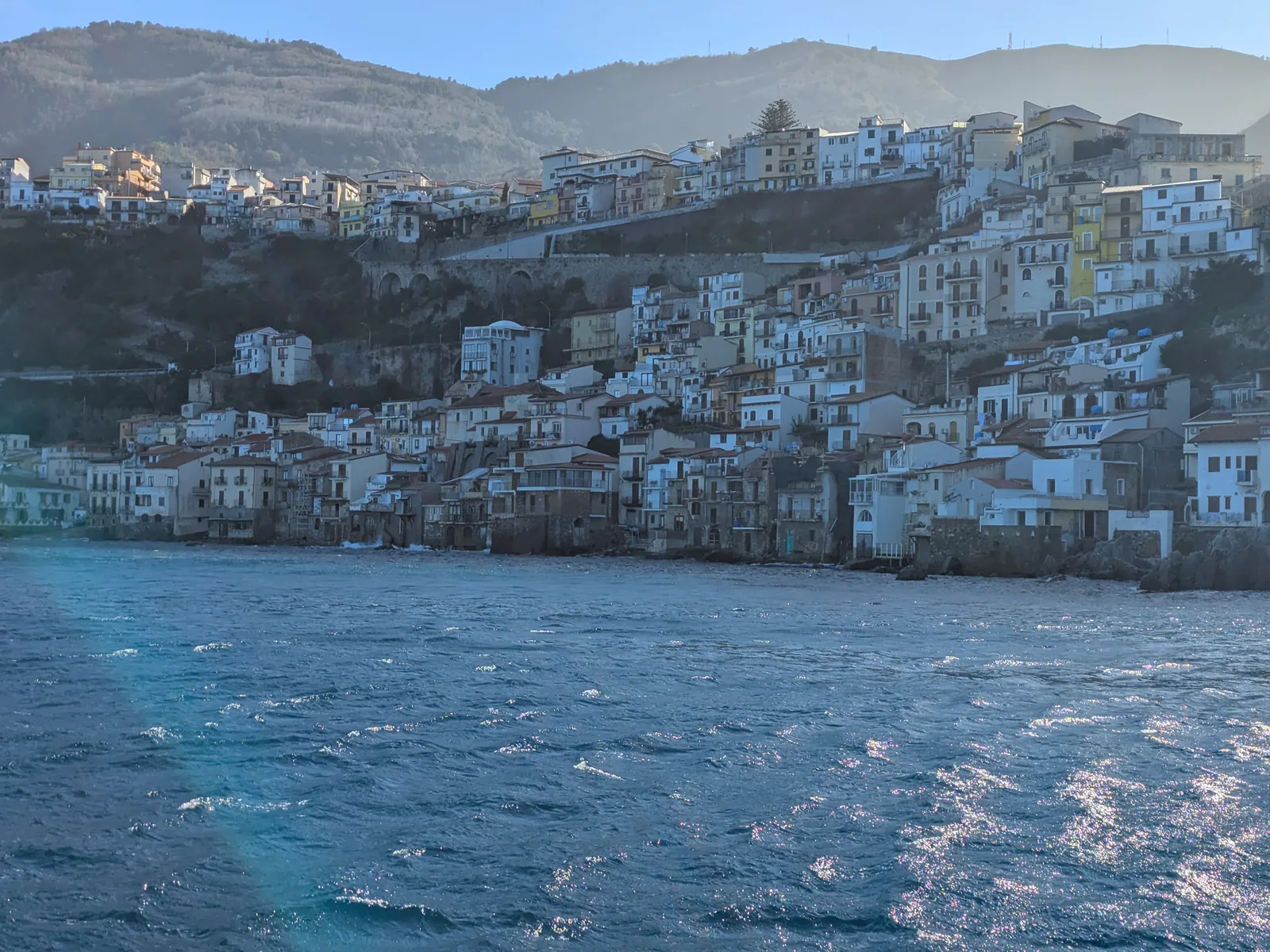
6. Costa Viola. The Violet Coast runs from Palmi through Bagnara to Scilla – terraced vineyards above sheer drops, small beaches and viewpoints along the old coastal road.
7. Chianalea di Scilla. The fishing quarter of Scilla is a member of the I Borghi più belli d’Italia association. Houses stand right at the water’s edge with boats moored between them. Try a swordfish sandwich (panino con pesce spada) – fishing in the Strait is a centuries-old tradition.
8. Castello Ruffo. The fortress on the rock separates Chianalea from Marina Grande beach. According to Homer, the monster Scylla lurked in the caves here. The castle walls look out over the entire Strait.
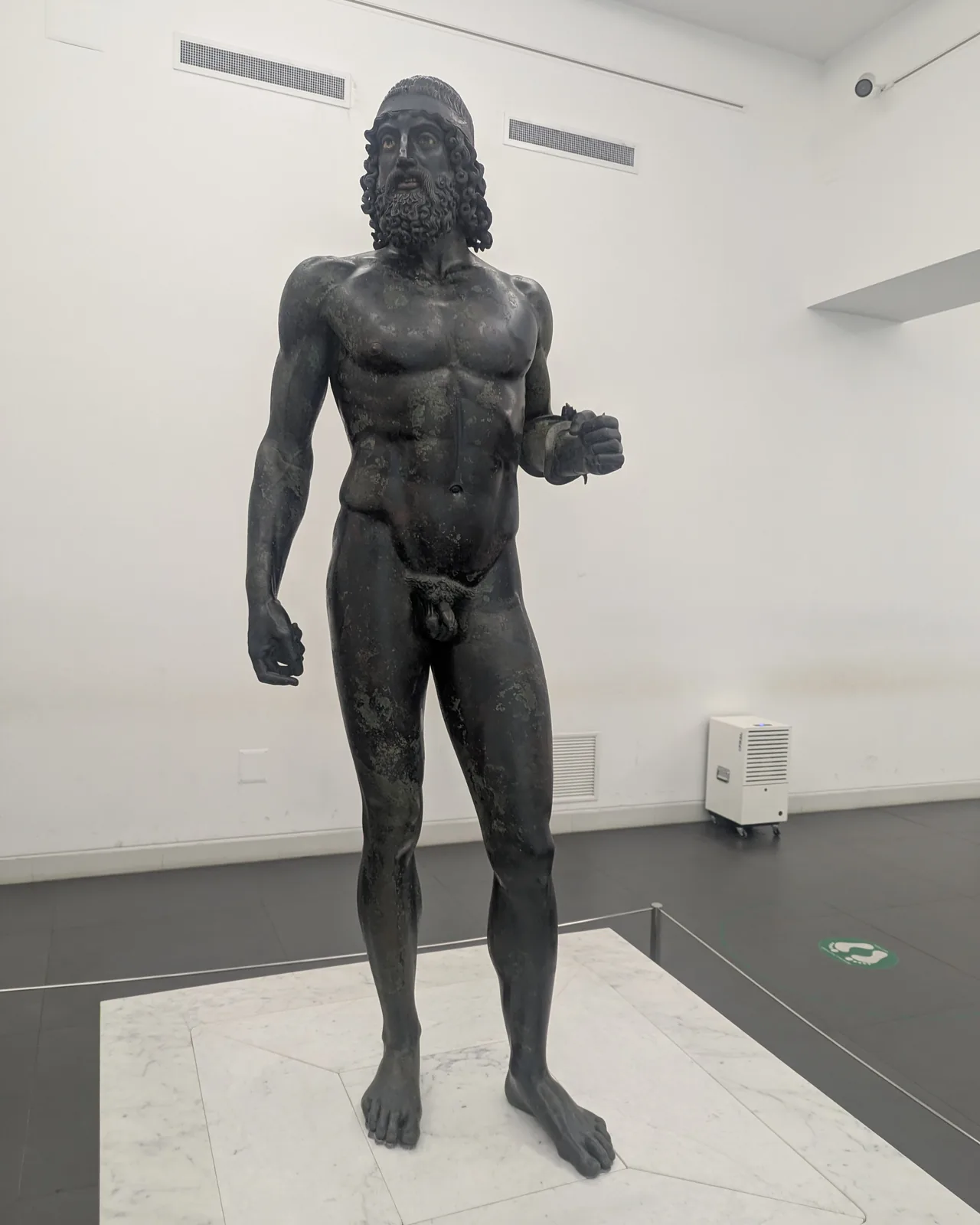
9. The National Archaeological Museum and the Riace Bronzes. The museum in Reggio Calabria is home to the Riace Bronzes – two Greek warrior statues from the 5th century BC, recovered from the sea in 1972. They are one of the few sights that justify a trip to Calabria even outside beach season.
10. Lungomare Falcomatà. Reggio’s seafront promenade runs for about 1.7 km along the Strait. Come at sunset, when the lights of Messina switch on across the water and, on clear days, Etna comes into view. This stretch of coast is also famous for bergamot – a highly aromatic citrus used in perfumes and local liqueurs.
Aspromonte and Greek-speaking Calabria
A few dozen kilometres from Reggio’s beaches, the mountains begin – and here you can still hear the Grecanico dialect (grecanico), a legacy of the Greek-speaking settlers of the past. This is the least touristy part of the list.
11. Aspromonte National Park. Aspromonte is a massif topped by Montalto (1,956 m). Trails from Gambarie offer views of both seas and Etna. The park also contains abandoned Roghudi Vecchio, perched on a rocky ridge.
12. Bova. Bova sits at around 820 m and is considered the capital of Bovesia, the Grecanico area. It is the starting point of the Sentiero dell’Inglese, a trail through the Greek villages of Aspromonte.
13. Pentedattilo. This village in the municipality of Melito di Porto Salvo huddles against a rock shaped like a hand – the name comes from the Greek pentadaktylos, “five fingers”. It is tied to a grim story: the massacre of the Alberti family in 1686. In the 20th century residents moved further down the hill, and today craft workshops occupy the restored houses.
The Ionian coast – Gerace, Locri, Stilo and Le Castella
The eastern coast has wider beaches, fewer hotels and the richest traces of Magna Graecia, the Greek colonies of southern Italy. If history is your thing, this is where you will spend the most time.
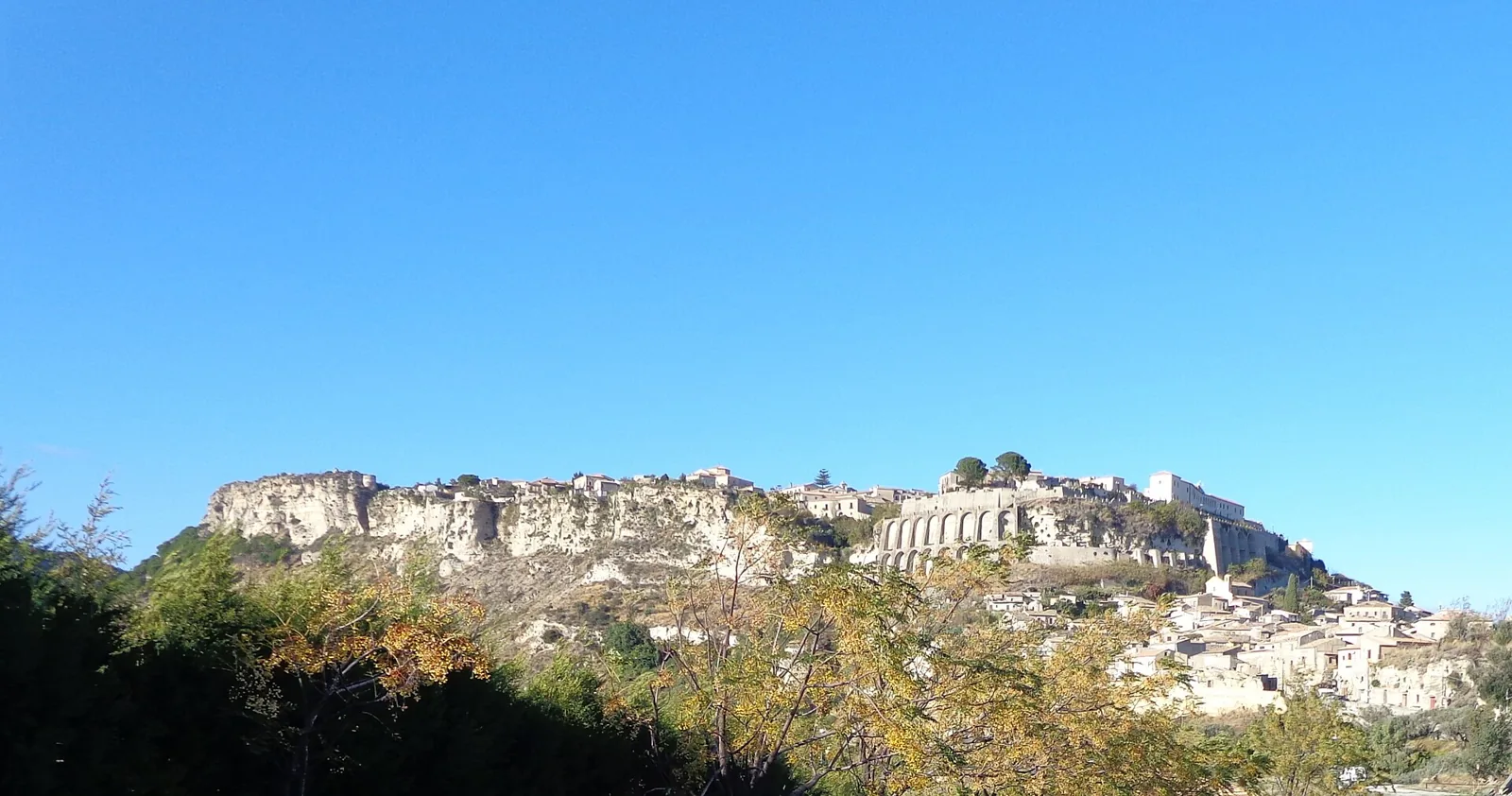
14. Gerace. Medieval Gerace stands on a rock a few kilometres from the sea. Its cathedral is one of the largest churches in Calabria, and its nave is lined with ancient columns brought from the ruins of Locri.
15. Locri Epizefiri. The archaeological park preserves the ruins of a 7th-century BC Greek colony, including a theatre and temple remains. Lokroi was famous for its cult of Persephone, and the terracotta votive tablets known as pinakes are displayed in the museums of Locri and Reggio.
16. Cattolica di Stilo. This small 10th-century Byzantine church on the slopes of Monte Consolino is one of the best-preserved monuments of its era in southern Italy. Stilo itself, birthplace of the philosopher Tommaso Campanella, is worth exploring on foot.
17. Marmarico Waterfall. Near Bivongi, not far from Stilo, Calabria’s highest waterfall drops about 114 m. The approach is a forest trail, so allow half a day and wear proper shoes.
18. Kaulon. On the beach at Monasterace lie the ruins of the Greek colony of Kaulon. The highlight is the sea dragon mosaic, one of the largest Hellenistic mosaics in southern Italy.
19. Le Castella. In the municipality of Isola di Capo Rizzuto (province of Crotone), an Aragonese fortress stands on an islet joined to the mainland by a narrow strip of land. The oldest part is a cylindrical Angevin tower, while the bastions were added in the early 16th century. Around it lies the Capo Rizzuto marine protected area.
Mountains and northern towns – Sila, Cosenza, Pollino
Northern Calabria is above all mountains: the Sila plateau with its lakes, and Pollino on the border with Basilicata. Summers here are noticeably cooler than on the coast, and in winter there is snow.
20. Sila National Park. Sila means pine forests, meadows and the lakes of Arvo, Cecita and Ampollino. Camigliatello Silano (about 1,270 m) is the main base, and nearby is the I Giganti della Sila reserve, protecting monumental Calabrian pines more than 300 years old.
21. Catanzaro and the Bisantis Bridge. The regional capital sits on a hill between the mountains and the Ionian Sea. The Bisantis Bridge, opened in 1962, has an arch spanning 231 m and has become the city’s symbol.
22. Cosenza. The old town of Cosenza climbs a hill crowned by a Norman-Swabian castle. In the modern part of the city, the Corso Mazzini pedestrian street has been turned into an open-air museum – MAB – with sculptures by artists including Salvador Dalí and Giorgio de Chirico.
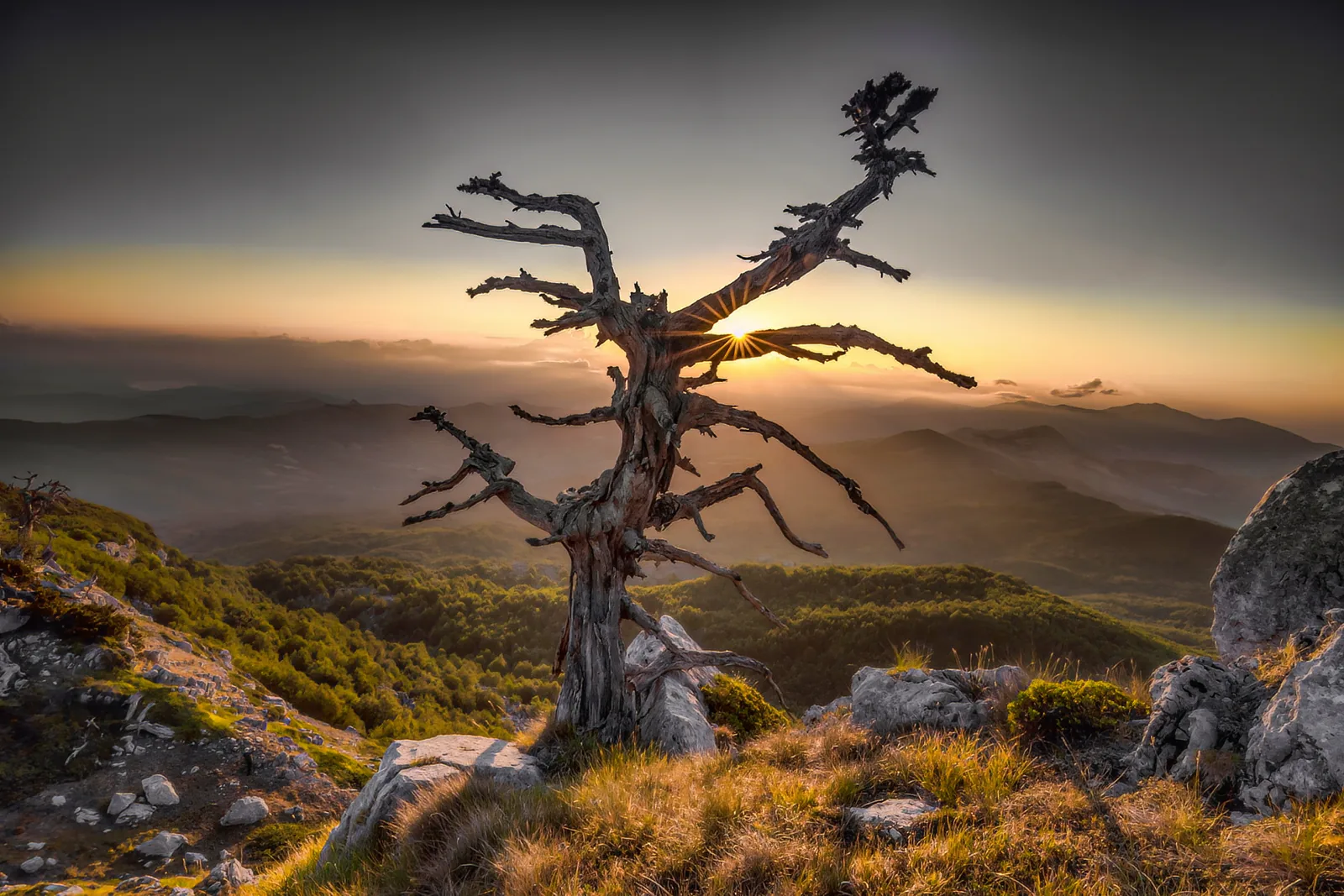
23. Pollino National Park. Pollino is Italy’s largest national park, covering more than 192,000 hectares. Its emblem is the pino loricato, the Bosnian pine that grows on limestone ridges, named after its bark, which resembles Roman scale armour (lorica). In summer, rafting in the gorges of the Lao river is popular.
24. Rossano and the Codex Purpureus. In historic Rossano (now part of Corigliano-Rossano), the Diocesan Museum holds the Codex Purpureus Rossanensis – a 5th–6th-century gospel book written in silver and gold on purple parchment. In 2015 UNESCO added it to the Memory of the World register.
Riviera dei Cedri – Diamante and the Arcomagno
The northern Tyrrhenian coast between Praia a Mare and Cetraro is called the Riviera dei Cedri – the Citron Riviera – after the citrus fruit grown in the area. It is a popular package-holiday destination, centred on Scalea.
25. Diamante and the Arcomagno. Diamante is known as the town of murals, with hundreds of paintings covering the walls of its old centre. In early September it hosts the Peperoncino Festival, a celebration of chilli peppers. A short drive north, in San Nicola Arcella, the Arcomagno is a natural rock arch over a tiny beach. In season, entry is ticketed and time on the beach is limited, so check the current rules at arcomagnocalabria.it.
How to plan your route
The most common mistake is trying to see all of Calabria from one hotel. It works better to choose two bases and give each 3–4 days. A few combinations that work well:
- First visit, 7 days: Tropea (Coast of the Gods, Pizzo) + Reggio Calabria (Scilla, Riace Bronzes, Aspromonte). A ready-made route is in our 7-day itinerary.
- History and Magna Graecia: Reggio Calabria + Locri (Gerace, Locri Epizefiri, Stilo, Kaulon).
- Mountains and a cooler summer: Camigliatello Silano (Sila) + Cosenza + a day in Pollino.
- Package holiday in the north: Scalea as a base, with trips to Diamante, the Arcomagno and the Lao river.
Without a car you will mostly see places on the coastal railway lines. Regional trains connect Tropea, Pizzo, Scilla and Reggio Calabria efficiently. The line along the Ionian coast (to Locri or Catanzaro Lido) is slower and less frequent, but reaches the main towns of the east. The mountains, Gerace, Pentedattilo and Le Castella all need a car – see our guide to car rental in Calabria. For flights and transfers, read how to get to Calabria.
Finally, the weather: July and August bring heat and crowded beaches, which is when the mountains are at their best. For towns and archaeological sites, May, June, September and October are ideal.
Frequently asked questions
What should I see in Calabria in a week?
In a week, combine the Coast of the Gods with the south: Tropea, Capo Vaticano and Pizzo, then Scilla, Reggio Calabria with the Riace Bronzes and a day trip into Aspromonte. This plan works best with two bases.
What is the most beautiful town in Calabria?
The names that come up most often are Tropea (Borgo dei Borghi 2021), Scilla with its Chianalea quarter and medieval Gerace. Tropea and Scilla are on the sea; Gerace sits on a rock a few kilometres inland from the Ionian coast.
Can you visit Calabria without a car?
Partly. Regional trains connect Tropea, Pizzo, Scilla and Reggio Calabria efficiently. The main towns of the Ionian coast can be reached too, but it takes longer. The national parks, Gerace, Pentedattilo and Le Castella are hard to reach by public transport, though.
How many days do you need in Calabria?
Seven days is enough for the highlights of the south. For the whole region, including the Ionian coast, Sila and Pollino, allow 12–14 days and at least three bases.
When is the best time to visit Calabria?
For sightseeing, May, June, September and October are best – warm, without the August heat and crowds. July and August suit beach holidays and the Sila and Pollino mountains.
Sources
We checked the information in this article against the following sources:
- Calabria Straordinaria – official tourism website of the Calabria Region
- National Archaeological Museum of Reggio Calabria – Riace Bronzes
- UNESCO Memory of the World – Codex Purpureus Rossanensis – unesco.org
- Museo Diocesano e del Codex – Rossano – codexrossanensis.it
- Calabria Straordinaria – Visiting Pentedattilo – Pentedattilo
- Pro Loco Le Castella – Castello Aragonese – history of the fortress
- Arcomagno Calabria – visiting rules for the Arcomagno
- Peperoncino Festival – Diamante – official festival website
- Parco Nazionale del Pollino – parcopollino.gov.it
- Wikipedia – Calabria – en.wikipedia.org