Tropea is a charming town perched on a sandstone cliff above the Tyrrhenian Sea, which has long attracted visitors with its beaches, views and well-preserved historic centre. Often called the "pearl of Calabria", it combines seaside relaxation with sightseeing in a town of long, layered history. Cobblestone streets, golden beaches, the sanctuary on the rock and local cuisine make Tropea one of the key stops on the Costa degli Dei.
Table of Contents
- Tropea – A Living Monument in the Heart of Calabria
- Historical and Cultural Significance
- Culinary Icon of Calabria – The Red Onion
- Tropea Today – Tourism and Heritage
- Architectural Treasures of Tropea – A Journey Through Time and Style
- Historic Attractions of Tropea
- The Unique Architecture of Tropea
- Unforgettable Views
- Tropea's Beaches – Showcase of the Coast of the Gods
- Legends and Folklore – The Living History of the City
- The Climate of Tropea – A Gentle Influence on Tourism
- Culinary Treasures of Tropea – The Flavours of Calabria
Tropea – A Living Monument in the Heart of Calabria
Tropea has played an important role in the history of Calabria for centuries. Thanks to its strategic position on the Poro promontory, the town was an important commercial and military point, and its past is linked to the influence of different civilisations, beginning with the ancient Oenotrians. From the Greeks, through the Byzantines and Arabs, to the Normans – each of these cultures left its mark on the town layout, traditions and local identity.
Legend has it that the city was founded by Hercules himself, who, returning from his mythical journeys, stopped on this coast to rest. To this day, traces of this story remain in the name of the former administrative seat – Portercole – and the central square, Largo Ercole. The town is not merely a creature of myths, however; archaeologists confirm the presence of settlements here as far back as the Neolithic period, around 3300 BC.
Historical and Cultural Significance
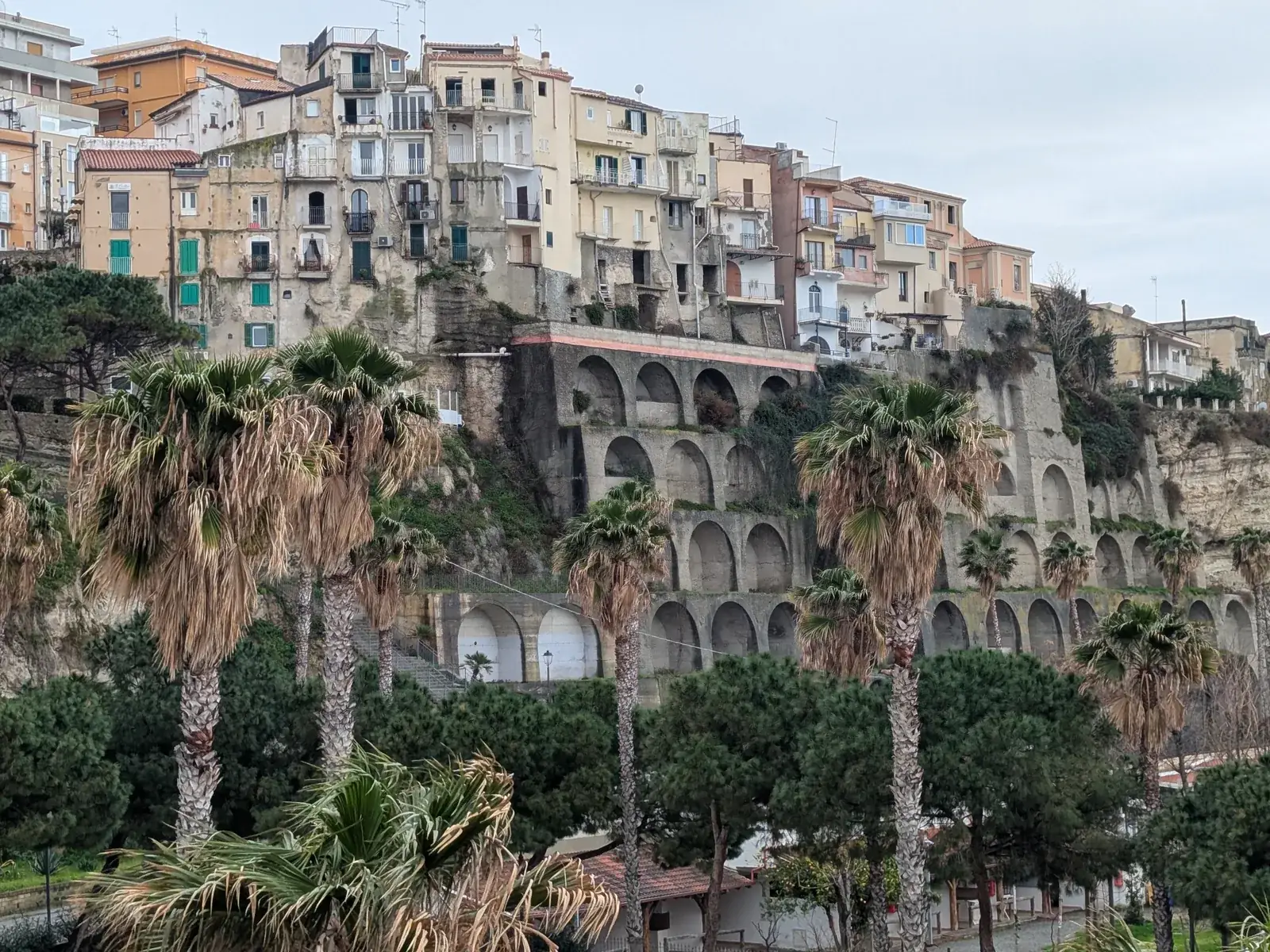
Tropea shows how a town's history can merge with the natural landscape of cliff and sea. A key moment was the fortification of the town by Byzantine general Belisarius in 535 AD, which initiated more than half a millennium of Eastern influence. Ancient fortifications, cobblestone streets and local architecture allow you to read the town's history without leaving its centre. An important point in this story is the Norman Cathedral (Duomo), founded in the 12th century, which combines sacred function with the artistic heritage of successive eras.
A particularly important aspect of the city's identity is its status as a città demaniale – a royal city, subject directly to the crown rather than to local feudal lords. The inhabitants valued this independence so highly that when, in 1612, the Viceroy of Naples sold Tropea to Vincenzo Ruffo, Prince of Scilla, for 191,041 ducats, the town appealed. After a favourable ruling by the Collateral Council in Naples (1613), King Philip III annulled the sale by a rescript issued in Valladolid, and the news reached Tropea on 23 August 1615. This event remains a cornerstone of local community pride to this day.
| Era | Key Events and Impact on the City |
|---|---|
| 8th–7th century BC | Greek colonisation and incorporation of the territory into Magna Graecia. |
| 535–1050 AD | Byzantine rule; Belisarius's fortifications and development of Eastern rites. |
| 1050–1194 AD | Norman conquest; Latinisation and construction of the current cathedral. |
| 1615 AD | Philip III annuls the sale of Tropea to Prince Ruffo and confirms the town's demaniale status. |
Culinary Icon of Calabria – The Red Onion
One of the most recognisable symbols of this region is the red onion from Tropea, known for its sweetness, which it owes to sandy soils and a mild climate without winter temperature swings. Cultivated here for thousands of years and probably introduced by the Phoenicians, the Cipolla Rossa di Tropea received the prestigious IGP certification (Protected Geographical Indication) in 2008. It is a staple ingredient of local cuisine and one of the products most strongly associated with Calabria.
This vegetable appears in a wide variety of dishes, from fresh salads with tomatoes to preserves and ice cream. It comes in three varieties harvested at different times of year: the sweet cipollotto (October–March), fresh onion (April–May) and storage onion (June–July). Rich in vitamins and selenium, it is also valued for its health properties.
Tropea Today – Tourism and Heritage
Modern Tropea is an important historical and tourist centre that won Italy's national Il Borgo dei Borghi contest in 2021, earning the title of the country's most beautiful village. Every year it attracts visitors who want to see the cliff-top centre, descend to the beaches below the town and try local products. The Mediterranean climate is especially favourable for sightseeing in May, June and September, when temperatures are pleasant and there are fewer crowds than in the middle of summer.
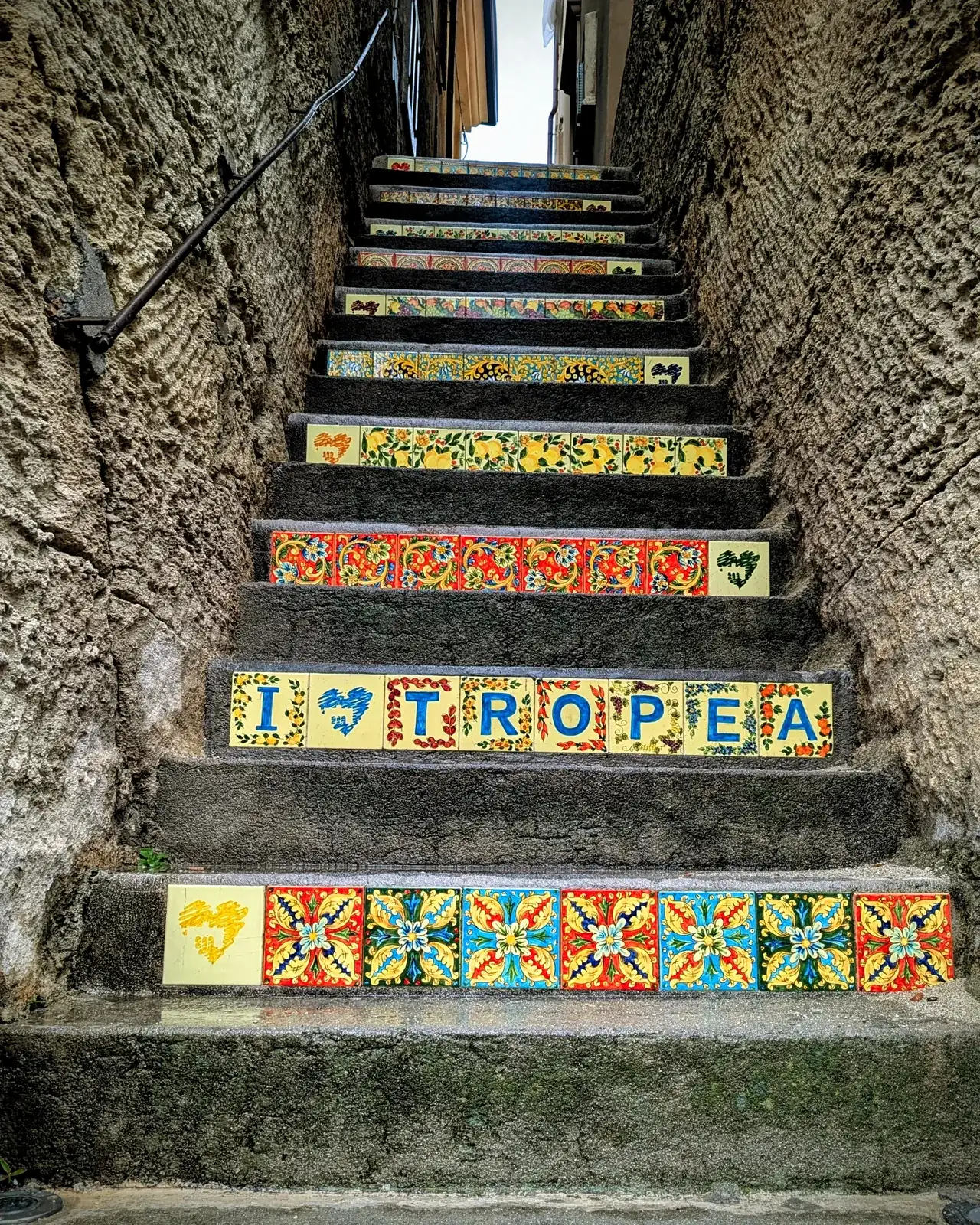
Wandering through the historic alleys of Tropea, taking trips to the nearby beaches or discovering local flavours such as the red onion mentioned above gives a full picture of what Calabria offers on the Tyrrhenian coast. In Palazzo Santa Chiara, in the historic centre, you will find MuMaT – Civico Museo del Mare di Tropea, a good addition to a walk through the old town, close to the cathedral, Palazzo Toraldo and the Sedile dei Nobili.
Architectural Treasures of Tropea – A Journey Through Time and Style
Tropea impresses not only with its views but also with architecture that reflects the complex history of the region. Strolling through the streets, you can see a mixture of styles: from austere Norman Romanesque to Baroque and Arabic details. The town's character is shaped by a dense network of alleyways, squares and aristocratic palaces.
An interesting architectural feature is the so-called apotropaic masks – stone carvings with grotesque, sometimes terrifying faces, placed above the portals of houses. Their purpose, rooted in ancient superstitions, was to ward off the "evil eye" and protect the inhabitants from evil forces. These stone faces remain one of the details to look for while walking past historic façades.
Historic Attractions of Tropea
One of the most important landmarks in Tropea is the medieval concattedrale di Maria Santissima di Romania, built in the 12th century under Norman rule. This church, located in the town centre, is full of precious works of art, including the miraculous icon of Maria Santissima di Romania (Madonna di Romania). It is believed that she saved the town from the earthquake of 1638, and during the Second World War six large charges dropped on Tropea failed to explode; two of them are kept in the cathedral as a reminder of the event attributed to the protection of the Madonna di Romania.
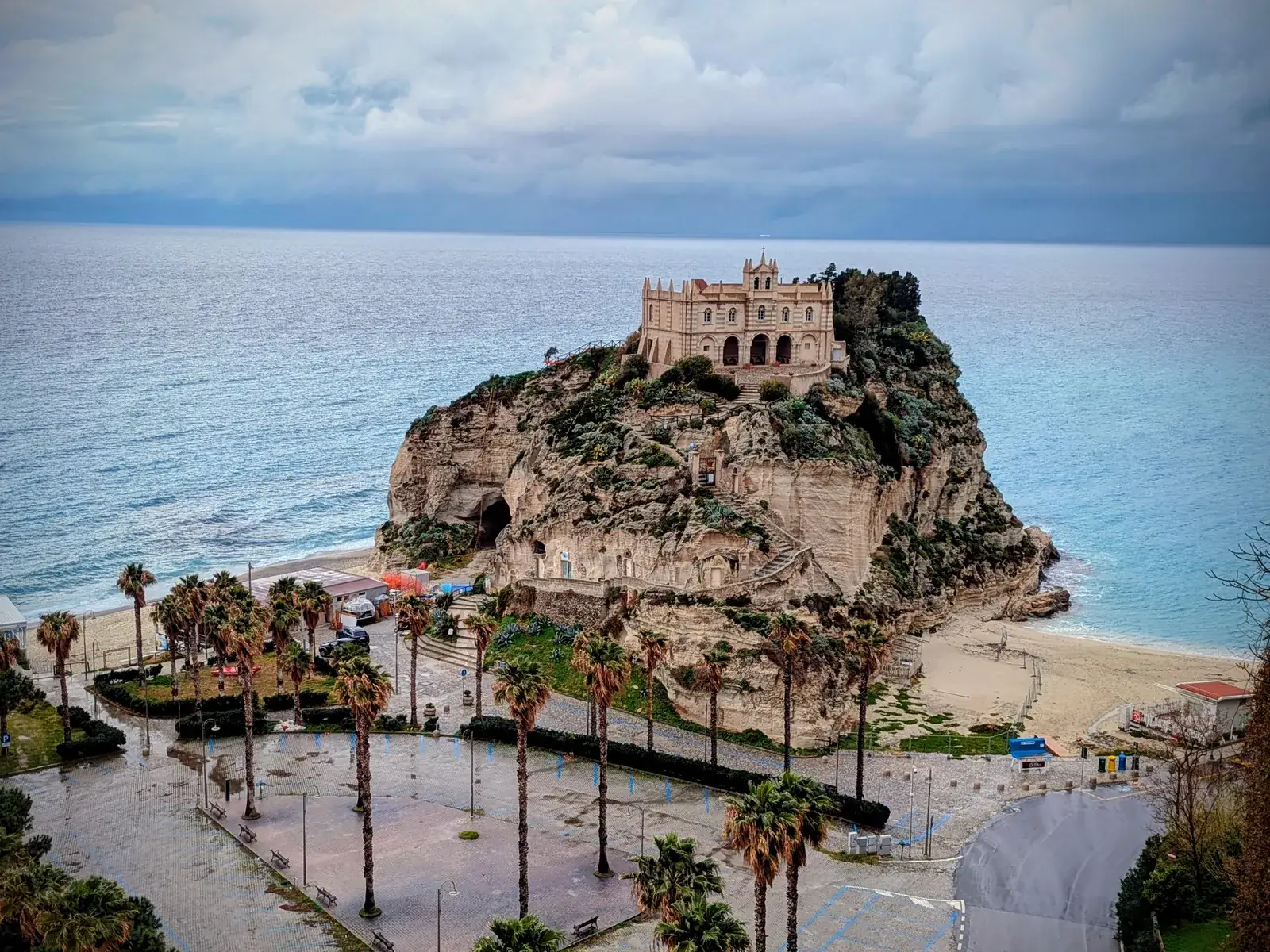
The cathedral also serves as a diocesan sanctuary, but the town's best-known icon is the separate Sanctuary of Santa Maria dell'Isola. Its roots date back to the 7th century, when it served as a hermitage for Basilian monks. Standing atop a solitary rock, it offers views of the coastline and is the site of an annual maritime procession on 15 August. The sanctuary opens seasonally: 9:30–19:30 in April, May and October, and 9:30–20:00 from June to September; it is closed from December to March.
Tropea is also home to numerous noble palaces built over the centuries by wealthy families. Palazzo Toraldo is particularly worth noting, with archives containing parchments from the 13th century, as is Palazzo Braghò. The latter stands out for its granite portal and Art Nouveau elements added during a 1921 renovation.
The Unique Architecture of Tropea
Norman influences dominate the architecture of Tropea, though Byzantine and Arabic accents are also present, stemming from the turbulent history of the region. One example is the distinctive administrative building of the Sedile di Portercole from 1703, where the nobility once deliberated. Its façade features the city's coat of arms with a phoenix, symbolising the rebirth of the city after numerous earthquakes.
Local stone and sandstone were the main building materials, giving the town a calm, natural character. The light façades and the colour of the rock sit well with the blue of the Tyrrhenian Sea, so Tropea's centre is best seen both from street level and from the viewpoints above the cliff.
Unforgettable Views
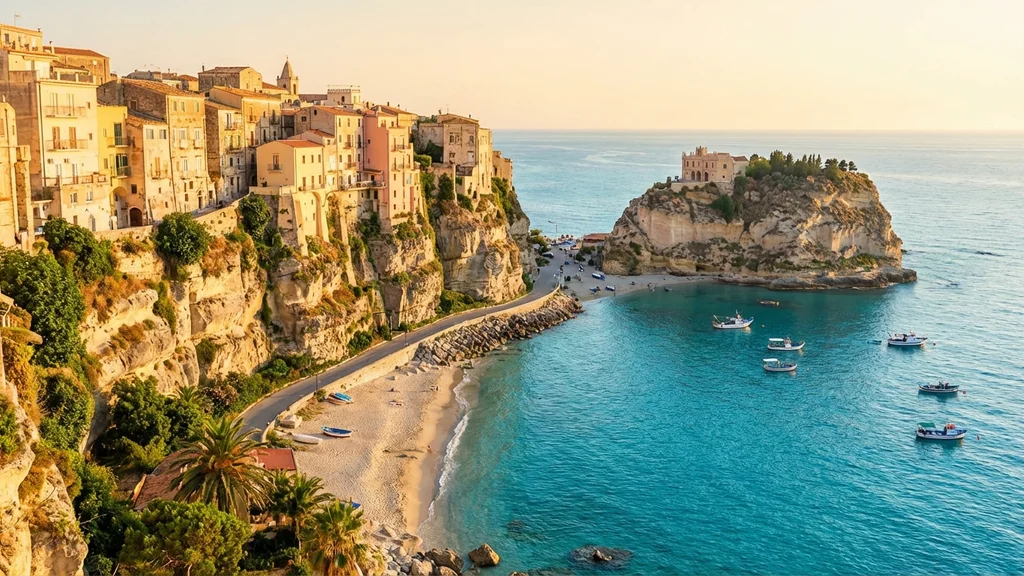
Besides its monuments, the town also offers extraordinary viewpoints known as "affacci". From the cliffs on which Tropea is built, on clear days there is a panorama of the Stromboli volcano and the other Aeolian Islands. The view from Belvedere Piazza del Cannone is particularly recommended, with the best perspective on the layout of the beaches, the rock of Santa Maria dell'Isola and sunsets over the sea.
Tropea and its surroundings are one of the most important places to visit in Calabria for anyone interested in history, architecture and coastal landscapes. The combination of cliff-top location with historic buildings creates the so-called "balcony over the sea", while stairways from the centre lead directly to the beaches at the foot of the town.
Tropea's Beaches – Showcase of the Coast of the Gods
Tropea is famous for its picturesque beaches, regularly awarded the Blue Flag (Bandiera Blu), which attract sun lovers from all over Europe. The 2026 Bandiera Blu list for Tropea includes Marina del Convento, Marina dell'Isola and Rocca Nettuno. The best-known beach is below the centre, often divided into smaller sections such as Rotonda Beach at the foot of the cliff and the long, sandy A Linguata. Here turquoise water meets golden sand, with the Church of Santa Maria dell'Isola in the background.
Near Tropea lies Praia I Focu at Capo Vaticano, a cape also known for the Belvedere del Faro viewpoint with views of Stromboli. The beach is known for its very clear water, good for swimming and snorkelling. A tragic legend is associated with this place – that of Donna Canfora. This virtuous widow, captured by the Saracens, threw herself into the sea to avoid dishonour; it is said that her garment gave the waters here their extraordinary emerald-blue colour.
Riaci Bay, located close to Capo Vaticano, is a smaller but equally charming spot, ideal for those seeking a quieter place to swim. Its waters and surroundings invite snorkelling, and the rocky sections of coast form a natural backdrop for relaxation. While exploring the area, you can also visit Michelino Beach in Parghelia, known for its wild, natural character.
Many visitors opt for scenic boat tours along the "Coast of the Gods" (Costa degli Dei), offering the chance to discover hidden caves, such as the romantic Grota Palombaro. A popular route runs from Tropea to Capo Vaticano, often enhanced with an aperitif on board. From the sea you can best appreciate the height of the cliffs and the layout of coves that are not always easy to reach from land.
Legends and Folklore – The Living History of the City
The culture of Tropea is inextricably linked to folklore that comes alive during local festivals. One of the most spectacular customs is the Dance of the Giants (Ballo dei Giganti). Two enormous papier-mâché figures – a white woman named Mata and a dark-skinned Saracen warrior named Grifone – dance through the streets to the sound of drums. Legend speaks of an invader's love for a local girl that led to his conversion to Christianity, symbolising the reconciliation of cultures.
Another ritual is "U Camiuzzu i Focu" – a fiery camel puppet associated with the Turkish-Saracen threat and the figure of the tax collector, present in the tradition of Tri da Cruci. The puppet, filled with fireworks, is led in a dance of fire that recalls the old fears of the coastal inhabitants. It is one of those customs in which local historical memory blends with street spectacle.
Watch on YouTube
The Climate of Tropea – A Gentle Influence on Tourism
Located in picturesque Calabria, Tropea enjoys a Mediterranean climate, which is one of the main factors attracting travellers. Proximity to the sea and shelter from the mountains moderate temperatures, so the town works well beyond the summer holidays too. These conditions also favour the cultivation of the famous onion, giving it its characteristic sweetness.
The Mediterranean weather of Tropea boasts mild winters, during which temperatures range between 8°C and 13°C, making it attractive even outside the summer season. Summer in Tropea, with maximum warmth reaching around 27°C (though noticeably warmer in direct sunlight), draws those who want to spend time on the beaches and swim in the Tyrrhenian Sea.
Tourism seasonality here is closely tied to weather, with the peak falling in the months from June to September. However, the mild climate means that many travellers also visit Tropea during spring and autumn, taking advantage of less crowded beaches and a calmer centre. Accommodation open outside the strict high season makes a good base for exploring the town, Capo Vaticano and nearby villages.
Thanks to the mild weather conditions, water sports have gained great popularity in the area. In Tropea and neighbouring towns you can try activities such as diving and snorkelling at Marinella di Zambrone beach, known as Paradiso del Sub, sailing or windsurfing. These activities enrich a stay especially when you want to combine beach time with seeing the rocky coast from the water.
Culinary Treasures of Tropea – The Flavours of Calabria
Tropea is also a strong point on the region's culinary map. Local cuisine is based on simple dishes and fresh ingredients: fish, seafood, vegetables, olive oil, cheeses and spicy additions. Local flavours show Calabria's typical intensity – from spicy 'nduja to the sweetness of red onion.
Tropea's Red Onion – The Culinary Symbol of Calabria
Particularly deserving of attention are cipolle di Tropea, the sweet red onion whose history stretches back to Phoenician times. Thanks to the specific soil and climate, it is exceptionally crisp and aromatic. Protected by the IGP designation, it is frequently used in salads such as Insalata di Cipolle di Tropea and in baked dishes like Cipolle Ripiene. In August, a special festival dedicated to this vegetable takes place in nearby Ricadi.
Seafood Specialities – The Taste of the Tyrrhenian Sea
Tropea, thanks to its location, offers an abundance of fish and seafood. Characteristic dishes of southern Italy include Pesce Spada alla Ghiotta, popular in Calabria and Sicily, which is swordfish braised with tomatoes, olives and capers. Local menus also often feature squid, including Totani Ripieni, or stuffed squid, which clearly shows the simple, maritime character of coastal cuisine.
Pasta – The Heart of Calabrian Cuisine
Calabria is also a kingdom of pasta, and Fileja alla Tropeana reigns in Tropea. This is a typical, hand-rolled pasta wound around a thin stick or iron rod; in the past, stems of wild grasses (disa, saracchio) were used. It is served with a sauce made with pork, pecorino cheese and, naturally, Tropea onion. An alternative variant is served with 'nduja – the soft, spicy sausage from Spilinga – which adds a characteristic Calabrian kick to the dish.
Frequently Asked Questions
Where is Tropea located?
Tropea is located in southern Italy, in the Calabria region, in the province of Vibo Valentia. The town sits on a picturesque sandstone cliff above the Tyrrhenian Sea, along the stretch of coastline known as the Coast of the Gods (Costa degli Dei).
What are the most beautiful beaches in Tropea?
The most beautiful beaches include Spiaggia della Rotonda (located directly below the town's cliff), the sandy A Linguata and Praia I Focu at Capo Vaticano. It is also worth visiting Michelino Beach in nearby Parghelia and Riaci Bay.
How do I get from Lamezia Terme airport to Tropea?
From Lamezia Terme airport you can reach Tropea by regional train from Lamezia Terme Centrale station (the journey takes around one hour). Trenitalia's Lamezia Airlink runs between the airport and the station: the stop on Viale Rodolfo Imbrogno is about 50 m from the arrivals hall exit, and the bus section costs an extra €1.80 with a combined ticket. Taxis and car hire are also available, providing a comfortable way to reach the town, which is about 55 km away by road – roughly an hour's drive.
When is the best time to plan a holiday in Tropea?
The peak tourist season falls in July and August, when it is warmest. However, the ideal time to travel is May, June and September – the weather is beautiful and the crowds are smaller. Thanks to the mild climate, Tropea is also attractive outside the strict summer season.
What should I see in the centre of Tropea?
You must see the 12th-century Norman Cathedral, the Sanctuary of Santa Maria dell'Isola on the rock and the Sedile di Portercole building. While strolling through the streets, look out for aristocratic palaces (e.g. Palazzo Toraldo), MuMaT – Civico Museo del Mare di Tropea in Palazzo Santa Chiara and the characteristic apotropaic masks on building façades.
Top Attractions
Santa Maria dell'Isola
Iconic church on the rock – the symbol of Tropea
Tropea Beaches
Blue Flag, white sand, turquoise waters
Norman Cathedral
12th-century Duomo with miraculous Madonna icon
Red Onion Festival
Annual celebration of Tropea's famous red onion
Capo Vaticano
Wild beaches and cliffs – jewel of the Coast of the Gods
Getting there
The nearest airport is Lamezia Terme (SUF) – about 60 km and around 1 hour by car; Tropea has a station on the regional Lamezia Terme Centrale–Reggio Calabria Centrale line.
Lamezia Terme airport (SUF)
- By car via A2 and SS522About 60 km and 1 hour: take the A2 to the Pizzo Calabro exit, then the SS522. Avoid the ZTL; use Rocca Nettuno parking on Via Campo Inferiore.
- Airlink + regional trainTake Airlink to Lamezia Terme Centrale, with departures about every 30 minutes from the airport. Direct regional trains to Tropea usually take 50–65 minutes.
- Ferrovie della Calabria 237Direct route 237: Lamezia Terme Aeroporto–Pizzo–Vibo Marina–Parghelia–Tropea. It generally runs Monday to Saturday, excluding public holidays.
Reggio Calabria airport (REG)
- By car via A2 and SS522About 1 hour 35 minutes: take the A2 northbound, then the SS522 to Tropea. Avoid the ZTL and use Rocca Nettuno parking.
- Aeroporto → CentraleTake a regional train from Reggio Calabria Aeroporto station to Reggio Calabria Centrale.
- Regional train via TropeaRegional trains from Reggio Calabria Centrale run via Tropea; the full trip from the airport takes roughly 2 hours.
From Poland – direct flights
- Choose SUF airportSUF is closest to Tropea. In summer 2026, Ryanair flies from KRK, WRO, WMI and KTW Tue/Thu/Sat; Wizz Air from KTW Tue/Thu/Sat and WAW Mon/Wed/Fri.
- Then continue from SUFThe fastest option is a rental car: about 60 km and 1 hour via the A2 and SS522 to Tropea.
From Rome or Naples
- Train to LameziaFrecciarossa or Italo to Lamezia Terme Centrale: about 4–4.5 hours from Rome and 3–3.5 hours from Naples. Intercity trains are slower: about 5.5–6.5 hours from Rome.
- Regional train to TropeaAt Lamezia Terme Centrale, change to a direct regional train to Tropea – usually 50–65 minutes.
From Capo Vaticano
- By car on local roadsAbout 15 minutes on local coastal roads to Tropea. Do not enter the town-centre ZTL without authorisation.
- Ricadi → TropeaFrom Ricadi station, the closest station to Capo Vaticano, a regional train to Tropea usually takes about 10 minutes.
From Pizzo
- By car via SS522About 30 minutes via the SS522 towards Tropea. For longer stays, use Rocca Nettuno parking on Via Campo Inferiore.
- Regional train along the coastRegional trains on the line via Tropea connect Pizzo with Tropea; the journey takes roughly 30 minutes.
From Scilla
- By car via A2 and SS18About 1 hour 15 minutes via the A2 and SS18, then towards Tropea. Do not enter the historic-centre ZTL without authorisation.
- Regional train via TropeaRegional trains from Scilla run on the line via Tropea; the journey takes roughly 1 hour 10 minutes.
From Reggio Calabria
- By car via A2 and SS522About 1 hour 30 minutes: take the A2 northbound, then the SS522 to Tropea. Park outside the ZTL, for example at Rocca Nettuno.
- Regional train via TropeaFrom Reggio Calabria Centrale, regional trains run along the coast to Tropea; the journey takes roughly 1 hour 45 minutes.
Journey times are approximate. Timetables: Trenitalia, Ferrovie della Calabria, local operators.
Sources
The information in this article was verified against the following sources:
- Comune di Tropea – official website of the town council
- Calabria Straordinaria – Tropea, the pearl of the Tyrrhenian Sea – official tourism portal of the Calabria Region
- Santuario di Santa Maria dell'Isola – official sanctuary website (history, opening hours)
- Catalogo generale dei Beni Culturali – Santuario di Maria SS. di Romania – Italian Ministry of Culture heritage catalogue (Norman cathedral)
- Tropea Tourism – Concattedrale di Maria SS. di Romania
- Rievocazioni Storiche (Ministero della Cultura) – Liberazione di Tropea 1615 – città demaniale status
- Tropea Magazine – Giganti, cammelli di fuoco, ciucci e cavallucci – the Dance of the Giants tradition
- Consorzio Cipolla Rossa di Tropea Calabria IGP – production area and varieties of the red onion
- Bandiera Blu 2026 – FEE Italia – list of Blue Flag beaches
- Trenitalia – Lamezia Airlink – getting there from Lamezia Terme airport
- Ferrovie della Calabria – web.ferroviedellacalabria.it
- Comune di Tropea – comune.tropea.vv.it
- Comune di Tropea – servizi.comune.tropea.vv.it
- RFI – Rete Ferroviaria Italiana – rfi.it
- Wikipedia – Tropea
Last updated: