Calabria's street food scene is not a trend but a living tradition passed down through generations. From fried zeppole on the piazzas of Cosenza to steaming swordfish sandwiches in Scilla, this is food eaten standing up, with your hands, perched on a stone wall overlooking the sea. The simplest Calabrian snacks usually cost a few euros, but larger portions – such as a swordfish sandwich or cuoppo di pesce – can be more expensive.
Table of Contents
Morzello – the signature street dish of Catanzaro
If one dish defines Calabrian street food, it is morzello (or morzeddhu in dialect). This thick stew is made from various veal or beef offal – depending on the establishment and home recipe, it may include tripe, lung, liver, heart, or intestines – slow-cooked in tomato concentrate with peperoncino, bay leaves, and oregano. It is served stuffed inside pitta, a local round bread that is sliced open and filled with the steaming mixture.
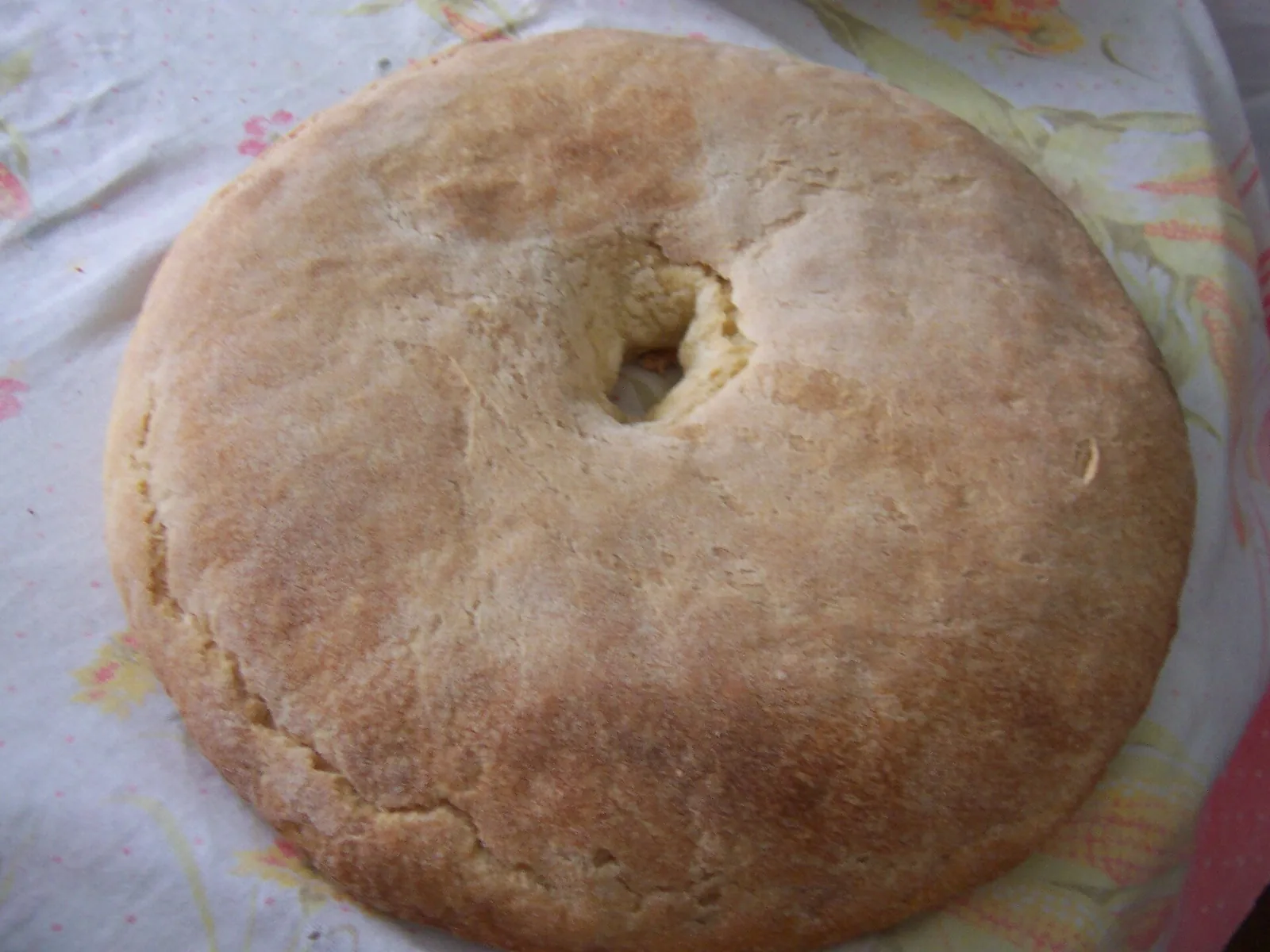
In Catanzaro, this dish is most commonly ordered as morzeddhu cu a pitta. The pitta itself is a local, round bread with a hole in the middle, sliced and filled with the stew. For morzello, bakers use a type of pitta known as pitta "a ruota di carro" (literally "cartwheel"): a flattened, wheel-shaped bread with a large central hole and very little crumb. Local sources give its diameter as about 40 cm, so one loaf can easily be cut into portions to soak up the hot sauce.
Legend has it that morzello was invented by a poor widow named Chicchina, who transformed discarded offal from a butcher into a nourishing meal for her children. Today, morzello is the symbol of Catanzaro and something of a civic ritual – students, labourers and office workers eat it alike, usually for breakfast or lunch, often washed down with a strong local red wine.
It is a living tradition of cucina povera, the cuisine of the poor, which turns simple ingredients into something bold, spicy and surprisingly deep in flavour.
From the sea to the bun – swordfish sandwiches and cuoppo di pesce
Along the Tyrrhenian coast of Calabria, especially in Scilla and neighbouring Bagnara Calabra, the grilled swordfish sandwich (panino con pesce spada) is the undisputed king of street food. Freshly caught fish goes straight on the grill, then into bread with tomato, onion, salad and the legendary salmoriglio – a sauce of olive oil, garlic, oregano, parsley and lemon juice.
You can buy the sandwich in season in Scilla’s eateries – especially around Marina Grande and near the harbour district of Chianalea – as well as in the town centre. The tradition of swordfish fishing in the Strait of Messina dates back to antiquity, and you can still spot feluche at sea – traditional boats with a very long passerella (bow gangway) and a tall observation platform (a mast called the antenna).
This traditional fishing method is most strongly associated with Scilla and Bagnara Calabra on the Calabrian side and the Sicilian coast opposite. The season runs mainly from late spring to the end of summer, so that is when you are most likely to find a sandwich made with truly fresh swordfish. If you want to try swordfish in a place where the tradition has real, authentic weight rather than just a tourist label, head to the sagra del pescespada in Bagnara Calabra, usually held around late July or early August (traditionally on the first Sunday of August, though in practice the exact date shifts from year to year).
Cuoppo di pesce fritto is another essential stop – a paper cone filled with freshly fried fish and seafood. The best cuoppo can be found in seaside towns on both coasts: the Tyrrhenian (Diamante, Tropea) and the Ionian (Soverato, Corigliano-Rossano). Fried anchovies, squid and prawns, straight from the oil – for 4–6 euros you get a meal that tastes like the Calabrian sea at its finest.
Fried, spicy and street-ready – cuddrurieddri, polpette and frittole
December in Cosenza means cuddrurieddri (also known as zeppole or cullurielli) – fried doughnuts made from potato dough. The recipe is simple: flour, potatoes, yeast, water and salt. The dough is shaped into rings and deep-fried until golden. They are traditionally prepared on 7 December, the eve of the Feast of the Immaculate Conception celebrated on 8 December, when the scent of boiling oil fills the streets of the entire city.
This custom is strong in many parts of northern and central Calabria, not just in Cosenza itself. Depending on the town, you may hear them called cuddrurieddri, cullurielli, zippuli, or simply zeppole.
Variations include fillings of anchovies, salt cod, 'nduja, olives or sun-dried tomatoes. Making cuddrurieddri is a communal family affair – grandmothers, mothers and daughters gather around the pots, and the freshly fried doughnuts disappear in the blink of an eye.
Year-round, on piazzas across Calabria, you will also encounter other street food staples:
- Polpette – fried meatballs of minced beef (or a beef-pork blend), breadcrumbs, egg, pecorino and parsley. Served piping hot, straight from the oil, for 1–2 euros each.
- Frittole – less noble cuts of pork slowly rendered in their own fat in copper cauldrons (quadara). This dish from the traditional pig slaughter ritual is served on fragrant slices of bread.
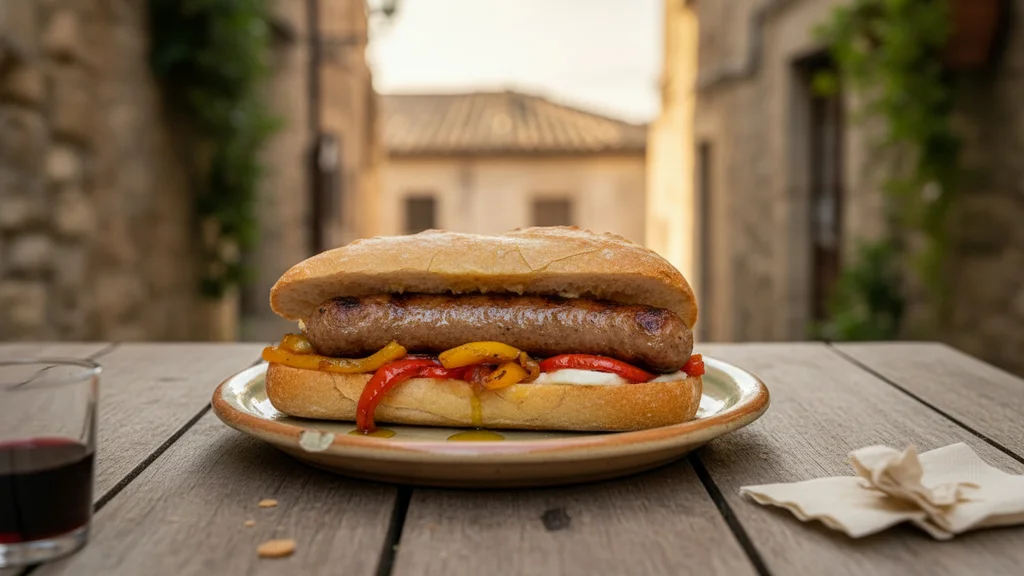
- Paninu cu satizzu – crusty ciabatta stuffed with grilled Calabrian sausage, often with cime di rapa (broccoli rabe) or onion. A staple of festivals, concerts and street markets.
- Pitta cu 'a soppressata – round pitta bread filled with a slice of soppressata, a dry-cured salami. Simple, quick and perfect.
Frittole are closely tied to maialata, the traditional winter pig slaughter. Meat, skin and less noble cuts are cooked for a long time in a large cauldron known as quadara or caddara, and the tradition remains particularly alive in the Reggio Calabria and Vibo Valentia areas and in the region's interior. In the street food version, they are most easily found in winter and at local festivals.
Watch on YouTube
Sweet street food – tartufo, granita and pitta 'mpigliata
Calabria's sweet street food is a category of its own, and tartufo di Pizzo takes first place. The best-known version usually combines hazelnut and chocolate gelato with a soft chocolate centre, the whole dessert dusted with cocoa and icing sugar. It is a dessert best eaten on a piazza, a few steps from the sea.
Tartufo di Pizzo in its present form was created around 1952. Tradition credits Giuseppe De Maria, known as Don Pippo, a Sicilian by birth with a lifetime of experience shaping arancini by hand. While preparing desserts for a wedding reception in Pizzo Calabro, he ran out of moulds – so, drawing on his arancini-shaping technique, he began forming the gelato in his hands instead. Its popularity was built by local gelato makers connected with the centre of Pizzo. Despite the claim, repeated online, that it is “Europe’s first PGI gelato”, Tartufo di Pizzo does not hold EU PGI status – in 2008 the name received only provisional national protection, and the dessert is listed on Italy’s register of traditional products (PAT). Whatever the recipe nuances, it remains the town's most famous treat and one of its most recognisable symbols.
Granita con brioche is a summer breakfast tradition Calabria shares with Sicily. A frozen mixture of water, sugar and fruit – most commonly lemon, strawberry, mulberry or coffee – is served with a soft, sweet brioche. Along the Calabrian coast, expect to pay 3–5 euros for granita with brioche. This is a morning answer to the heat, not an after-lunch dessert.
Pitta 'mpigliata is a festive pastry especially associated with San Giovanni in Fiore and the Sila Grande area in the province of Cosenza. It is shaped into rosettes or spirals of thin dough filled with nuts, raisins, honey, cinnamon and often liqueur or cooked wine. It is a traditional Christmas and wedding pastry, regarded as one of the most characteristic flavours of mountain Calabria.
Where to find street food – a city-by-city guide
Calabrian street food does not hide in food trucks or on Instagram. Look for it on piazzas, in bakery windows, at festivals and near churches. The easiest times to find it are between 11:30 and 14:30 and in the evening, during the passeggiata and local festivals. Granita is sold from the morning, while many fried snacks appear especially in the afternoon and evening; swordfish sandwiches and cuoppo are most widely available in summer.
The table below will help you plan your street food feast:
| Dish | City / area | When | Approximate price |
|---|---|---|---|
| Morzello cu a pitta | Catanzaro | Year-round | €3–5 |
| Swordfish sandwich | Scilla, Bagnara Calabra | May–September | €5–8 |
| Cuoppo di pesce fritto | Diamante, Tropea, Soverato | Year-round (best in summer) | €4–6 |
| Cuddrurieddri / zeppole | Cosenza and surroundings | December (7–8 Dec) | €1–2 each |
| Tartufo di Pizzo | Pizzo Calabro | Year-round | €3.50–5 |
| Granita con brioche | Entire coast | May–October | €3–5 |
| Paninu cu satizzu | All of Calabria (festivals) | Year-round | €3–4 |
| Polpette fritte | All of Calabria | Year-round | €1–2 each |
A few practical tips for street food hunters:
- Follow the queue – if locals are lining up, that is a good sign. Empty places should be avoided.
- Eat at the right time – the widest choice is between 11:30 and 14:30, with another good window during the evening passeggiata. Have granita in the morning, and look for fried snacks more often in the afternoon and evening.
- Seek out festivals – sagre (food festivals) are the best way to sample several dishes in one place. They run mainly in summer and early autumn.
- Ask for spicy – if you see peperoncino on the counter, ask for an extra dose. Calabrians respect those who like it hot.
- Carry cash – smaller street stalls and window counters often do not accept cards.
Calabrian street food – frequently asked questions
What is morzello and where can I try it?
Morzello (morzeddhu) is a thick stew made from various veal or beef offal, slow-cooked in tomatoes with peperoncino, oregano and bay leaves. It is served in pitta – a local round bread – and, as morzeddhu cu a pitta, is most strongly associated with Catanzaro. It is the city’s signature street dish and usually costs 3–5 euros.
When is the best time to visit Calabria for street food?
Summer (June–September) is peak season for seafood, granita and food festivals. December brings cuddrurieddri and pitta 'mpigliata. However, many specialities – morzello, tartufo di Pizzo and polpette – are available year-round.
Is Calabrian street food very spicy?
Peperoncino is fundamental to Calabrian cuisine, but spice levels vary by dish. Morzello and panino cu satizzu can be distinctly spicy, while tartufo, granita and cuoppo di pesce are mild. You can always ask for a version without chilli (senza piccante).
How much does street food cost in Calabria?
Calabrian street food is very affordable. Individual portions typically cost 1–5 euros: polpette and zeppole from 1 euro each, tartufo di Pizzo 3.50–5 euros, swordfish sandwich 5–8 euros. For 15–20 euros you can treat yourself to a proper street food feast.
How does Calabrian street food differ from Sicilian?
Both regions have strong street food traditions, but Calabria leans more heavily on peperoncino, offal (morzello) and local sausages. Sicily is famous for arancini, panelle and sfincione. Granita con brioche is a tradition shared by both regions. Calabrian street food is generally less known to tourists, which means more authentic experiences and lower prices.
Sources
The information in this article was verified against the following sources:
- calabriastraordinaria.it – calabriastraordinaria.it
- Marina Grande - Comune di Scilla – comune.scilla.rc.it
- regione.calabria.it (PDF) – regione.calabria.it
- Just a moment... – gamberorosso.it
- Wikipedia – Street food – en.wikipedia.org
- Tartufo di Pizzo: storia e origine del primo gelato a marchio IGP in Europa – cibotoday.it
- Tartufo di Pizzo: the greatest ice cream in the world – greatitalianchefs.com
Last updated: