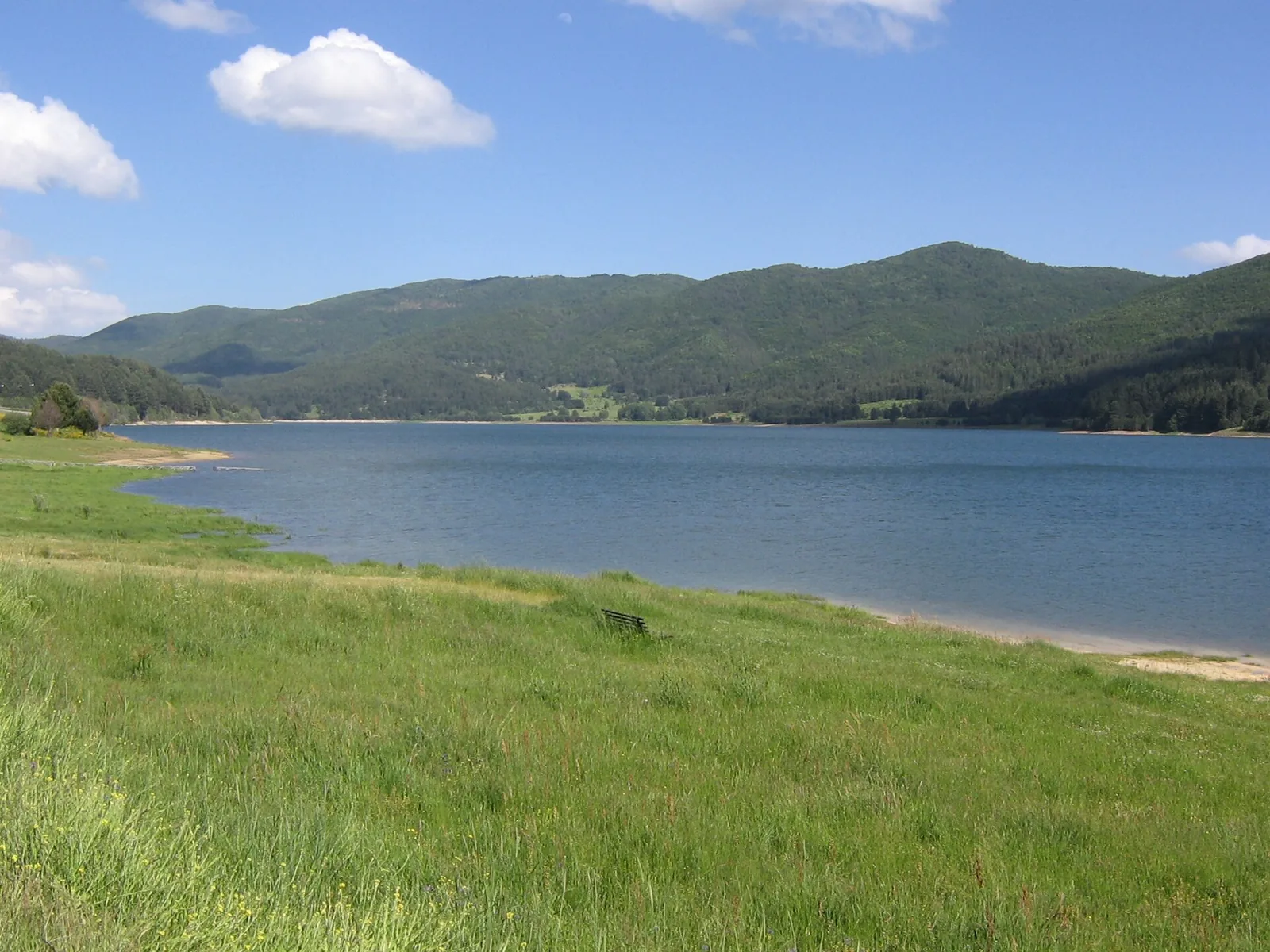
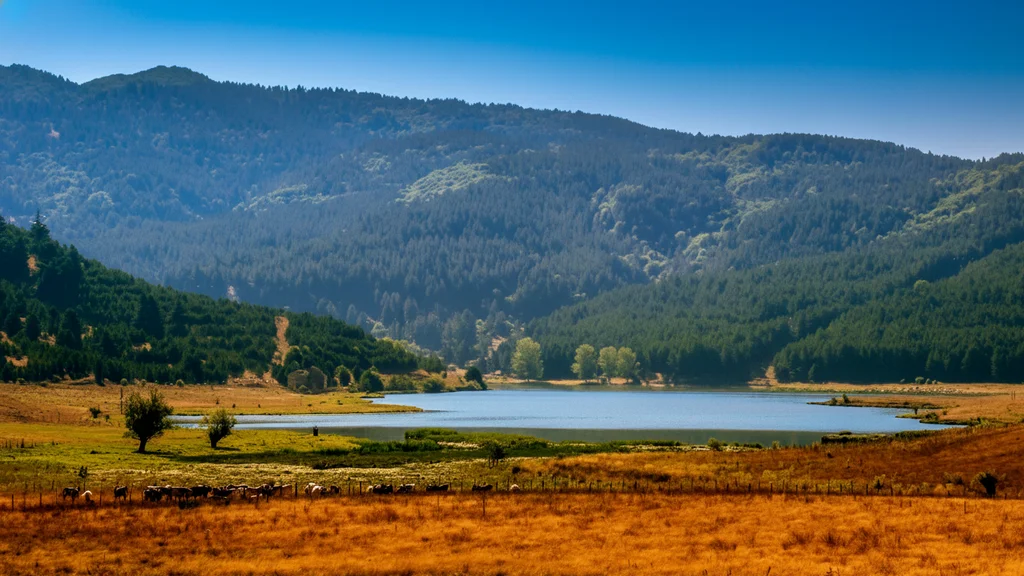
Sila National Park is a unique natural enclave located in the heart of Calabria, captivating visitors with its diverse landscape, mountain massifs and lush forests. Covering approximately 73,695 hectares, the park protects the heart of the Sila plateau, which in geological and landscape terms differs radically from the stereotypical image of southern Italy. This area, often referred to as the Gran Bosco d'Italia (Great Forest of Italy), extends across three provinces: Cosenza, Catanzaro and Crotone. Picturesque lakes such as Lago di Cecita are among the main attractions, offering opportunities for active recreation among forests, mountain meadows and the broad ridges of the plateau.
The Parco Nazionale della Sila was established by decree on 14 November 2002 and covers 73,695 hectares. It lies across three provinces – Cosenza, Catanzaro and Crotone – and in 2014 the Sila area was inscribed in the UNESCO MAB network as the "Sila" Biosphere Reserve. UNESCO MAB status does not apply only to the national park itself: the biosphere reserve is much larger and, according to UNESCO, covers 307,294 hectares. For visitors, this means that not only the core of the park is protected and promoted, but the wider Sila landscape with its towns, forests, lakes and areas used by local communities.
Table of Contents
- Protecting the unique flora and fauna of Sila National Park
- Geological evolution of the Sila plateau – from crystalline bedrock to the modern landscape
- Adventure on the trails of Sila National Park – trekking and outdoor activities
- Sila National Park – natural and cultural heritage of Calabria
- The impact of human activities on biodiversity in Sila National Park
- Practical tips – transport and logistics in Sila National Park
Protecting the unique flora and fauna of Sila National Park
Sila National Park, located on the Sila mountain massif in Calabria, protects some of the most characteristic mountain ecosystems of the Mediterranean basin. Both conifers and deciduous trees thrive here, creating a rich and varied landscape. The symbol of the park is the Calabrian black pine (Pinus nigra ssp. laricio), a subspecies of the black pine characteristic of Sila and Corsica, which – thanks to its resilience – was historically used to build ship masts.
The most spectacular example of these forests is the Fallistro Biogenetic Reserve, known as I Giganti della Sila. It protects a group of 58 monumental trees, most of them Calabrian pines over 350 years old, reaching heights of up to 45 metres. In the world of fauna, a key role is played by Canis lupus italicus – the Apennine wolf – which, after near-extinction in the mid-20th century, successfully rebuilt its population in the inaccessible forests of the plateau.
The park's forests are home to red deer, fallow deer and the Calabrian black squirrel (Sciurus meridionalis) – a black-coated rodent recognised, after genetic work published up to 2017, as a distinct species endemic to Calabria and Basilicata rather than a dark form of the red squirrel. The quality of the environment here is demonstrated by the extensive forest complexes, low industrial pressure and excellent conditions for observing wildlife.
In the area around Lago Cecita, remains of Palaeoloxodon antiquus (formerly Elephas antiquus), a Pleistocene forest elephant, have been discovered. The find dates to tens of thousands of years ago and is among the most important palaeontological discoveries in Calabria. The animal remains themselves should be separated from interpretations concerning possible prehistoric human activity.
Geological evolution of the Sila plateau – from crystalline bedrock to the modern landscape
The Sila plateau is a unique area with a fascinating geological history dating back to the Hercynian orogeny some 300 million years ago. Unlike the limestone Apennines, the Sila massif is composed of ancient crystalline bedrock, including granites, gneisses and mica schists. The current shape of the plateau is the result of prolonged tectonic and erosive processes, which formed one of the most characteristic mountain landscapes of southern Italy.
| Park sector | Highest peak | Altitude (m a.s.l.) | Main lakes |
|---|---|---|---|
| Sila Greca | Monte Paleparto | 1,481 | Cecita (partial) |
| Sila Grande | Monte Botte Donato | 1,928 | Arvo, Cecita, Ariamacina |
| Sila Piccola | Monte Gariglione | 1,764 | Ampollino, Passante |
The erosion of crystalline rocks has produced unique weathering forms such as spheroidal granite boulders. Picturesque lakes such as Lake Arvo have become an integral part of the ecosystem and attract nature lovers from across Europe. The plateau's geological history is today further underlined by its UNESCO MAB Biosphere Reserve status, granted to the Sila area in 2014.
Adventure on the trails of Sila National Park – trekking and outdoor activities
Sila National Park offers impressive landscapes across three main sections: Sila Piccola, Sila Grande and Sila Greca. With altitudes exceeding 1,000 m a.s.l., the region encourages hiking in summer and turns into an important winter sports area in the colder months. Sila's winter scenery recalls Scandinavian landscapes – with snow-covered pine forests and frozen lake surfaces.
The network of hiking and cycling trails is spread across Sila Grande, Sila Piccola and Sila Greca. Among the best-known walking and trekking areas are the surroundings of Cupone, Fallistro, Lorica and Villaggio Mancuso. It is there that you can most easily see the diversity of Sila – from old forests to wide lakeshores and open ridges.
For hiking enthusiasts, the Colli Perilli trail (10.8 km) offers direct contact with the forests and mountain landscape. In practice, many visitors start with three reliable places: I Giganti della Sila in Fallistro, Centro Visita Cupone by Lake Cecita, and the area around Lorica and Lago Arvo. Cycling tourism is centred around the lakes, where the 41.6 km route around Lake Arvo provides a fitness challenge.
In the Lorica area there are trails and infrastructure linked to Monte Botte Donato, but the condition of lifts should always be checked before arrival. In winter, the main bases and ski centres are Camigliatello Silano, Lorica and the Palumbosila area. This makes Sila one of the most important winter sports areas in southern Italy.
I Giganti della Sila is located in Località Croce di Magara, in the municipality of Spezzano della Sila, near Camigliatello. It is a short, focused attraction – typically 30–60 minutes suffice for a walk through the reserve. According to FAI, the standard ticket costs 6 euros, the reduced ticket for visitors aged 6–18 costs 3 euros, and FAI members enter free of charge. The Centro Visita Cupone and its educational trails usually take 1–3 hours, and at Lago Arvo in Lorica you can plan a leisurely stroll and recreation stop for 1–2 hours.
Centro Visita Cupone is located by Lago Cecita in the municipality of Spezzano della Sila and was created on the site of a former state sawmill facility. It includes nature trails, wildlife observation areas, a museum, a geological garden and a botanical garden with 115 plant species from the Calabrian mountains. The site also has facilities for visitors with disabilities and blind visitors, making it one of the most accessible educational points in the park. If you want to ride the Treno della Sila, treat it as a day attraction and book your place in advance.
Sila National Park – natural and cultural heritage of Calabria
Sila National Park is not just nature – it is also a mosaic of cultures and traditions closely tied to the history of settlement on the plateau. San Giovanni in Fiore developed around the abbey associated with Joachim of Fiore, the renowned medieval thinker. The heart of the town is the monumental Florense Abbey, an example of austere Florensian architecture that still draws pilgrims and those interested in the region's history.
Joachim of Fiore (c. 1135–1202) was a Calabrian abbot, mystic and theologian of the Middle Ages. In the late 12th century, Joachim founded the first Florensian community in the Sila area, while the present Abbazia Florense in San Giovanni in Fiore is associated with reconstruction/foundation from 1215. His thought about the three ages of Christian history had a wide influence in medieval Europe.
The areas around Sila Greca are linked to Arbëreshë communities, descended from Albanian settlers from the 15th century. Byzantine traditions, a unique dialect and colourful folk costumes are preserved to this day. Sila combines nature with local culture very well, and a journey across the plateau can easily be paired with discovering the cuisine, crafts and small mountain towns.
In the Sila Piccola sector, Villaggio Mancuso stands out with its unique Swiss-Tyrolean style architecture. The Albergo delle Fate remains one of the most recognisable buildings in this settlement and clearly shows the former atmosphere of mountain summer resorts in the Calabrian interior.
Watch on YouTube
The impact of human activities on biodiversity in Sila National Park
Sila National Park is an ecosystem where the conservation strategy rests on the harmonious coexistence of people and nature. A key challenge is sustainable water resource management, particularly with regard to lakes such as Cecita, which serve hydroelectric functions.
Lake Cecita also holds great palaeontological significance – in its area, remains of a prehistoric elephant (Palaeoloxodon antiquus, formerly Elephas antiquus) have been discovered. This is one of the most important finds of its type in Calabria. Promoting ecotourism aims to minimise the negative human impact while supporting a local economy built on certified products.
The region's gastronomy supports biodiversity: the cultivation of Sila Potato (Patata della Sila PGI) at altitudes of around 1,000–1,300 m a.s.l. and traditional grazing help preserve natural mountain meadows. Caciocavallo Silano PDO is historically linked to the Sila area, though its protected production covers a wider territory across several southern Italian regions. Its name (literally "cheese on horseback") most likely comes from the old ripening method: the cheeses were tied in pairs and hung astride a wooden pole. Typical of the mountain zone are also mushrooms, particularly porcini, cured meats and pastoral cuisine strongly linked to animal husbandry and transhumance.
Practical tips – transport and logistics in Sila National Park
The city of Cosenza is the natural gateway to the park, particularly for Sila Grande. The SS107 road leads from here to Camigliatello Silano – approximately 35 km and usually 45–60 minutes of driving, depending on weather and traffic. The best-known base towns are Camigliatello Silano, Lorica on Lago Arvo, San Giovanni in Fiore, and Villaggio Mancuso and Taverna in Sila Piccola.
In practice, keep in mind the Centro Visita Cupone, located on the SP6 road by Lago Cecita, a few kilometres from Camigliatello. For those approaching from the east, other reference points are useful: from Catanzaro to Villaggio Mancuso is about 35–40 km, and from Crotone to the Trepidò/Caprara area by Ampollino over 70 km. This is a large park, so travel time always depends on the chosen base.
The historic Treno della Sila is one of the most interesting technical attractions of the region. It is a tourist railway running seasonally on the narrow-gauge (950 mm) Ferrovie della Calabria line between Moccone and San Nicola-Silvana Mansio, via Camigliatello Silano, often with heritage rolling stock. The route reaches about 1,405–1,406 m a.s.l. at San Nicola-Silvana Mansio, and steam-hauled services run occasionally. A journey on this heritage train lets you see the forests and viaducts from a different perspective, but dates should be checked before your trip.
The best period for trekking is usually from May to October. In winter, from December to March, at elevations of 1,200–1,900 m a.s.l., snow, ice and occasional road difficulties are possible, and winter tyres or chains may be required on the SS107 and local roads towards Lorica, Camigliatello and Villaggio Mancuso. In summer, temperatures here are usually notably lower than on the Calabrian coast.
| Lake | Main activities | Unique features |
|---|---|---|
| Cecita | Fishing, walks, educational trails | Elephant palaeontological site |
| Arvo | Walks, lakeside recreation, active tourism | Close to Lorica resort |
| Ampollino | Year-round tourism, skiing | Oldest dam on the plateau |
| Ariamacina | Birdwatching, trekking | Legambiente Nature Reserve |
Frequently Asked Questions
Where is Sila National Park?
The park is situated in the heart of Calabria, southern Italy, and extends across three provinces: Cosenza, Catanzaro and Crotone.
What is worth seeing in Sila National Park?
The main attractions include the giant pines of the Fallistro Reserve, lakes Arvo and Cecita, the Florense Abbey in San Giovanni in Fiore, and the Cupone Visitor Centre.
How to get to Sila Park from Cosenza?
The most convenient way is by car on the SS107 to Camigliatello Silano, which usually takes about 45–60 minutes. Ferrovie della Calabria bus connections should be checked in current timetables before travelling.
Can you do winter sports in Sila?
Yes. The main bases and centres for skiers are Camigliatello Silano, Lorica and the Palumbosila area, but in winter you should account for snow, ice and possible road difficulties.
What lakes are in Sila Park?
The main lakes are Cecita, Arvo, Ampollino and Ariamacina. Each has a different character – from peaceful walks and birdwatching to active recreation in tourist bases.
Top Attractions of Sila Park
I Giganti della Sila
The Fallistro Biogenetic Reserve with 58 monumental Calabrian pines over 350 years old, reaching heights of up to 45 metres.
Lake Arvo and Lorica
Active tourism hub – lakeside walks, recreation and mountain panoramas in one of the main bases of Sila Grande.
Treno della Sila
A historic tourist railway running seasonally on a narrow-gauge route through Camigliatello Silano, often with heritage rolling stock.
Florense Abbey
A monumental Florensian seat in San Giovanni in Fiore, associated with the figure of Joachim of Fiore.
Lake Cecita
The largest lake in the park with a unique palaeontological site – prehistoric elephant remains were discovered in its area.
Camigliatello Silano
The main tourist hub of Sila Grande – a base for trekking in summer and an important point for winter trips.
Getting there
The nearest airport is Lamezia Terme (SUF) – about 90 km and 1 hr 25 min by car to Camigliatello Silano; the most practical rail station is Cosenza FS (Vaglio Lise), then a Ferrovie della Calabria bus.
Lamezia Terme airport (SUF)
- By car via A2 and SS107About 90 km and 1 hr 25 min to Camigliatello: take the A2, exit for Cosenza, then SS107. Paid parking is available by Via Falcone e Borsellino.
- Lamezia AirlinkLamezia Airlink connects the airport with Lamezia Terme Centrale about every 30 minutes; the rail-ticket supplement is €1.80.
- Trenitalia to CosenzaFrom Lamezia Terme Centrale, take a Trenitalia train to Cosenza FS (Vaglio Lise).
- Bus 385AFerrovie della Calabria bus 385A runs from Cosenza FS to Camigliatello Silano; it does not reach every attraction in the park.
Reggio Calabria airport (REG)
- By car via A2 and SS107Take the A2 towards Cosenza, then SS107 to Camigliatello. Use the paid parking area by Via Falcone e Borsellino.
- Regional train to CentraleTake a regional train from Reggio Calabria Aeroporto to Reggio Calabria Centrale, then continue towards Cosenza FS.
- Bus 385AFerrovie della Calabria bus 385A runs from Cosenza FS to Camigliatello Silano.
From Poland – direct flights
- Poland → SUFFor summer 2026, choose SUF: Ryanair flies from KRK, WRO, seasonal WMI and KTW from 2 June (Tue/Thu/Sat); Wizz Air flies from KTW (Tue/Thu/Sat) and WAW (Mon/Wed/Fri).
- Then as from SUFThen continue as from SUF: the fastest option is by car – about 90 km and 1 hr 25 min via the A2 and SS107 to Camigliatello.
From Rome or Naples
- Train via PaolaFrecciarossa or Italo to Paola: about 3.5–4.5 hours from Rome and 2.5–3 hours from Naples. Then take a regional train to Cosenza FS, about 25–30 minutes.
- Bus 385AFrom Cosenza FS, take Ferrovie della Calabria bus 385A to Camigliatello Silano.
- FlixBus or MarinoBusAlternatively, take FlixBus or MarinoBus to Cosenza, then bus 385A to Camigliatello Silano.
From Cosenza
- By car via SS107About 36 km and 45–60 min via the SS107 Silana Crotonese to Camigliatello Silano. Paid parking is available by Via Falcone e Borsellino.
- Bus 385AFerrovie della Calabria bus 385A runs from Cosenza via Spezzano and Camigliatello to San Giovanni in Fiore.
From Catanzaro
- By car to CamigliatelloAbout 25 km and 35 min to Villaggio Mancuso in the Sila Piccola. Camigliatello Silano in the Sila Grande is much further – about 130 km and 1 hr 50 min via Cosenza.
From Pizzo
- By car via CosenzaAbout 80 km by car to Camigliatello; once in Cosenza, continue on the SS107. Paid parking is available by Via Falcone e Borsellino.
From Aspromonte
- By car via A2About 120 km and 1 hr 40 min by car to Camigliatello. Head towards Cosenza, then take the SS107 onto the Sila plateau.
From Tropea
- By car via CosenzaAbout 110 km by car to Camigliatello; from Cosenza, continue on the SS107. Paid parking is available by Via Falcone e Borsellino.
From Pollino
- By car via A2About 120 km by car to Camigliatello. Travel via Cosenza, then take the SS107 onto the Sila plateau.
Journey times are approximate. Timetables: Trenitalia, Ferrovie della Calabria, local operators.
Near Sila National Park
Sources
The information in this article was verified against the following sources:
- Parco Nazionale della Sila - Boschi vetusti – archivio.parcosila.it
- Parco Nazionale della Sila - Geologia – archivio.parcosila.it
- Cupone visitor centre – calabriastraordinaria.it
- I Giganti della Sila in Calabria | FAI - Fondo per l'Ambiente Italiano – fondoambiente.it
- Treno della Sila per le tue vacanze in Calabria - Italia.it – italia.it
- Sila - Man and the Biosphere Programme (MAB) – unesco.org
- dettaglio attrazione - visitsila – visitsila.it
- Trenitalia – trenitalia.com
- Trenitalia – trenitalia.com
- Ferrovie della Calabria – web.ferroviedellacalabria.it
- trenodellasila.it – trenodellasila.it
- parcosila.it – parcosila.it
- SACAL – lotniska Kalabrii – sacal.it
- prolococamigliatello.it – prolococamigliatello.it
- Wikipedia – Joachim of Fiore – en.wikipedia.org
Last updated: