Calabrian cuisine is not delicate. It is bold, fiery and disarmingly honest – much like the Calabrians themselves. For centuries this was the food of the poor, built from whatever the land, the sea and the pig could provide. Chili, olive oil, pork and pasta – from these four pillars Calabria constructed a culinary tradition that is now conquering restaurants from London to New York. To truly understand it, you need to sit at a table in a local trattoria, where a nonna sets down a plate that weighs as much as a small car and watches to make sure you finish every bite.
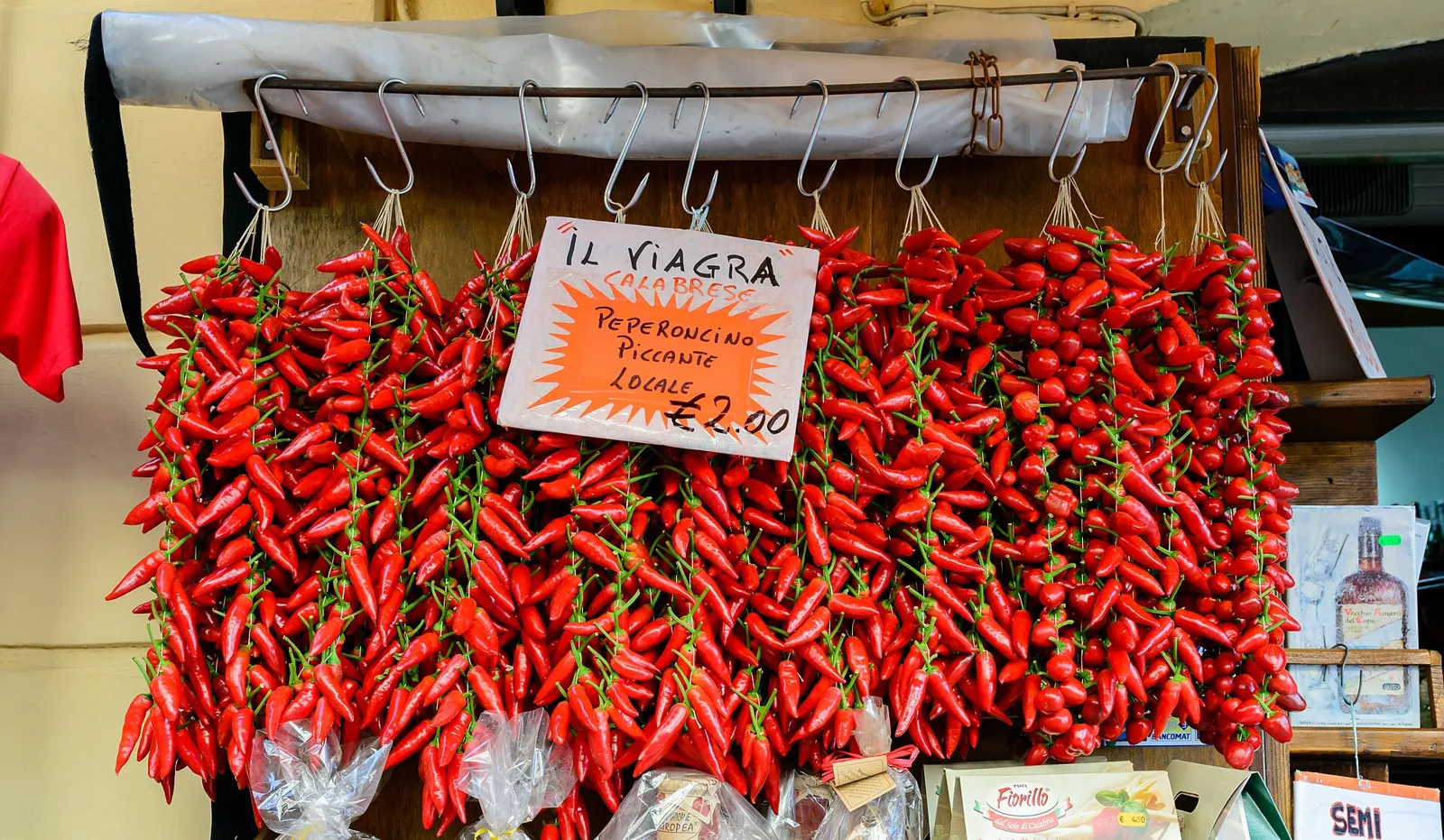
Calabria is the Italian region most strongly associated with peperoncino. The symbol of this culinary obsession is the Peperoncino Festival in Diamante, held annually since 1992, usually in early September. Chili turns up everywhere here – in cured meats, sauces, vegetables sott’olio and bread – so heat is not an add-on but part of the local identity. On 11 June 2026 Peperoncino di Calabria was officially entered in the EU register of PGIs; the regulation was published in the Official Journal of the EU the same day.
Table of Contents
Antipasti – Before Things Get Serious
A Calabrian meal begins with a tagliere – a board of cured meats and cheeses that could be dinner on its own. On the board you will find soppressata (a hard salami with chili), capocollo (a cured pork product from the neck and loin area) and the star of the evening – 'nduja. Another excellent addition is Cipolla Rossa di Tropea Calabria IGP, one of Italy’s most recognisable onions, perfect with ’nduja, cheeses and simple antipasti.
This is also where Calabria showcases its quality-certified products. The most recognisable include Capocollo di Calabria DOP, Pancetta di Calabria DOP, Salsiccia di Calabria DOP, Soppressata di Calabria DOP, Caciocavallo Silano DOP and Pecorino Crotonese DOP. Spilinga is widely regarded as the birthplace of ’nduja, although the product long functioned more as a traditional speciality than a formally protected designation. In the province of Vibo Valentia, in the Monte Poro area, Pecorino del Monte Poro DOP is also produced in fresco, semistagionato and stagionato styles.
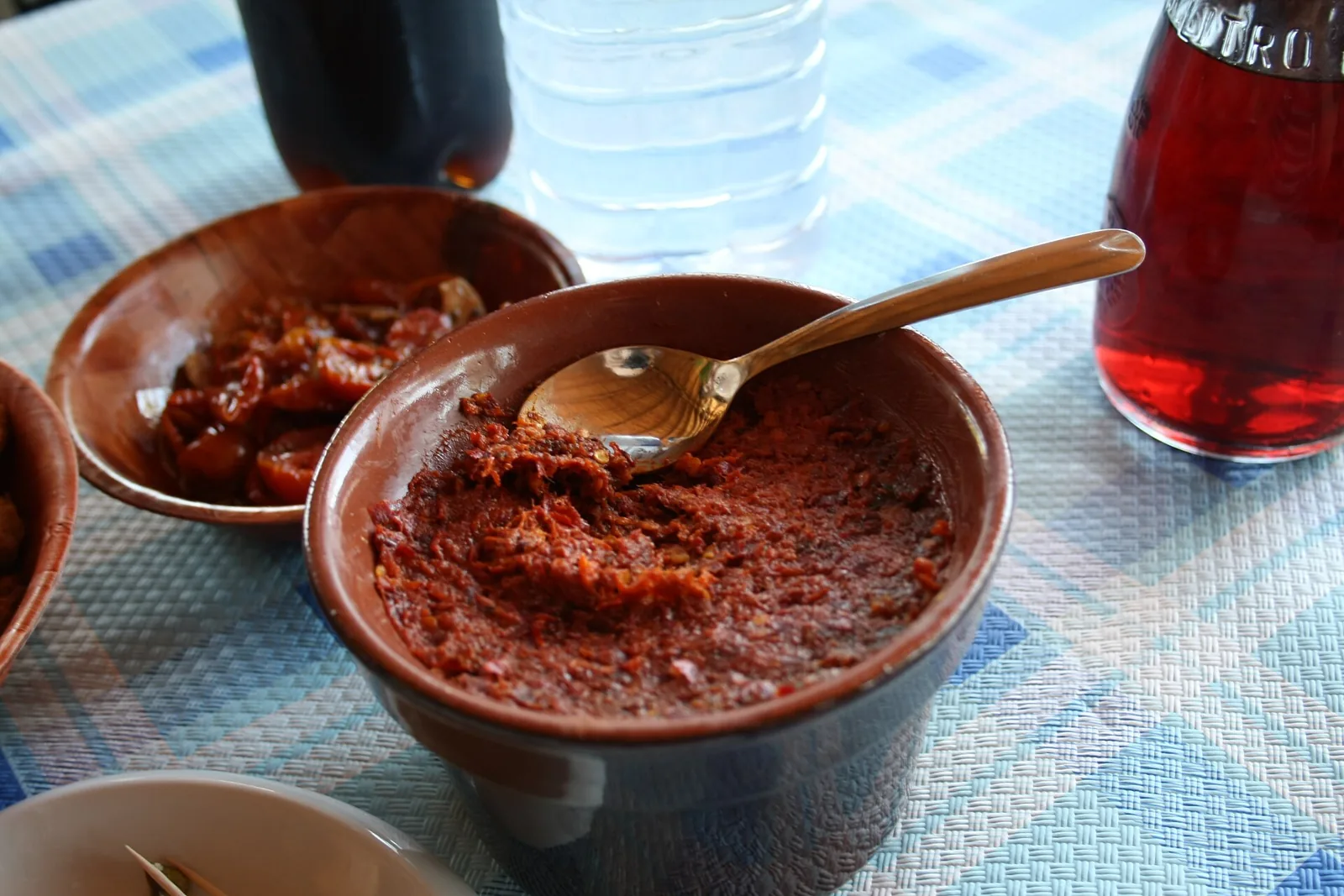
'Nduja from Spilinga is a soft, spreadable sausage made from pork and peperoncino chili peppers, so fiery that the first bite brings tears to the unprepared. Historically it was a peasant cured meat made from fatty pork cuts and offal; today it is also produced from selected cuts of meat. On the plate it looks like an intensely red paste – spread it on warm bread or bruschetta with cherry tomatoes and watch it melt from the heat. Tropea red onion balances its fat and heat beautifully, especially when it appears on the board as a jam or pickled accompaniment.
Alongside the cured meats come vegetables sott’olio, such as melanzane sott'olio (aubergines preserved in olive oil with garlic); peperoni cruschi, however, are primarily a speciality of Basilicata, although they are also found in southern regions, including Calabria. Local cheeses are mainly caciocavallo silano DOP (a mature cow’s milk cheese with a characteristic shape), pecorino crotonese (sheep’s cheese from the Crotone area, sharp and aromatic) and pecorino from Monte Poro, especially close to the Vibo Valentia area. On the Ionian coast, also look for sardella calabrese, known as rosamarina or the “caviar of Calabria” – a spicy paste made from young sardines or anchovies, peperoncino, salt and wild fennel, associated among others with Crucoli, Cirò Marina, Cariati and Trebisacce.
Primi – Pasta Made by Hand
In Calabria, pasta is not a factory product – it is a ritual. And the most important pasta in the region is fileja. These are long, spiral tubes shaped by hand using a thin metal rod called a ferretto or danaco. The dough is simple – flour and water, no eggs – and the shape ensures sauce gets into every crevice.
Fileja is particularly associated with the province of Vibo Valentia and the Monte Poro area. Across much of Calabria it is served with tomato sauce, goat ragù or with ’nduja and grated pecorino or ricotta salata. It is one of those pastas that taste best where they are still made by hand.
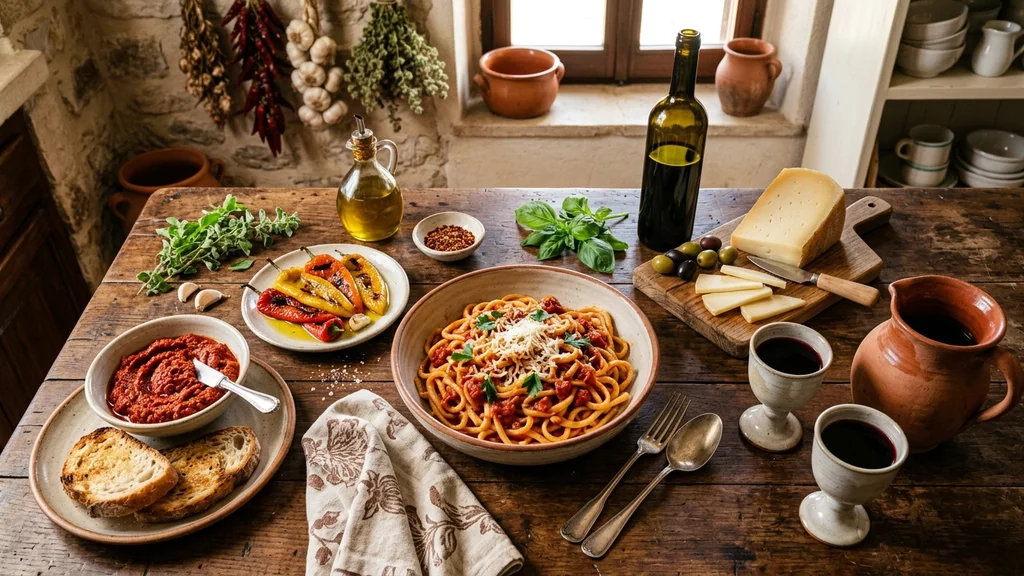
The classic preparation is fileja con sugo di 'nduja – in a tomato sauce with melted 'nduja, where the spicy sausage dissolves into the tomatoes, creating a velvety, fiery coating that clings to every twist of the pasta. In traditional trattorias you will also find fileja con ragù di capra (with slow-braised goat meat) – a rich, deeply aromatic dish. Around Vibo Valentia it often reaches the table with local pecorino, while on the Ionian coast sardella is sometimes used as a spicy addition to simple pasta.
Other pastas you must not skip: lagane e ceci (wide pasta ribbons with chickpeas – a traditional Friday fasting dish), rigatoni con 'nduja e ricotta (where creamy ricotta tempers the fire of the 'nduja) and sagne chine – Calabria's version of lasagne with meatballs, artichoke and hard-boiled egg, served on feast days.
Secondi – Sea and Mountains on One Plate
Calabria is narrow – the drive from coast to mountains takes an hour. That is why on the same table you find pesce spada alla ghiotta (swordfish braised with capers, olives and tomatoes – a speciality of Scilla and Bagnara) alongside capretto al forno (roast kid with herbs – a classic from the mountain villages of Aspromonte).
On the Tyrrhenian coast you must try swordfish – Scilla and the surrounding area is the capital of this dish. The fish is grilled, braised, served in a sandwich as street food or presented in thin slices as carpaccio di pesce spada. The season runs from May to September, when shoals of swordfish pass through the Strait of Messina.
Scilla, especially the Chianalea quarter, and nearby Bagnara Calabra are historically linked to swordfish fishing in the Strait of Messina. Fishermen traditionally used special observation-and-hunting boats called feluca or passerella, with a tall mast and a long harpooning platform. This maritime landscape still strongly shapes local menus.
On the Ionian coast, pesce azzurro (blue fish – sardines, anchovies, mackerel) dominates, served marinated, grilled or stuffed with breadcrumbs and oregano. Sardella grows out of the same coastal flavours: a spicy fish paste with peperoncino that you will find on crostini, in pitta or as an addition to pasta. It is a simple, intense taste of Ionian Calabria.
Street Food – Eat on the Move
Calabrian street food is a category unto itself. The most famous is the panino con pesce spada from Scilla – a sandwich with grilled swordfish, lettuce, tomato and a squeeze of lemon. Cost: roughly 10 to as much as 20 EUR in popular places in Scilla; check the current price list on site. This quick dish tastes best near the harbour or by the water, when the fish does not need many extras.
It is also worth knowing the basics of local street bread. Pitta calabrese is a round, low bread popular in Catanzaro and other parts of the region, often used to serve morzeddhu. Another classic is cuddrurieddri/cullurielli – fried rings of dough, especially associated with the Christmas period in Cosenza and parts of Calabria. Do not confuse them with Reggio-style cudduraci/cuddhuraci, which are sweet Easter pastries with egg.
In Cosenza and its surroundings, look for pitta 'mpigliata – a traditional pastry made from rolled wheat dough, shaped into spirals and filled with walnuts, raisins, cinnamon and often honey. It is a sweet street food that tastes like Christmas regardless of the season. In Catanzaro, the tradition is morzello (morzeddhu) – a thick stew of beef offal with tomatoes and hot pepper, served in a round pitta bread. Not for delicate palates, but locals eat it for breakfast.
When ordering, pay attention to the rules of the place. Restaurants often add a coperto charge, usually around €1.50–3.00 per person, and sometimes a servizio charge instead. In bars and ice cream parlours, prices at a table can be higher than ordering al banco.
Dolci – Calabria Can Be Sweet
Just when you think you cannot manage another bite, the waiter sets down a tartufo di Pizzo. This is a frozen sphere of two gelato flavours – usually chocolate and hazelnut – with liquid chocolate or fruit syrup in the centre, rolled in cocoa or sprinkles. The dessert's origins are most commonly traced to 1952 in the seaside town of Pizzo, attributed to Giuseppe De Maria, known as Don Pippo. According to local lore, the dessert was born out of the need to serve ice cream without a mould during a wedding – so a sphere was hand-formed with filling and a coating.
In Pizzo, make sure to stop at one of the historic gelaterie in the centre and order a tartufo where it has been made for generations. In local tradition, the connection between the dessert, Giuseppe De Maria and Bar Dante is the most firmly established, but what matters most today is simply tasting it on the spot.
Beyond tartufo, look for flavours deeply rooted in local territory. In Reggio Calabria and its surroundings, an important dessert is gelato al bergamotto, made with bergamot grown mainly along the Ionian coast of the Reggio Calabria province, between Villa San Giovanni and Monasterace, with the most important area in the Reggio–Locri belt. Also excellent are crocette di fichi – pressed dried figs layered with almonds, citrus peel and often coated in chocolate.
Other sweets worth seeking out: mostaccioli/mustazzoli from Soriano Calabro – hard biscuits made with flour and honey or grape must, hand-shaped into animals, fish, baskets or symbols of abundance, turdilli (Christmas fritters with honey) and fichi secchi – dried figs stuffed with walnuts and orange peel, left to mature for weeks in a cool place.
Watch on YouTube
Wine – Gaglioppo and Beyond
Calabrian wine deserves an article of its own, but here are the essentials. The king of red grapes is Gaglioppo, used to make Cirò DOC – Calabria's most famous wine. Other important red varieties include Magliocco and Magliocco Dolce, while among whites you will frequently encounter Greco Bianco, Mantonico and, in selected areas, Zibibbo.
On the appellation map, the names to remember are Cirò DOC in the province of Crotone, Greco di Bianco DOC in the province of Reggio Calabria, Melissa DOC near Crotone, Savuto DOC on the border of the Cosenza and Catanzaro provinces, Terre di Cosenza DOC and Bivongi DOC in the Ionian area between Catanzaro and Reggio Calabria. This helps explain why Calabrian wines change so dramatically from coast to coast.
Cirò Rosso is a wine with powerful tannins, aromas of red fruits and herbal notes that gain complexity with age. Drink it with meats and aged cheeses. If you prefer something lighter, reach for Cirò Rosato – a rosé, fresh and bright, ideal with fish and antipasti.
For connoisseurs, Greco di Bianco DOC is essential – a dessert wine made by appassimento (dried grapes), with a deep amber colour and aromas of orange blossom, citrus and herbs. Drink it with dry biscuits, almond-based desserts or aged pecorino. Vine cultivation in the Bianco area has ancient roots, and the passito tradition here is very long-standing.
How to Order Without a Faux Pas
The pace of a meal: A Calabrian lunch is a ritual. Antipasti, primo, secondo, dolce, caffè, amaro – an hour minimum, often two. Many restaurants serve lunch roughly between 12:30 and 15:00, and dinner between 20:00 and 23:00; outside those hours the kitchen is often closed.
Hours and availability: In small towns, some restaurants close one day mid-week, and the fullest menus appear on weekends and holidays. If you have your heart set on a particular dish, don't leave lunch for late afternoon.
Chili: If you do not like spice, say senza peperoncino (without chili). But remember – in Calabria, chili is in almost everything. Locals do not consider 'nduja spicy. Keep that in mind.
Prices: A full meal in a trattoria (antipasti, primo, secondo, wine, coffee) costs 25–40 euros per person. In upscale ristoranti, 50–70 euros. On the street in Scilla, a swordfish sandwich may cost roughly 10 to 20 EUR in popular places, while tartufo is usually ordered in a gelateria or café according to the current price list. Check the menu before ordering, because prices at a table and at the counter can differ.
Coperto and table service: A coperto charge is often added to the bill, usually around €1.50–3.00 per person, and sometimes you will see servizio instead. In bars and ice cream parlours, ordering at a table may cost more than al banco, so glance at the price list before sitting down.
What to take home: A jar of 'nduja (available in every grocery shop), a bottle of Cirò, a caciocavallo and bergamot-infused olive oil. Tropea onions, sheep’s cheeses from Calabria and a small jar of sardella are also good buys, especially if you are returning from the Ionian coast.
Calabrian cuisine does not try to impress anyone. There are no foam reductions or deconstructed classics here. What you get instead is simple, intense food based on products that truly define the region: peperoncino, olive oil, pork, fish, Tropea onions, cheeses and handmade pasta. If you like honest eating – this is your place.
Sources
The information in this article was verified against the following sources:
- Cuddhuraci | Turismo Reggio Calabria – turismo.reggiocal.it
- IL TERRITORIO – consorziocipollatropeaigp.com
- Gazzetta Ufficiale – gazzettaufficiale.it
- Pizza di Franco Pepe: storia del peperone crusco - Italia.it – italia.it
- Masaf - Salumi DOP - Capocollo di Calabria DOP – masaf.gov.it
- Mostaccioli di Soriano Calabro, un’eredità della Magna Grecia – Turismo Soriano Calabro – turismosorianocalabro.org
- Just a moment... – gamberorosso.it
- Wikipedia – Calabria – en.wikipedia.org