Catanzaro is the administrative capital of Calabria, where medieval history meets the rugged landscape of the south. The city, historically known for its position on the isthmus as the "City of Two Seas", combines a medieval street layout with modern architecture. It is also referred to as the "City of Three Vs": Vento, Velluto and Vitaliano, meaning wind, velvet and Saint Vitalianus. It is a destination for travellers after a less touristy Calabria: an administrative centre spread over three hills and the seaside Lido district on the Gulf of Squillace.
Table of Contents
- Silk-making in Catanzaro – From Byzantine Roots to Contemporary Heritage
- Monuments of Catanzaro – The Architectural Treasures of Calabria
- Earthquakes and the Modern Reconstruction of Catanzaro
- The Economy of Catanzaro – Between Tradition and Modernity
- Culture and Festivals in Catanzaro – From Culinary Traditions to Jazz Rhythms
Silk-making in Catanzaro – From Byzantine Roots to Contemporary Heritage
Catanzaro, known as "La Città della Seta", played an important role in the history of silk-making in southern Italy. From Byzantine times, the city was associated with silk processing, helped by its location and local climatic conditions. The very name of the city may derive from the Byzantine word Katartárioi, meaning silk spinners.
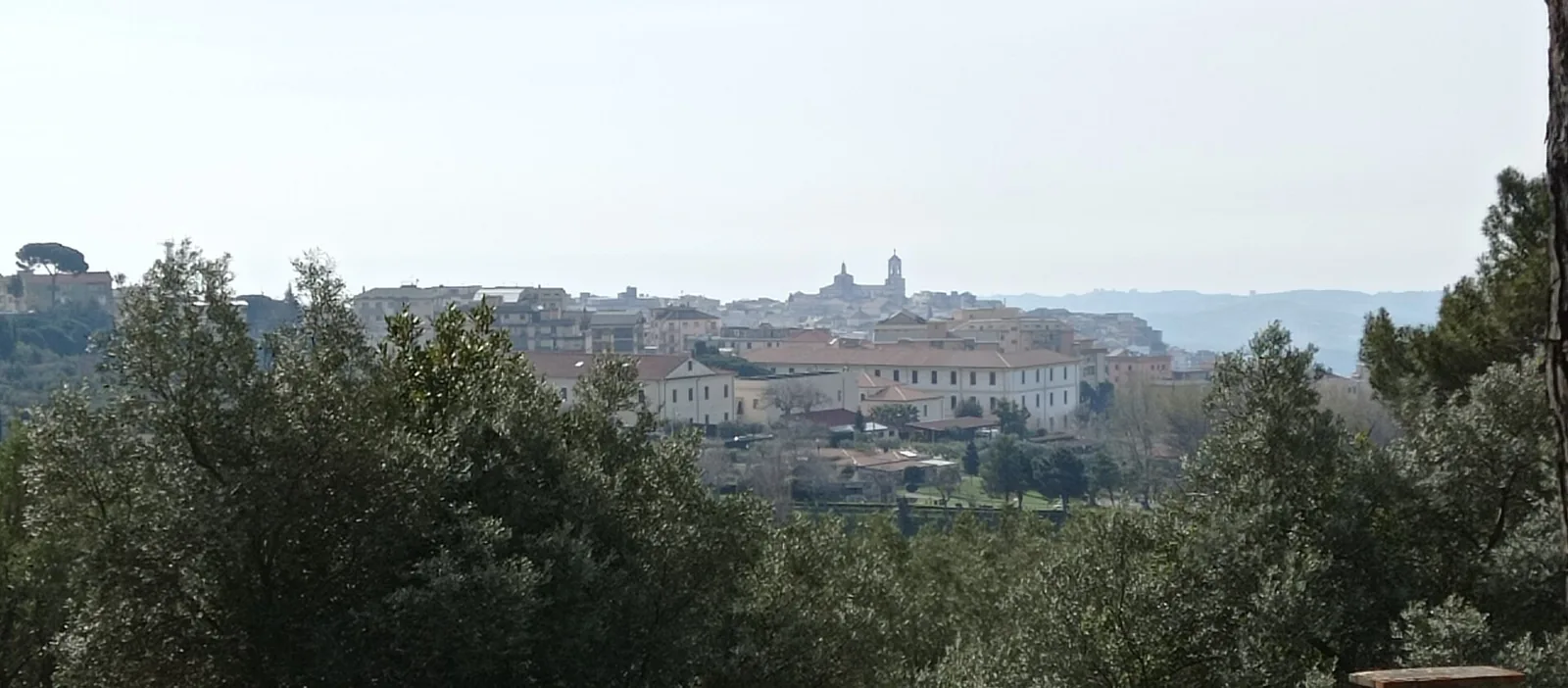
Medieval Flourishing
Catanzaro's silk tradition is linked to the Byzantine period, when silk-processing workshops and mulberry cultivation developed in the city. At the beginning of the 10th century, around 903, Catanzaro came under Saracen rule and functioned under the Arabic name Qaṭanṣār. Its position on routes connecting the Ionian and Tyrrhenian coasts encouraged trade contacts and the exchange of craft techniques.
In medieval sources, Catanzaro appears, among others, in the writings of Geoffrey Malaterra at the end of the 11th century and in al-Idrisi in the 12th century; the formal development of silk-making regulations is best documented by the privilege of Charles V from 1519 and the statutes of 1568. These later documents show that textile production was not merely a domestic craft, but an activity subject to quality control and guild rules.
The Golden Age
The city experienced its golden age in the 15th and 16th centuries. In the 15th and 16th centuries, Catanzaro was one of the most important silk-making centres in southern Italy; its craftsmen were called to places including Palermo, Messina, Lyon and Tours. Catanzaro obtained royal privileges that supported the growth of the industry and attracted Spanish, Venetian and Dutch merchants. Professional guilds controlled the quality of the fabrics on offer, such as the luxury velvet known as velluto catanzarese.
The Decline of Tradition
In the 19th century, competition from mechanised production in Lyon and England caused significant losses to Catanzaro's traditional economy. Additionally, silkworm diseases and agricultural crises hit local craftsmen hard. Despite revival attempts, such as the founding of the Scuola Serica in 1870, production gradually faded. Ultimately, following the destruction of World War II, mass silk production in the region collapsed almost entirely.
Heritage and the Present Day
Today silk-making in Catanzaro is remembered as an important cultural heritage of the region. In the nearby village of San Floro, the cooperative Nido di Seta has restored the full production cycle. Young Calabrians there combine historic techniques with a modern approach to sustainable development, and a visit shows what the successive stages of producing luxury fabrics looked like.
Monuments of Catanzaro – The Architectural Treasures of Calabria
Catanzaro, as the regional capital, is distinguished not only by its topography but also by the richness of its monuments. At the heart of the historic centre, set on three hills, stands the Cathedral (Duomo di Catanzaro), originally built on Norman foundations from 1121. Today's cathedral is largely the result of post-war reconstruction completed in 1960; it preserves the memory of its Norman beginnings, but its current appearance is modern. Inside are works of sacred art, including an 18th-century Assumption painting and a bust of Saint Vitalianus.
An equally important landmark on the spiritual map is the 13th-century Basilica Minore di Maria SS. Immacolata, which houses a wooden statue of the Madonna dressed in red silk. A short walk away is the MARCH – Museo Archeologico e Numismatico Provinciale in Villa Margherita, the oldest museum in Calabria. It was created following an initiative from 1863 and inaugurated on 4 May 1879, and its numismatic collection includes more than 8,000 coins. The provincial museums website currently lists opening hours as 10:00–13:00. For lovers of more recent art, the museum MARCA, opened in 2008, is a must-visit, presenting among others the avant-garde works of Mimmo Rotella.
When planning a visit, also head just outside Catanzaro to Roccelletta di Borgia. The Museo e Parco archeologico nazionale di Scolacium covers the remains of Greek-Roman Skylletion/Minervia Scolacium, the forum, theatre, amphitheatre and the Norman basilica of Santa Maria della Roccella. According to MiC data, standard opening hours are Tuesday–Sunday 09:00–19:00, while the park is closed on Monday. A full ticket costs €5 and a reduced ticket €2.
Strolling through the historic centre of Catanzaro, one encounters buildings reflecting a mixture of architectural styles from different eras. The Bisantis Bridge, more widely known as the Viadotto Morandi, is a particularly striking symbol of modern engineering. Completed in 1962, it creates a contrast with the historic buildings, rising 112 metres above the floor of the Fiumarella valley. This site is an important transport link and one of the city's most recognisable works of engineering. Another symbol of Catanzaro is Il Cavatore on Piazza Matteotti – a monumental fountain with a bronze figure of a quarryman set into a niche in the old castle wall. Designed by Giuseppe Rito between 1951 and 1954, it was unveiled in February 1956 as a tribute to the hard work of local people during post-war reconstruction.
| Bridge Technical Parameter | Value | Functional Significance |
|---|---|---|
| Height above valley floor | 112 m | Symbol of the city's modernity and resilience |
| Roadway length and arch span | Roadway length: 468.45 m; arch span: approx. 231–236 m | Key link between city centre and the Due Mari road |
| Wind resistance | >140 km/h | Adaptation to the city's characteristic winds |
| Construction type | Single-span reinforced concrete arch / calcestruzzo armato | Monument of 20th-century engineering |
A break from the city bustle comes at Parco della Biodiversità Mediterranea, a large park covering around 60 hectares. The associated Parco Internazionale della Scultura displays works by artists such as Stephan Balkenhol, Tony Cragg, Wim Delvoye, Jan Fabre, Antony Gormley, Mimmo Paladino, Marc Quinn, Dennis Oppenheim, Michelangelo Pistoletto, Mauro Staccioli and Daniel Buren. This is one of those places in Catanzaro where a walk, contemporary art and a break from city-centre traffic combine into a practical half-day plan.
Earthquakes and the Modern Reconstruction of Catanzaro
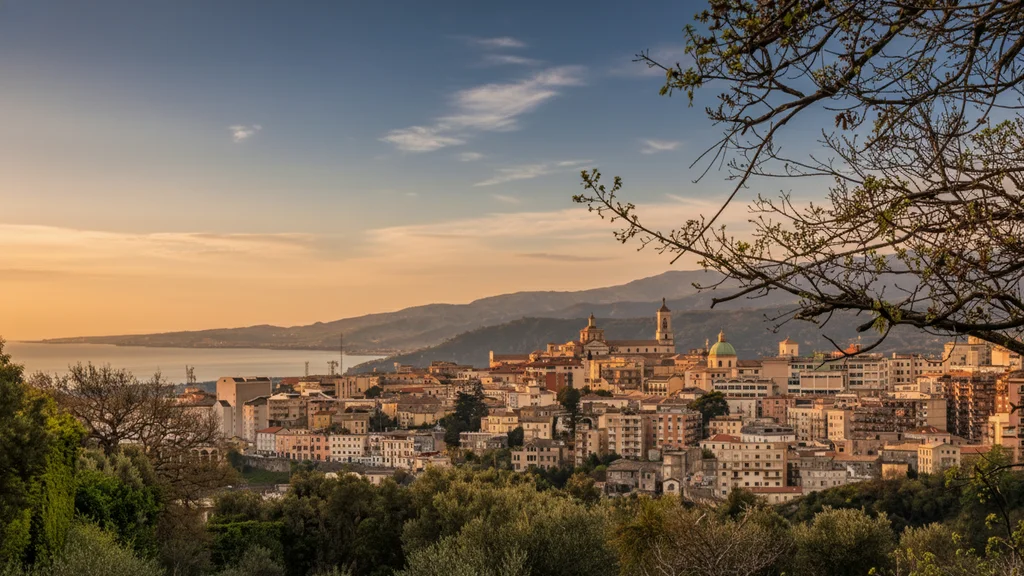
Earthquakes have strongly influenced the history and appearance of Catanzaro. The city has repeatedly experienced destructive tremors, including in 1638, 1783 and 1832. These cataclysms destroyed buildings, but also forced successive stages of reconstruction and strengthening of the urban fabric.
The historical context of destruction stretches deep into the past, periodically interrupting the development of the region. One of the most important later events was the 1908 earthquake, which also affected Catanzaro and required intervention by the authorities. In Catanzaro, the old fabric of the centre preserved its medieval layout, although it was heavily transformed by earthquakes, 19th- and 20th-century urban cut-throughs and the bombings of 1943. For this reason, a walk here reveals not a street grid planned from scratch, but a city that has grown in layers.
During later rebuilding, elements of new architecture appeared, and post-war reconstruction changed some of the most important buildings, including the cathedral. Earthquakes and wartime destruction left Catanzaro without a single coherent architectural style – this is a mosaic of a city, marked by successive repairs, transformations and compromises. For travellers, this means a centre that is less postcard-perfect but more authentic: with fragments of old urban fabric, modern interventions and views that suddenly open up between the streets.
The legacy of these dramatic events helps explain why Catanzaro has such an uneven, layered spatial structure. The city was not reconstructed as an ideal urban model, but rebuilt in stages according to the needs of residents, administration and transport. This mixture of medieval layout, later cut-throughs and 20th-century infrastructure is what defines its character today.
Watch on YouTube
The Economy of Catanzaro – Between Tradition and Modernity
Catanzaro, as the administrative centre of Calabria, is a city with an economy that combines traditional agriculture with services. It benefits from its position on Italy's narrowest isthmus, between the Ionian and Tyrrhenian Seas, and from its regional administrative functions. After the dispute over the regional capital, the Statute of Calabria approved in 1971 named Catanzaro as the capoluogo, where the president and regional government are based; the Regional Council is seated in Reggio Calabria. The city is home to the Cittadella Regionale and the campus of Magna Graecia University.
- Agriculture – cultivation of citrus fruits and olives for the local market and export.
- Food industry – processing of local crops and production of traditional Calabrian specialities.
- Service sector – public administration as well as medical and legal sciences at the local university.
Agriculture benefiting from the mild Mediterranean climate remains the basis of the city's economic surroundings. The area around Catanzaro is associated with olive oil production, supporting local family businesses and trade in agricultural products. The service sector, with a strong role for administration, higher education and healthcare, stabilises the city's everyday functioning.
Catanzaro also benefits from support programmes focused on infrastructure, public services and urban development. For visitors, the most visible results are investments in public spaces, transport and the cultural offer. The city's economy does not rest on a single pillar, but on a combination of administrative functions, the university, services and the agricultural hinterland of the province.
Catanzaro also invests in tourism, showcasing its monuments and the seaside district of Catanzaro Lido. With wide beaches, views of the Gulf of Squillace and the Lungomare promenade, Lido attracts visitors looking for an easy combination of a hilltop city and time by the sea.
Culture and Festivals in Catanzaro – From Culinary Traditions to Jazz Rhythms
Catanzaro is a place where history and culture combine Byzantine, Norman and local Calabrian traditions. For centuries, the city built its identity around craftsmanship, cuisine, religious celebrations and its position between two seas. The best way to get to know it is on foot: between the churches of the centre, viewpoints, local bars and the Lido district.
The Flavours of Calabria
Cuisine in Catanzaro is one of the strongest elements of local culture. It is based on simple products, hot peperoncino, meat dishes and traditional bread. The most iconic culinary highlight is however morzello (in dialect u morzeddhu catanzarisa), a spicy stew made from veal offal. The dish comes from the culture of the "fifth quarter" – the use of offal – and, according to local legend, was invented by a poor widow named Chicchina.
- Morzello – spicy veal offal stew served in traditional pitta bread.
- 'Nduja – spicy, spreadable pork sausage, the basis of many dishes and snacks.
- Maccaruni with purpette – homemade pasta with small meatballs, typical of Sunday lunches in the south.
Traditionally morzello is eaten in flat pitta bread, from which the thick, spicy sauce is meant to drip as you eat.
Traditional Craftsmanship
Catanzaro is known above all for its former silk-making craft, which shaped the city's economy and reputation for centuries. Traces of the old silk craft are associated, among other places, with the historic Filanda district; in nearby Tiriolo, the tradition of weaving vancali remains alive. Interestingly, in Tiriolo the art of weaving with broom plant fibres (ginestra) is still cultivated, producing the characteristic vancale shawls.
Music and Events
The city lives with music especially in summer and autumn, when events move to squares, concert halls and open-air spaces. One of the most important events in the calendar is the Catanzaro Jazz Fest, which every year attracts musicians from Italy. Summer evenings are filled with music as part of the Estate a Catanzaro series, offering a programme of classical and modern music in the open air.
Tourist Facilities
Catanzaro's cultural heritage attracts travellers looking for less obvious places in southern Europe. The Cathedral, MARCH, MARCA, the Scolacium park in Roccelletta di Borgia and the monumental Bisantis Bridge make it possible to plan a full visit to the city and its surroundings. Catanzaro is developing its tourist offer around the history of silk, monuments, contemporary art and access to the sea in the Lido district. In the maze of vicoli, the narrow alleyways, the everyday rhythm of the Calabrian capital is still visible: administrative, academic and local at the same time.
Frequently Asked Questions
Where is Catanzaro located?
Catanzaro is located in southern Italy, in the Calabria region, of which it is the capital. The historic centre sits inland on three hills (Tre Colli) divided by the deep valleys of the Fiumarella and Corace rivers, within the Catanzaro Isthmus – the narrowest point of the Italian Peninsula, separating the Ionian Sea from the Tyrrhenian Sea.
What is Catanzaro famous for?
The city is famous above all for its history of silk-making and the production of luxury fabrics. It is also known as the "City of Three Vs" (Vento, Velluto, San Vitaliano), as well as for the Bisantis Bridge, the Il Cavatore fountain, its position between two seas and its spicy cuisine headed by morzello.
What are the most important monuments in Catanzaro?
The most important places include the Cathedral (Duomo di Catanzaro), the 13th-century Basilica Minore di Maria SS. Immacolata, MARCH – Museo Archeologico e Numismatico Provinciale and the modern Bisantis Bridge. Nearby, the Museo e Parco archeologico nazionale di Scolacium in Roccelletta di Borgia is also worth seeing.
How do I get from Catanzaro to the sea?
From Catanzaro's historic centre, the easiest way to reach the sea is to head for the Catanzaro Lido district, approximately 15 kilometres away. This district lies directly on the Gulf of Squillace and offers wide beaches and the Lungomare seafront promenade.
What is the weather like in Catanzaro?
Catanzaro enjoys a mild Mediterranean climate, characterised by warm summers and gentle winters. Thanks to its position on the isthmus the city is known for its wind – breezes arrive from the Ionian and Tyrrhenian seas as well as from the Sila – pleasantly cooling the air on hot days. Its high, airy hilltop site once protected residents from the malaria that plagued the coastal lowlands.
What should I eat in Catanzaro?
While in Catanzaro, you should try morzello – the traditional spicy stew of veal offal served in pitta bread. Also popular are dishes featuring Calabrian peperoncino, spicy 'nduja sausage and local cheeses from the Sila plateau.
Top Attractions
Bisantis Bridge
Viadotto Morandi – 112 m above the valley, an engineering icon
Cathedral (Duomo)
Norman beginnings, current appearance after the 1960 reconstruction
MARCA Museum
Avant-garde contemporary art, Mimmo Rotella and others
Catanzaro Lido
Beaches on the Gulf of Squillace, Lungomare promenade
Getting there
The nearest airport is Lamezia Terme (SUF): about 35 km and 35–40 minutes by car; the main rail station is Catanzaro Lido, with Ferrovie della Calabria connections to Catanzaro P.zza Matteotti.
Lamezia Terme airport (SUF)
- By car via SS 280About 35–40 minutes via the SS 280 dei Due Mari; from the A2 take the “Lamezia Terme–Catanzaro” exit. Avoid the signed ZTL in the centre.
- Airlink to CentraleLamezia Airlink runs to Lamezia Terme Centrale about every 30 minutes; select “Lamezia Terme Aeroporto” in Trenitalia’s journey planner.
- Regionale + Ferrovie CalabriaFrom Lamezia Terme Centrale, take a Regionale train to Catanzaro Lido, usually 45–50 minutes; then use Ferrovie della Calabria to Catanzaro P.zza Matteotti.
- Bus 384Ferrovie della Calabria route 384: Lamezia Terme Airport – Cittadella Regionale – Catanzaro. This is the most convenient option for Germaneto.
Reggio Calabria airport (REG)
- By car to CatanzaroAbout 1 hr 50 min – 2 hr to Catanzaro (via the A2 and SS 280, or the coastal SS 106). Do not enter the signed ZTL in the historic centre; use paid on-street spaces marked with blue lines.
- Taxi from the terminalA direct taxi from the terminal is convenient for late arrivals or larger luggage; the journey takes about 2 hours.
From Poland – direct flights
- Poland → SUFIn summer 2026, choose SUF, the closest airport to Catanzaro: Ryanair flies from KRK, WRO, WMI and KTW (from 2 June: Tue/Thu/Sat); Wizz Air from KTW (Tue/Thu/Sat) and WAW (Mon/Wed/Fri).
- Continue as from SUFThen continue as from SUF: the fastest option is by car, about 35–40 minutes via the SS 280 dei Due Mari.
From Rome or Naples
- Train to LameziaFrecciarossa or Italo to Lamezia Terme Centrale: about 4–4.5 hours from Rome and 3–3.5 hours from Naples. Intercity trains are slower: about 5.5–6.5 hours from Rome.
- Regionale via LidoFrom Lamezia Terme Centrale, take a Regionale train to Catanzaro Lido, usually 45–50 minutes; then continue with Ferrovie della Calabria to P.zza Matteotti.
From Catanzaro Lido
- Drive to the centreAbout 15 minutes from the seafront district to central Catanzaro; watch for the signed ZTL around Corso Mazzini.
- Ferrovie della CalabriaDirect Ferrovie della Calabria trains run from Catanzaro Lido to Catanzaro P.zza Matteotti station, near the historic centre.
From Pizzo
- Drive eastwardsAbout 45 minutes by car from Pizzo to Catanzaro. Do not enter the signed ZTL in the historic centre.
From the Sila Plateau
- Drive from the mountainsAbout 1 hour by car from the Sila Plateau to Catanzaro. Central parking spaces are paid and marked with blue lines.
From Reggio Calabria
- Drive to CatanzaroAbout 1 hr 50 min – 2 hr by car from Reggio Calabria to Catanzaro; do not enter the signed ZTL around Corso Mazzini.
Journey times are approximate. Timetables: Trenitalia, Ferrovie della Calabria, local operators.
Sources
The information in this article was verified against the following sources:
- censimentoarchitetturecontemporanee.cultura.gov.it – censimentoarchitetturecontemporanee.cultura.gov.it
- Le CHIESE delle Diocesi ITALIANE Chiesa di Santa Maria Assunta nella Cattedrale – chieseitaliane.chiesacattolica.it
- cultura.gov.it – cultura.gov.it
- PONTE BISANTIS | I Luoghi del Cuore - FAI – fondoambiente.it
- Architecturalorlandscapeheritage – catalogo.beniculturali.it
- *** ATTO COMPLETO *** – gazzettaufficiale.it
- istat.it – istat.it
- Catanzaro, la Città tra Due Mari: cosa vedere - Italia.it – italia.it
- MARCH – Museo Archeologico e Numismatico Provinciale - Musei Provincia di Catanzaro – museiprovinciacz.it
- Trenitalia – trenitalia.com
- Trenitalia – trenitalia.com
- Ferrovie della Calabria – web.ferroviedellacalabria.it
- SACAL – lotniska Kalabrii – sacal.it
- visit.catanzaro.it – visit.catanzaro.it
- Comune di Catanzaro – comune.catanzaro.it
- Wikipedia – Catanzaro – en.wikipedia.org
- Wikipedia – Antichi rioni di Catanzaro – it.wikipedia.org
Last updated: