Catanzaro Cathedral, officially known as Cattedrale di Santa Maria Assunta e dei Santi Pietro e Paolo, is one of the most important sacred sites in Calabria. It plays a key religious and cultural role in the region as the principal church of the Archdiocese of Catanzaro-Squillace. Its dedication links the cult of the Assumption of the Blessed Virgin Mary with Saints Peter and Paul, clearly reflecting the church's standing in the city's history.
Table of Contents
- Catanzaro Cathedral – A Testament to Medieval Architecture and Spirituality
- Architectural Features of Duomo Santa Maria Assunta in Catanzaro
- Madonna di Mezzogiorno – The Cult of Our Lady at the Centre of Catanzaro's Spiritual Life
- Catanzaro Cathedral in Its Regional Context – the Archdiocese and the Co-Cathedral of Squillace
Catanzaro Cathedral – A Testament to Medieval Architecture and Spirituality
Known as Duomo Santa Maria Assunta, Catanzaro Cathedral is one of the most important churches in the city's historic centre. Its medieval origins are linked to Norman rule in Calabria and to a foundation attributed to Goffredo di Loritello. According to ecclesiastical sources, the cathedral was consecrated in 1121 by Pope Callixtus II.
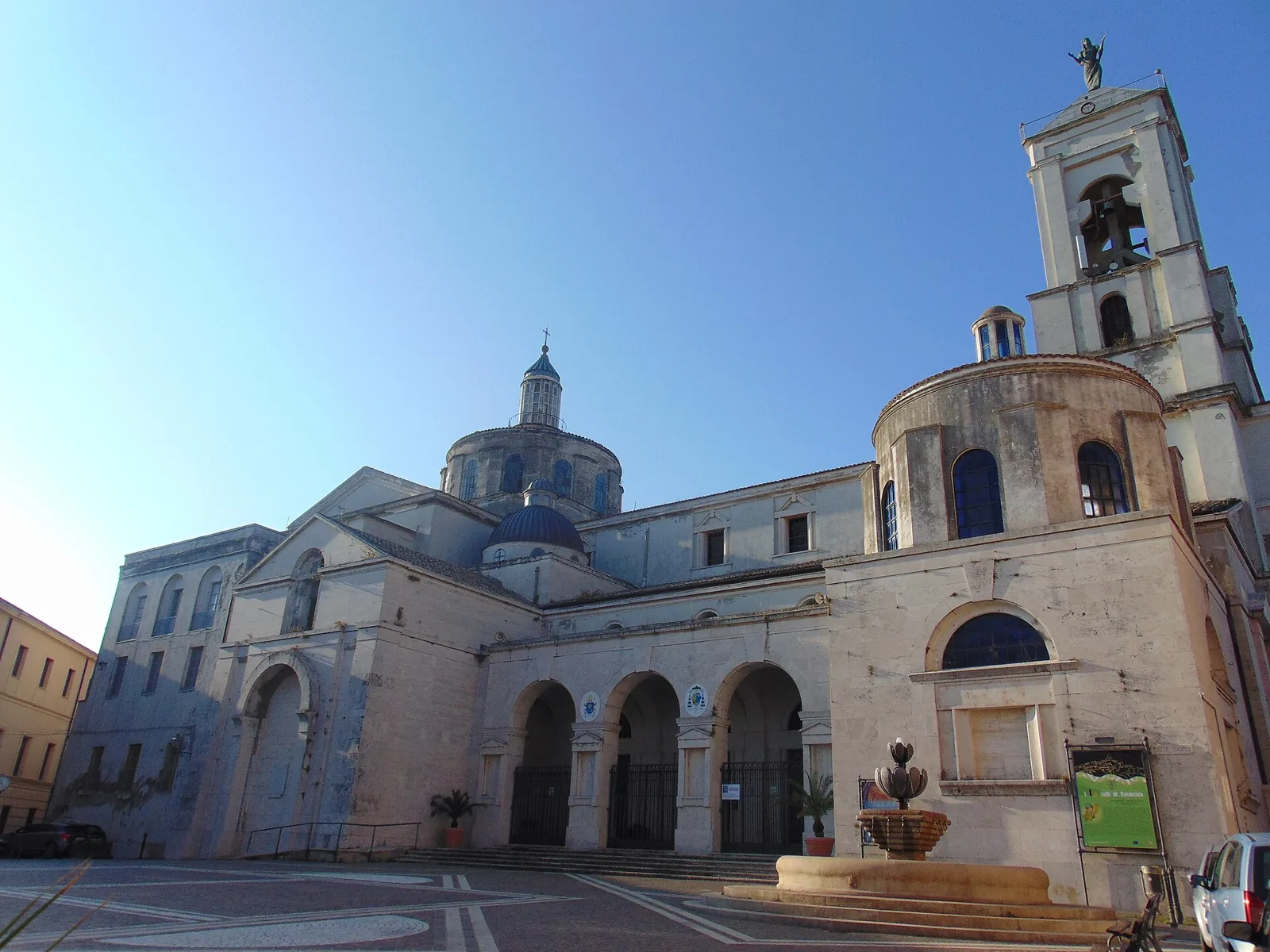
Catanzaro was historically a bishopric. Today the church is the cathedral of the Archdiocese of Catanzaro-Squillace, created in 1986 by merging the Archdiocese of Catanzaro and the Diocese of Squillace; the former cathedral in Squillace holds the status of co-cathedral. This is an important distinction, as it helps to understand the duomo's contemporary role within the region's ecclesiastical structure.
Over the centuries, the cathedral witnessed the most important events in the city's history and remained a constant reference point for residents. Its story is not one of unchanging forms but rather of successive stages of rebuilding and adaptation to new circumstances.
The most reliably documented stages include the medieval origins in the Norman era, serious damage from the earthquake of 1783, and wartime destruction in August 1943 during World War II. After the bombing, the building was reconstructed and reopened in a new form in 1960. This is precisely why the duomo combines its historic significance with the architecture visitors see today.
The cathedral's significance for the local Church remains very great. It is the principal church of the archdiocese, the venue for major liturgical celebrations and one of the symbols of Catanzaro's religious identity.
| Year / Period | Key Historical and Architectural Event |
|---|---|
| 1121 | Consecration of the cathedral by Pope Callixtus II; its foundation is linked to Goffredo di Loritello and the Norman era. |
| 1783 | Serious damage from the earthquake that struck much of Calabria. |
| 1943 | Wartime destruction during World War II, after bombing in August. |
| 1960 | Reconstruction of the cathedral after wartime destruction and the shaping of its present form. |
Watch on YouTube
Architectural Features of Duomo Santa Maria Assunta in Catanzaro
Architectural Characteristics of the Cathedral
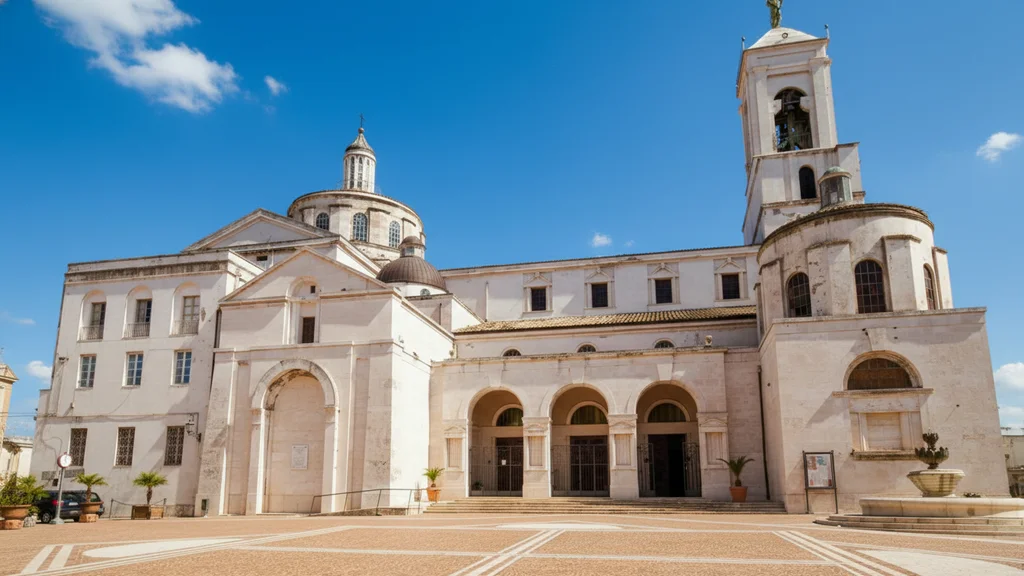
The current form of the cathedral is the result of post-war reconstruction, which means it differs from the earlier church known from previous eras. It is a three-nave church whose form is governed by simplicity and function rather than elaborate decoration – something immediately apparent from the facade.
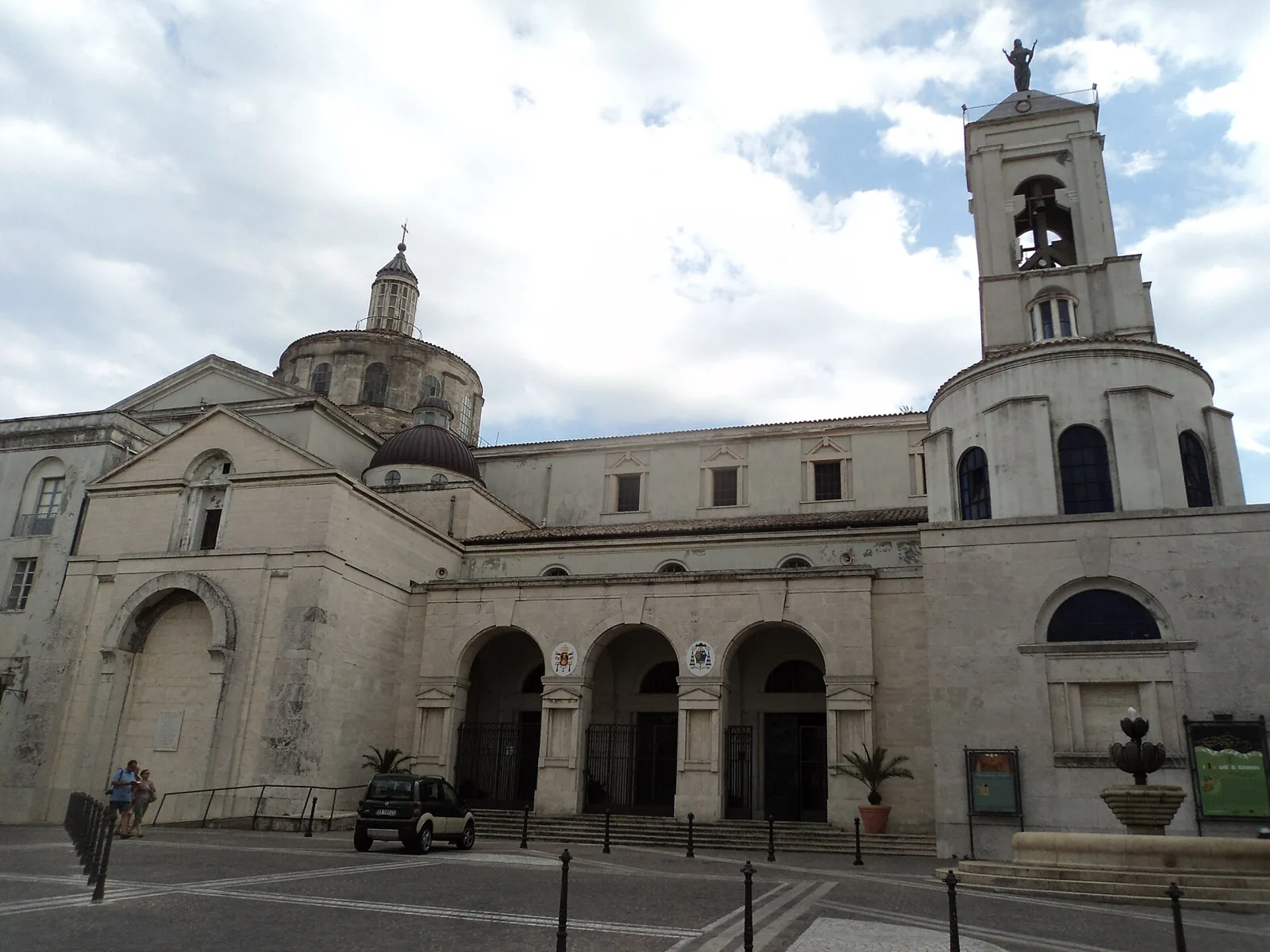
After 1955, the reconstruction was led by architects Vincenzo Fasolo and Franco Domestico. The project preserved the Norman layout but introduced elements clearly connected with the 20th-century rebuilding: a portico with three arches facing the square, the relocation of the bell tower to the centre of the facade, a glazed dome with a drum, and a coffered ceiling in the nave.
Inside, the three-nave layout and the monumental, orderly character of the space draw the eye. Today's appearance combines contemporary elements linked to the reconstruction after wartime destruction with what has survived from the church's earlier history and furnishings.
History and Cultural Context
In the case of Catanzaro, the cathedral's history is closely tied to the history of the entire city. The church suffered from both earthquakes and bombing during World War II, and its present form is the result of post-war reconstruction. This is one of those churches where the architecture speaks above all about the continuity of a place despite successive destructions.
Cultural and Spiritual Value
Catanzaro Cathedral, as the principal church of the archdiocese, holds great significance for the local community. Even after radical architectural changes, this building remains one of the key reference points in the historic centre. For visitors it is also an important stop on a walk through Catanzaro, as it shows how deeply religion and history are woven into the urban landscape here.
For tourists, it is also easy to include in a stroll through the historic centre. The cathedral stands on Piazza Duomo, just off the main axis of Catanzaro's historic centre; allow roughly 20–30 minutes to view it from outside or 30–45 minutes if the interior is accessible. It is most convenient to walk here from the main points of the old town. Before visiting, check the latest notices from the Archdiocese of Catanzaro-Squillace or the parish, as access to the interior depends on ongoing works.
Madonna di Mezzogiorno – The Cult of Our Lady at the Centre of Catanzaro's Spiritual Life
In Catanzaro, an important place in local tradition is held by the Marian image known as the Madonna di Mezzogiorno. The cult of Santa Maria di Mezzogiorno is connected above all with the Sanctuary of Santa Maria di Mezzogiorno in the Pianicello district, an auxiliary church of the cathedral parish. Its significance is best appreciated in person, in the context of local piety and the feast days observed by residents.
Origin and Legend
The Madonna di Mezzogiorno holds a prominent place in Catanzaro's religious imagination. The name itself belongs to local tradition, which over generations built a special status and devotion around this image.
Religious and Cultural Significance
The Sanctuary of Santa Maria di Mezzogiorno in the Pianicello district remains the place connected with this cult; the cathedral, meanwhile, is the principal church of the archdiocese. This distinction matters, as it allows Catanzaro's religious map to be understood without reducing all local devotion to a single building. Marian tradition and the role of the duomo exist side by side here, strengthening the city's religious identity.
Catanzaro Cathedral in Its Regional Context – the Archdiocese and the Co-Cathedral of Squillace
Since 1986 Catanzaro has been the seat of the merged Archdiocese of Catanzaro-Squillace, which is why the former cathedral of Squillace, about 25 km to the south (half an hour by car), now has the status of a co-cathedral. Both churches are dedicated to the Assumption of the Virgin Mary and both have Norman origins.
The Co-Cathedral of Squillace
The church in Squillace was founded in the 11th century by Count Roger I, at a time when the Normans were consolidating the Latin rite in Calabria. The 1783 earthquake destroyed it; after rebuilding it was reconsecrated on 6 May 1798, and in 2015 it was granted the title of minor basilica.
Two Rebuildings After Disaster
Seen side by side, the two churches show how natural and man-made disasters shaped Calabria's religious architecture. The present form of the Squillace co-cathedral largely dates from the late 18th-century rebuilding after the 1783 earthquake, while that of Catanzaro Cathedral comes from the reconstruction after the 1943 bombing, completed in 1960.
Frequently Asked Questions
What is worth seeing in Catanzaro Cathedral?
The most important aspect is the cathedral building itself and its interior, which show the effects of post-war reconstruction after wartime destruction. Its furnishings include, among other works, a 16th-century silver bust of St Vitaliano, a Madonna delle Grazie statue from 1595 by Tommaso Montani, and a Dormitio Virginis statue from around 1600. Other important elements include a wooden Addolorata, Domenico Augimeri's 1834 canvas Sacra Famiglia, 14 Stations of the Cross by Alessandro Monteleone, and bronze doors made for the Jubilee of 2000.
What is the history of Santa Maria Assunta Cathedral in Catanzaro?
The cathedral's history goes back to the Norman era; according to ecclesiastical sources, it was consecrated in 1121 by Pope Callixtus II. The church suffered serious damage after the earthquake of 1783 and wartime destruction in August 1943, and its current appearance is largely the result of post-war reconstruction completed in 1960.
What are the opening hours of Catanzaro Cathedral?
Access to the interior depends on ongoing works and current decisions by the parish or archdiocese. The official Visit Catanzaro portal currently lists the status as “Temporaneamente chiuso”, so before visiting it is best to check the latest notices from the Archdiocese of Catanzaro-Squillace or the parish.
Who was St Vitaliano to Catanzaro Cathedral?
St Vitaliano is venerated as the patron saint of Catanzaro. Among the cathedral's furnishings is a 16th-century silver bust of St Vitaliano, one of the most important objects connected with local religious tradition.
Why was the cathedral closed from 2018?
The cathedral was closed for worship from 21 January 2018 after earlier warnings about the condition of the building. In March 2017, part of the ceiling of a side chapel collapsed, and the problems also included detached marble elements and water infiltration. In 2025, the Soprintendenza (the heritage protection office) reported works intended to enable reopening, including the dismantling or demolition of heavily degraded reinforced concrete elements. On 11 June 2025 the large Assumption canvas from the high altar (about 5 × 2.5 m, Neapolitan school, 1750) was moved to the nearby MARCA museum, where a conservation workshop open to museum visitors has been set up; as of September 2026 the restoration itself was still awaiting the outcome of a public tender.
The cathedral is easy to combine with a longer walk through the old town. Corso Mazzini is the main axis of the old town, the MARCA museum is just a few minutes' walk away, and Teatro Politeama lies in the lower part of the centre. If you have more time, the Bisantis Bridge is worth a look as one of the city's most recognisable landmarks; the seaside district of Catanzaro Lido is about 10 km from the historic centre.
Sources
The information in this article was verified against the following sources:
- Le CHIESE delle Diocesi ITALIANE Chiesa di Santa Maria Assunta nella Cattedrale – chieseitaliane.chiesacattolica.it
- Cattedrale di Santa Maria Assunta (Duomo) – Visit Catanzaro – visit.catanzaro.it
- Le CHIESE delle Diocesi ITALIANE Chiesa Santa Maria di Mezzogiorno – chieseitaliane.chiesacattolica.it
- Catanzaro. Allarme crolli: chiude la cattedrale – avveniredicalabria.it
- Al via il restauro della tela dell’Assunta della Cattedrale di Catanzaro – sabap-cz-kr.cultura.gov.it
- L’Assunta del Duomo sotto esame: il restauro può riscrivere la storia della grande tela – catanzaroinforma.it
- Concattedrale di Santa Maria Assunta (Squillace) – Wikipedia – it.wikipedia.org
Last updated: