Calabria was the heartland of Magna Graecia – a network of Greek colonies that from the 8th century BC turned southern Italy into one of the ancient world's most important civilisational centres. Kroton, Sybaris, Lokroi Epizephyrii and Rhegion are not mere textbook names – these are the places where Pythagoras taught his philosophy, where one of the earliest written law codes in the Greek world was traditionally located, and where some of antiquity's finest bronze sculptures are kept today. Today their legacy is tangible: in archaeological parks, museums, and the very fabric of Calabrian towns.
Table of Contents
Greek colonisation of Calabria – how Magna Graecia was born
The term Magna Graecia (Latin for “Great Greece”) was no exaggeration. At their peak – between the 6th and 5th centuries BC – the Greek colonies of southern Italy and Sicily surpassed their mother cities in mainland Greece in many respects. Wealth, architectural ambition and sheer population made this the beating heart of the western Greek world of the Archaic and Classical periods.
Colonisation began in the 8th century BC. The reasons were pragmatic: overpopulation, famine and political strife in the mother poleis drove thousands of Greeks to seek new homes. Calabria – with its fertile valleys, sheltered bays and strategic position on maritime trade routes – proved to be their promised land. The first wave came from Euboea: around 730 BC, settlers founded Rhegion (today's Reggio Calabria), commanding the strategic Strait of Messina. Shortly afterwards, Achaeans from the Peloponnese established Sybaris (c. 720 BC) and Kroton (c. 710 BC), while Locrians founded Lokroi Epizephyrii (c. 680 BC, today's Locri).
Between 800 and 400 BC, the population of Greek settlement areas grew an estimated tenfold. Ancient authors attributed as many as 300,000 inhabitants to Sybaris, though modern scholars tend to regard this figure as exaggerated. These were not distant trading outposts but fully fledged cities with ambitious architecture, complex politics and vibrant intellectual life.
Greek apoikiai were formally new, independent poleis, not administrative colonies subordinate to the mother city. Each had its own institutions, citizens, coinage and rural territory – the chora. The founding of a colony was preceded by consultation of an oracle, and the expedition was led by an oikistes, a founder honoured after death almost as a hero. This is precisely why Kroton, Sybaris and Lokroi grew so quickly into independent powers of the 8th–6th centuries BC.
The great Greek colonies of Calabria
Each of Calabria's most important colonies had a distinct character, rivalled its neighbours and contributed something unique to Mediterranean civilisation.
Kroton – city of Pythagoras and Olympic champions
Kroton (modern Crotone) was the colony that for centuries set the standard in philosophy and sport. Founded c. 710 BC by Achaean settlers led by Myscellus, the city quickly became one of the most powerful poleis in Magna Graecia.
Around 530 BC, Pythagoras of Samos arrived in Kroton – and changed the city forever. His Pythagorean school was something between a scientific academy, a monastery and a political party. Members lived communally, shared their possessions, observed strict rules and believed that everything could be explained through numbers. The Pythagorean school contributed to the development of mathematics and the tradition attributed to Pythagoras, explored mathematical relationships in music and developed the concept of the harmony of the spheres – ideas that, through Plato, influenced all of Western philosophy.
Kroton was equally famed for its athletes. In ancient tradition, particular emphasis was placed on the series of victories by Krotoniate athletes, especially in the stadion race. The most celebrated, Milo of Croton, a six-time Olympic wrestling champion, became a legend of ancient sport.
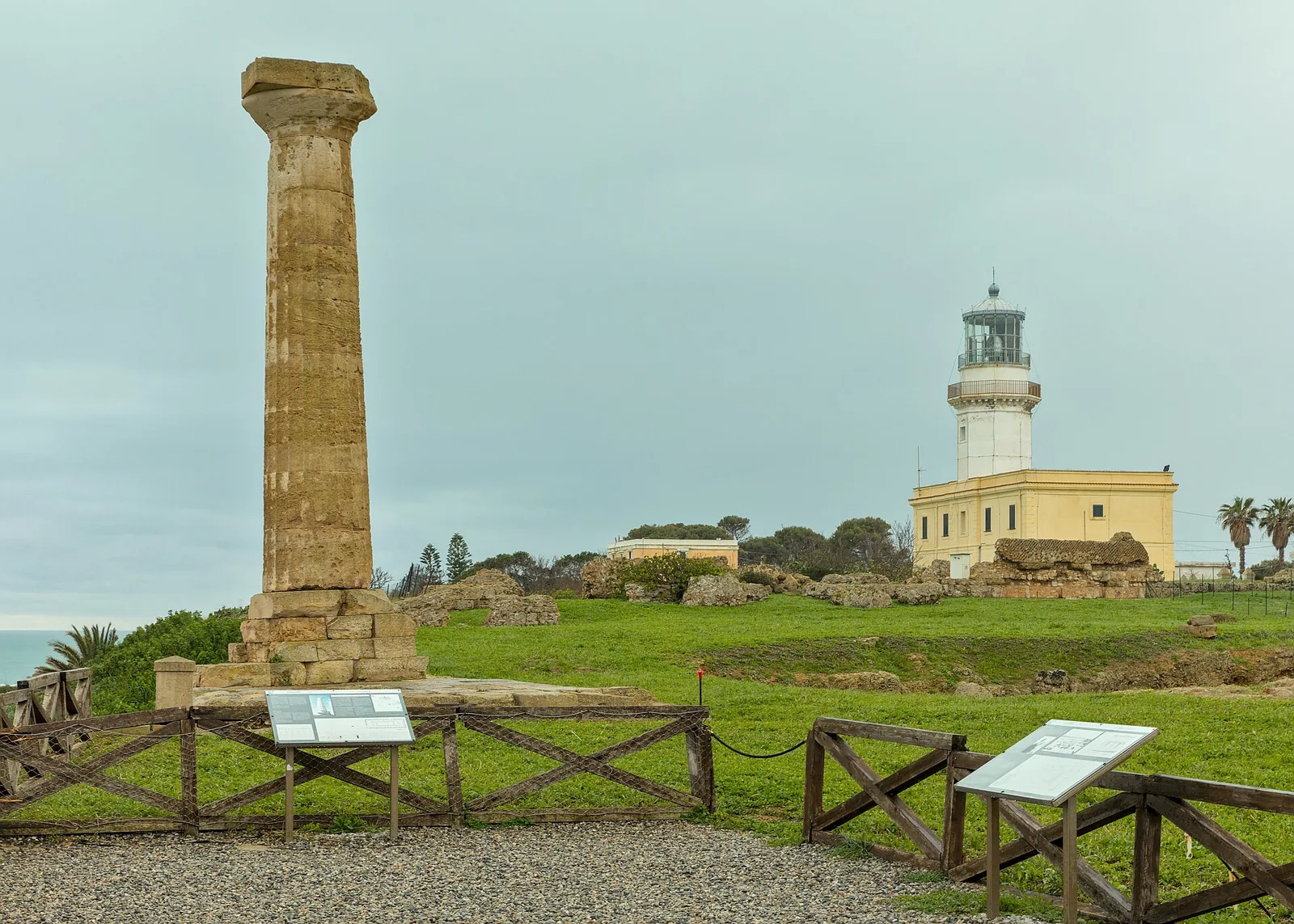
In 510 BC Kroton destroyed its rival Sybaris, becoming the regional hegemon. Near the city rose the monumental Temple of Hera Lacinia on the promontory of Capo Colonna – a sanctuary so renowned that it likely served as the seat of the Italiote League, the political and military confederation of Greek colonies.
Sybaris – a byword for luxury
Sybaris, founded c. 720 BC, was the wealthiest and most populous Greek colony in Italy. Situated on a fertile plain by the Gulf of Taranto, it controlled a vast territory with access to both the Ionian and Tyrrhenian seas.
The Sybarites' wealth was proverbial – the word “sybarite” still means a person devoted to luxury. Ancient authors described their love of elaborate cuisine, soft fabrics and avoidance of all exertion. Sybaris is said to have been the first city to ban noisy trades within its walls, lest they disturb the residents' repose.
The end came swiftly. In 510 BC Kroton defeated Sybaris and razed the city. According to tradition, the Krotoniates even diverted the Crati river over the ruins to flood them; later river deposits and environmental changes made the ancient city even harder to find. It vanished so completely that its location was not confirmed until the 1960s, through archaeological excavation. On its remains, Athens founded the colony of Thurii in 444 BC.
Lokroi Epizephyrii – cradle of law
Lokroi Epizephyrii (today's Locri), founded c. 680 BC by settlers from Locris, distinguished itself with something revolutionary: the Code of Zaleucus, traditionally regarded as one of the earliest written law codes in the Greek world. Its author was Zaleucus, active around 660 BC – several generations before Athens' Draco. The code was harsh, but it established a principle that sounds surprisingly modern: law should be fixed, written down and known to all.
Lokroi was also famed for its cult of Persephone, who here played an unusual role as protector of marriage and childbirth. The pinakes from Locri are terracotta votive tablets offered mainly at the Sanctuary of Persephone in the Mannella district, most commonly dated to the 5th century BC. They depict scenes of the marriage of Persephone and Hades, female rites of passage and fertility, making them one of the key iconographic ensembles of Magna Graecia. The most important collections of these tablets are associated both with Locri and with the Museo Archeologico Nazionale di Reggio Calabria.
Rhegion – guardian of the Strait
Rhegion (today's Reggio Calabria), founded c. 730 BC by Chalcidians, controlled the Strait of Messina – the most important sea lane in the western Mediterranean. Under the tyrant Anaxilas (494–476 BC), the city reached the height of its power, rivalling Syracuse for dominance over the strait.
Rhegion was a centre of culture and learning – home to the poet Ibycus, the historian Hippys and the sculptor Pythagoras of Rhegion (not to be confused with the philosopher). Even after the Roman conquest, the city preserved its Greek language and customs, functioning for a time as a civitas foederata, an allied city of Rome.
Calabria's Greek colonies at a glance
| Colony | Founded | Settlers | Key achievement |
|---|---|---|---|
| Rhegion | c. 730 BC | Chalcidians, Messenians | Control of the Strait of Messina |
| Sybaris | c. 720 BC | Achaeans, Troezenians | Wealthiest city in the West |
| Kroton | c. 710 BC | Achaeans (traditionally led by Myscellus of Rhypes) | Pythagoras, tradition of Olympic victories |
| Lokroi | c. 680 BC | Locrians | One of the earliest written law codes in the Greek world |
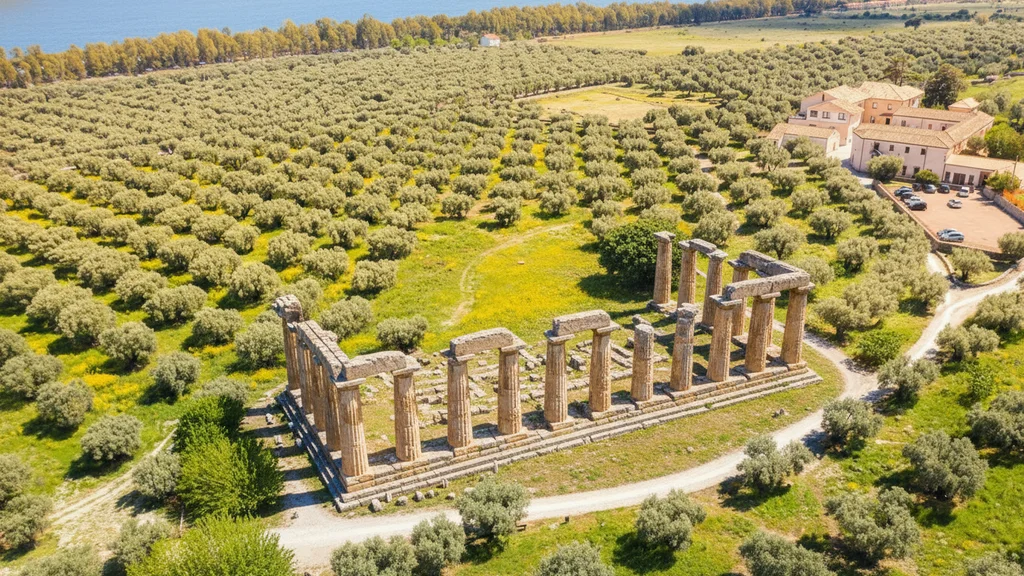
Besides Rhegion, Kroton, Sybaris and Lokroi, remember other important Magna Graecia centres on the territory of present-day Calabria. These include Kaulonia (modern Monasterace), traditionally dated to the 7th century BC and linked to Kroton, as well as Medma (modern Rosarno) and Hipponion (modern Vibo Valentia), both associated with Lokroi. Kaulonia is especially attractive today for its archaeological park in Monasterace Marina, where the remains of a Doric temple and the famous mosaic from the so-called House of the Dragon have been preserved.
Archaeological sites – what to see
Calabria has preserved a dense network of sites connected with its Greek past. The most important places lie mainly along the Ionian coast, so they can be combined into one driving route.
- Museo Nazionale della Magna Grecia, Reggio Calabria – one of Italy's most important archaeological museums. This is where the legendary Riace Bronzes are displayed – two Greek bronze statues dating to c. 460–450 BC, known as Warrior A and Warrior B. They were discovered on 16 August 1972 by an amateur diver, Stefano Mariottini, some 220 metres off the shore at Riace Marina. The statues stand about 2 metres tall, were cast using the lost-wax technique, and still retain inlaid eyes and details in copper and silver. Their authorship and original purpose remain uncertain, which only enhances their standing as among the most important masterpieces of Greek bronze sculpture. The museum also houses the celebrated pinakes from Lokroi. The MArRC is located at Piazza Giuseppe De Nava 26 in Reggio Calabria, and a visit usually takes 1.5–2.5 hours. Officially, the museum is open Tuesday to Sunday from 9:00 to 20:00, with last admission at 19:30. According to the Ministry of Culture website, a standard ticket costs €10 and a reduced ticket €2. More: Reggio Calabria.
- Archaeological Park of Locri Epizephyrii – extensive ruins of one of Magna Graecia's most important colonies: remains of temples (including the Ionic temple at Marasà), a Greek theatre, necropolises and defensive walls. The Parco archeologico di Locri Epizefiri lies along the SS106 between Locri and Portigliola, and a visit to the site and museum usually takes 2–3 hours. More: Locri.
- Parco archeologico di Sibari – the key site for understanding the history of Sybaris, Thurii and Roman Copia. The site's story begins around 720 BC with the foundation of the colony of Sybaris, and its first great phase ends with the destruction of the city in 510 BC. Later the area functioned as Thurii from 444/443 BC, and then as Roman Copia from 193 BC. It is a good complement to the museums in Reggio Calabria and Crotone because it shows the continuity of settlement in the same area.
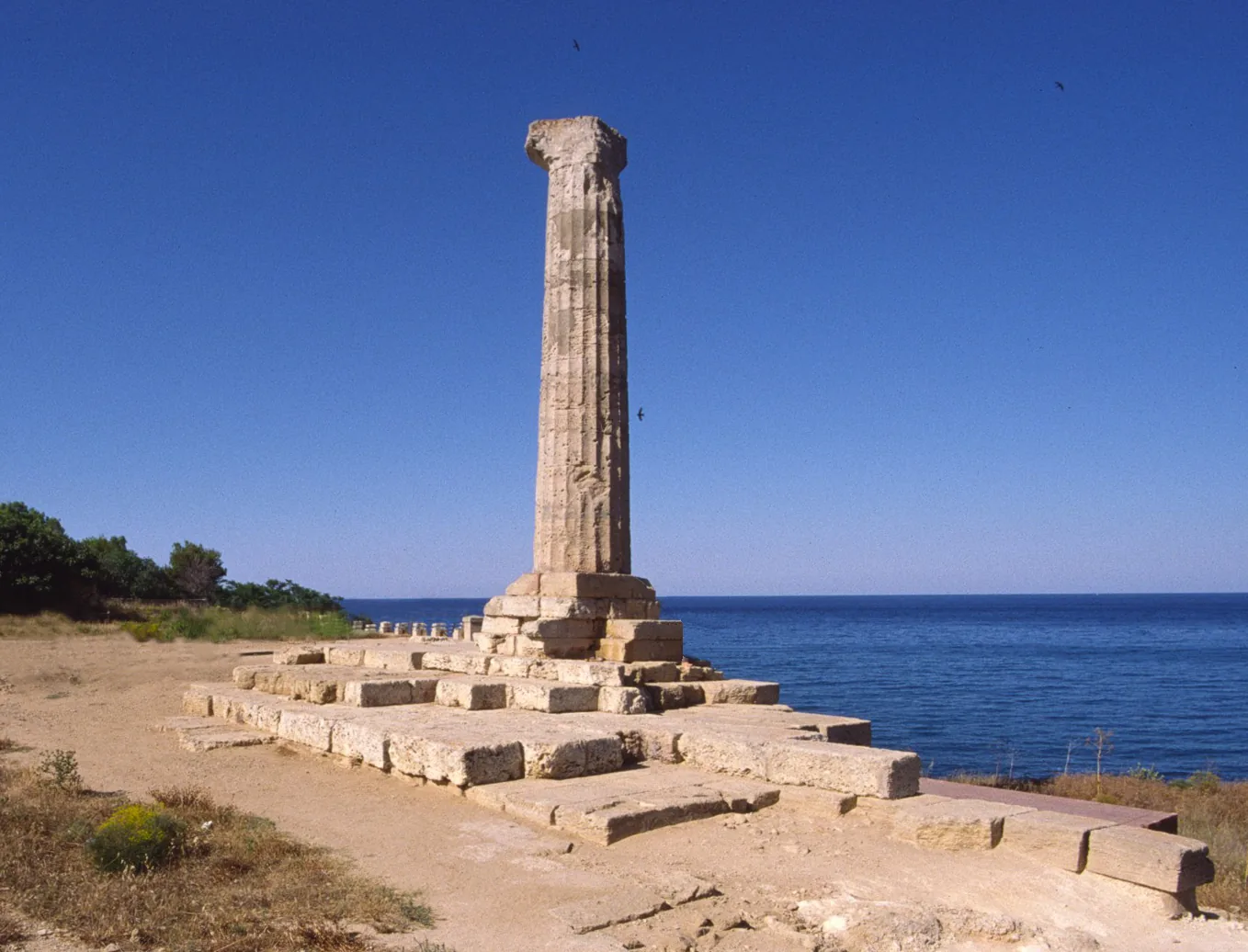
- Capo Colonna, Crotone – a promontory with the ruins of the Temple of Hera Lacinia. Of the monumental structure built c. 470–460 BC, a single lonely Doric column survives, standing 8 metres tall – the emblem of the entire region. In the 16th century the temple was still complete, but its stones were stripped to build the bishop's palace and castle in Crotone. The Museo e Parco archeologico nazionale di Capo Colonna lies 10 km from Crotone and covers about 50 ha. Officially, it is open Tuesday to Sunday from 9:00 to 20:00, while the park closes one hour before sunset. The park and museum usually require 1–2 hours.
- Cattolica di Stilo – although this tiny church is a Byzantine rather than an ancient monument, visit it in the context of cultural continuity: Stilo lies in the Stilaro valley, near an area historically connected with Kaulonia; the actual ruins of ancient Kaulonia, however, are in Monasterace Marina, at Punta Stilo. The Museo e Parco archeologico dell’antica Kaulonìa is located by the SS106 in Monasterace. The official MiC event page lists a standard ticket at €4 and a reduced ticket at €2. The museum and park display, among other things, the mosaic “drago” from the Casa del Drago. More: Stilo.
- Museo Archeologico Nazionale di Crotone – collections from excavations at Capo Colonna and Kroton itself: pottery, coins and architectural elements from the Temple of Hera.
If you are planning a driving route along Calabria's Ionian coast, these sites fit together into a logical trail. Reggio Calabria to Locri is about 110 km via the SS106 (Jonica), roughly an hour and a half of driving. From Locri to Monasterace and Kaulonia is about 45 km, and from Monasterace to Crotone about 115 km; Capo Colonna itself lies another dozen or so kilometres beyond the city. In practice, this makes a comfortable 2–3 day itinerary: Reggio Calabria → Locri → Monasterace/Kaulonia → Crotone/Capo Colonna. Bear in mind that the SS106 often runs straight through the middle of seaside towns and calls for an unhurried pace.
Watch on YouTube
The legacy of Magna Graecia in modern Calabria
More than two millennia after the last Greek colonies fell, their legacy continues to shape Calabrian identity – in language, place names, museums and local memory.
The Calabrian Greek language. Modern Calabrian Greek functions mainly in the Area Grecanica in the province of Reggio Calabria – around Bova, Bova Marina, Gallicianò, Roghudi and surrounding towns of the southern Aspromonte. It is a local variety of southern Italian Greek with a mixed, multi-layered origin, rather than a simple “direct descendant” of koine. Italian Law No. 482 of 15 December 1999 brought historic linguistic minorities, including the Greek one, under protection, but the number of active speakers remains small and is usually estimated at no more than a few thousand, mainly among older generations.
Living Greco-Calabrian culture. This heritage does not end with antiquity. Gallicianò is sometimes called Calabria's “Greek village,” and in Bova the Museo della Lingua Greco-Calabra “Gerhard Rohlfs” operates. Associations promoting the Greko language and Grecanica music also function in the region, ensuring the tradition still has its contemporary institutions and practices.
Urban planning and architecture. The Greek heritage is best seen today not in the layout of many modern towns, but at selected archaeological sites of the ancient cities. In Locri and Kaulonia, it is easier to grasp the scale of ancient building and how strongly Greek settlement shaped this stretch of coastline.
Culinary traditions. Calabria's love of olive oil, wine and simple, intense flavours has roots reaching back to the days of Magna Graecia. Greek colonists popularised and developed the cultivation of olives and vines that still define the Calabrian landscape and cuisine.
Law and philosophy. The Code of Zaleucus from Lokroi remains an important reference point in the story of the birth of the European legal tradition. The Pythagorean school in Kroton influenced – through Plato – Western mathematics, music and philosophy for the next two thousand years.
- The Riace Bronzes – the region's artistic symbol, seen on T-shirts, fridge magnets and shop signs from Reggio to Tropea
- The Capo Colonna column – featured on the coat of arms of the Province of Crotone, an icon of all Calabria
- Pythagoras – patron of schools, piazzas and festivals in Crotone, which proudly styles itself “the City of Pythagoras”
Twilight and legacy – from Greeks to Romans
The end of Magna Graecia did not come overnight. From the 4th century BC the colonies declined – weakened by internecine wars, pressure from Italic peoples, and the rising power of Rome.
From the 4th century BC, the Greek cities of Italy faced growing pressure from Italic peoples. The Bruttii emerged as a distinct group around the mid-4th century BC, occupied much of Calabria's interior and limited the colonies' control over their agricultural hinterland. This weakening preceded the wars with Rome and explains why cities like Kroton and Lokroi sought external alliances.
The turning point was the war with Pyrrhus (280–275 BC), when the colonies sought help from King Pyrrhus of Epirus against Rome – to no avail. After the Second Punic War, Rome regained control of cities that had earlier sided with Hannibal, including Lokroi; this was, however, a stage in a longer process of subjugating the Greek south of Italy, rather than a one-off “annexation” of all the colonies in 205 BC.
Paradoxically, the Roman conquest did not spell the end of Greek culture. The Romans were fascinated by the Hellenic heritage – Cicero mentioned that Plato was said to have visited the Pythagoreans of Lokroi, and Rhegion preserved its Greek language well into the imperial era. Horace's dictum “Graecia capta ferum victorem cepit” (“Conquered Greece conquered her savage conqueror”) perfectly captures this dynamic. Magna Graecia fell politically, but its ideas – from the Pythagorean tradition to the concept of written law – endured and continue to shape our world.
Magna Graecia in Calabria – frequently asked questions
What was Magna Graecia?
Magna Graecia (“Great Greece”) is the Latin name for the Greek settlement area in southern Italy, which developed from the 8th to the 3rd century BC. In Calabria, particularly important were Rhegion (Reggio Calabria), Sybaris, Kroton (Crotone) and Lokroi Epizephyrii (Locri), though these were not the only Greek colonies in the region. In many respects – from economic significance to cultural achievements – these centres could rival the cities of mainland Greece.
Where can you see the Riace Bronzes?
The Riace Bronzes – two full-size Greek bronze statues dating to c. 460–450 BC – are on display at the Museo Nazionale della Magna Grecia in Reggio Calabria. They were discovered off the coast of Riace Marina in 1972 and are among the most important surviving masterpieces of Greek bronze sculpture.
Which Magna Graecia archaeological sites should I visit in Calabria?
The top sites are: the Archaeological Park of Locri Epizephyrii, Parco archeologico di Sibari, Capo Colonna near Crotone, and the Museo Nazionale della Magna Grecia in Reggio Calabria with the Riace Bronzes and pinakes from Lokroi. If you are travelling by car, the route Reggio Calabria – Locri – Monasterace/Kaulonia – Crotone/Capo Colonna works well. It is a comfortable 2–3 day plan along the Ionian coast.
What is the connection between Pythagoras and Calabria?
Pythagoras of Samos arrived in Kroton (modern Crotone) around 530 BC and founded his famous Pythagorean school there. The school contributed to the development of mathematics, the study of music and the idea of the harmony of the spheres. Crotone still proudly calls itself “the City of Pythagoras.”
Is Greek still spoken in Calabria?
Yes – in the Area Grecanica in the province of Reggio Calabria, a local variety of southern Italian Greek, called Calabrian Greek, has survived. It is most strongly associated with towns such as Bova, Bova Marina, Gallicianò and Roghudi. Today it is spoken by a small number of people, mainly from older generations, but the language remains an important part of the region's identity.
Sources
The information in this article was verified against the following sources:
- Parchi archeologici di crotone e sibari la sibaritide – cultura.gov.it
- Ferragosto al museo 2024 apertura festiva del museo e parco archeologico dellantica kaulon – cultura.gov.it
- Marrc museo archeologico nazionale di reggio calabria – cultura.gov.it
- Parchi archeologici di crotone e sibari museo e parco archeologico nazionale di capo colonna – cultura.gov.it
- musei.fvg.beniculturali.it – musei.fvg.beniculturali.it
- Bronzi di riace – museoarcheologicoreggiocalabria.cultura.gov.it
- museoarcheologicoreggiocalabria.cultura.gov.it – museoarcheologicoreggiocalabria.cultura.gov.it
- penelope.uchicago.edu – penelope.uchicago.edu
- Area archeologica di Kaulonia - Italia.it – italia.it
- Wikipedia – Magna Graecia – en.wikipedia.org
Last updated: