Aspromonte National Park (Parco Nazionale dell'Aspromonte) is one of the most interesting natural areas of southern Calabria, offering rugged landscapes, mountain panoramas and access to a lesser-known side of the region. The national park was established in 1994 and covers 641.53 km² within the Metropolitan City of Reggio Calabria, at the extreme southern end of the Calabrian Apennines. Aspromonte's mountain waterfalls, scenic peaks and old settlements attract lovers of history, nature and mountain hiking; in a broader Calabria itinerary they are often paired with other places in the region, such as the Marmarico waterfalls in the Serre area. Thanks to the variety of trails and landscapes, Aspromonte remains a good destination for those who want to see Calabria beyond the coast.
The protected status of this area developed gradually, but the current national park dates from the presidential decree of 14 January 1994. Additionally, on 21 April 2021 Aspromonte was included in the UNESCO Global Geopark network, underscoring the international significance of its geology and landscape.
| Feature | Statistical and geographical description |
|---|---|
| Year established | 1994 |
| Area | 641.53 km² |
| Highest point | Montalto (1,956 m a.s.l.) |
| UNESCO status | UNESCO Global Geopark (since 21 April 2021) |
| Number of municipalities | 37 municipalities within the Metropolitan City of Reggio Calabria |
Table of Contents
- Flora and fauna of Aspromonte National Park – the natural treasures of southern Calabria
- Traces of ancient Greece in the heart of Aspromonte
- Hiking in Aspromonte National Park – trails and experiences
- Tourism and its impact on the Aspromonte ecosystem
- Aspromonte – cultural heritage and social role
- Tourist infrastructure in Aspromonte – nature above convenience
Flora and fauna of Aspromonte National Park – the natural treasures of southern Calabria
The name Aspromonte is sometimes translated as "rough mountain" or derived from the Greek "aspros", meaning "white/light". The rugged character of the massif is visible in its steep slopes, deep valleys and rapid changes of landscape between the lower areas and the highest ridges. The massif shows greater structural similarity to the Alps than to the rest of the Apennines, making it a unique fragment of the landscape in the Mediterranean basin.
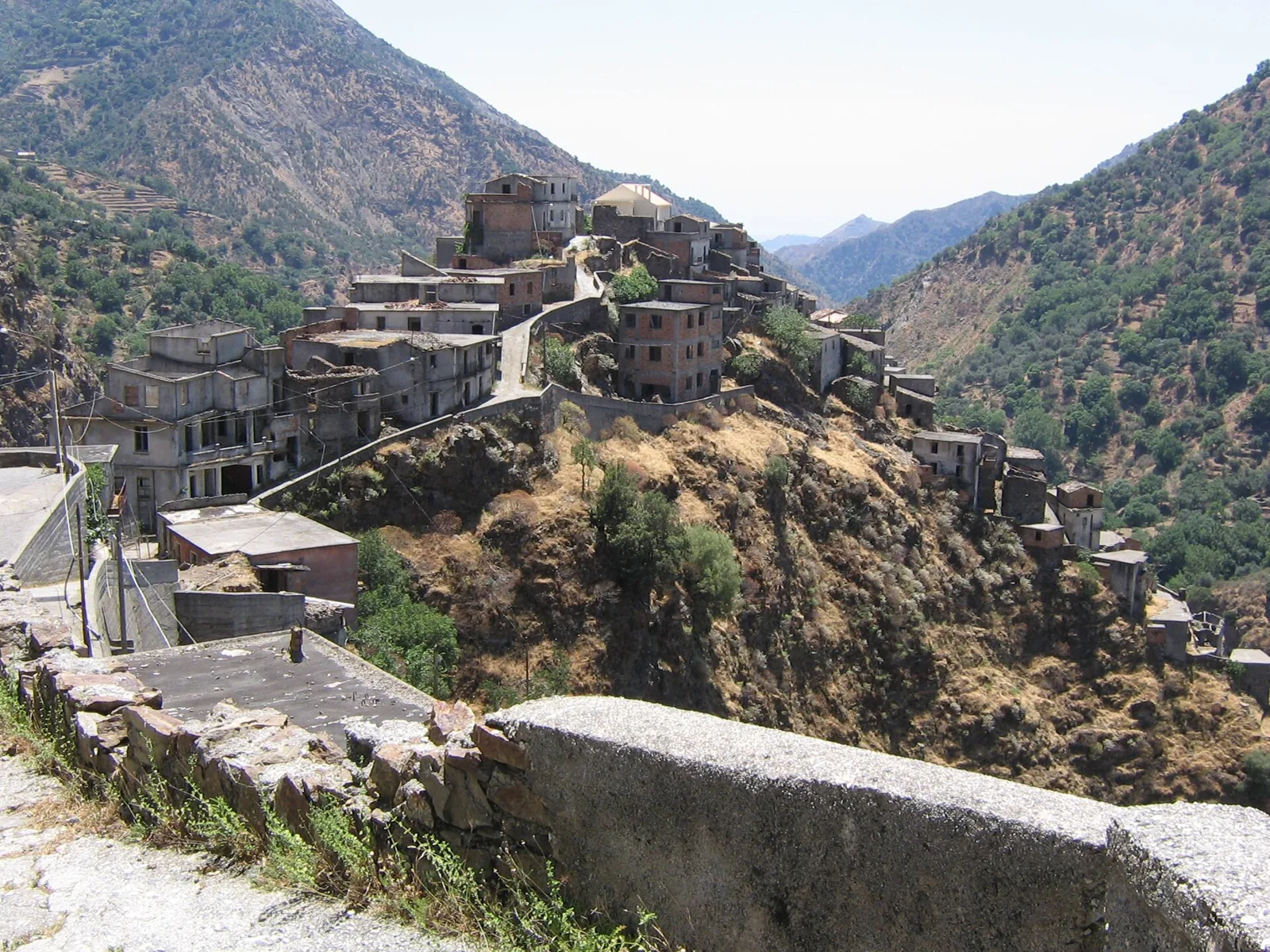
Aspromonte National Park is characterised by diverse natural habitats resulting from the presence of numerous streams and water formations known as fiumare. The vegetation is rich due to the large altitudinal gradient, from sea level to nearly 2,000 m a.s.l. Official park data lists around 1,500 flora species, representing more than 50% of Calabria's regional flora. Of particular significance are the beech forests, which represent some of the southernmost stands of this type in this part of Europe.
Aspromonte Calabria offers a landscape in which one passes rapidly from Mediterranean scrub to the cooler forests of the higher elevations. In the lower zones, typical southern flora dominates, while higher up chestnut groves, oak forests and beech woods demonstrate the natural diversity of the massif. In humid valleys grows the relict fern Woodwardia radicans, one of the species that best illustrates the importance of the park's shaded, permanently moist habitats.
The park's fauna is equally important, and one of its most iconic inhabitants is the Apennine wolf (Canis lupus italicus). This predator has successfully recovered within the park's boundaries, playing a key role in regulating wild boar populations. In the sky, golden eagles can be observed, along with other birds of prey associated with the mountain environment. In 2009–2011, as part of a fauna conservation project, 75 individuals of the Italian roe deer subspecies, the capriolo italico, were reintroduced here, restoring a species that had been absent from this area for around a century.
Traces of ancient Greece in the heart of Aspromonte
Aspromonte National Park is a place where the present merges with history, and the territory is home to a unique linguistic minority. Among its forests and mountain valleys, traces of past Greek influences can be found, though today's identity of the area is more complex than a simple reference to antiquity. The area known as Bovesia, or Area Grecanica, encompasses Bova, Bova Marina, Roghudi, Condofuri, Gallicianò and the surroundings of south-eastern Aspromonte.
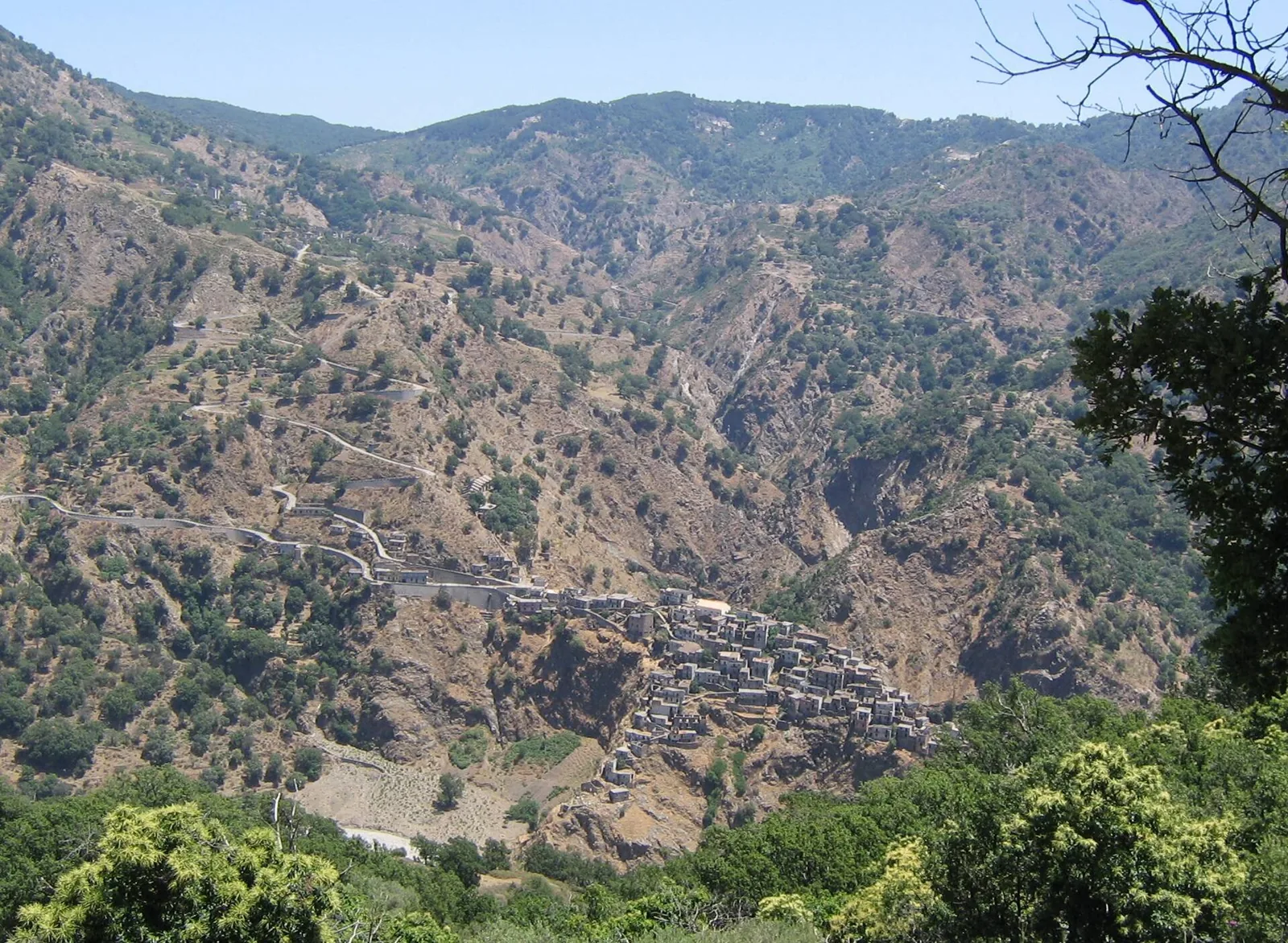
The idiom spoken there is Calabrian Greko, also called grecanico, rather than the "Griko dialect" in the Salentine sense. Its origins are linked both to the Byzantine period and to earlier Greek heritage present in Calabria. Gallicianò is regarded as one of the best-preserved settlements of Grecanic culture and remains an important reference point for this heritage.
The park is one of those places where the traces of Greeks who settled these lands during the era of Magna Graecia are still alive. Traces of Grecanic culture are visible above all in the language, traditions and architecture of places such as Bova, Gallicianò, Roccaforte del Greco and Samo. The town of Bova, considered the capital of this culture, is a member of I Borghi più belli d’Italia (the most beautiful villages in Italy) and offers a glimpse into historical architecture and traditions.
Fascinating abandoned villages (borghi fantasma) such as Pentedattilo, at the foot of a rock resembling the five fingers of a hand, and Roghudi Vecchio, spectacularly set on a rocky spur, draw visitors from across the world. Pentedattilo is slowly coming back to life, with small craft workshops open in summer. The Sanctuary of Madonna di Polsi, located in the municipality of San Luca at approximately 865 m a.s.l., remains one of the most important Marian sanctuaries in Calabria. The main celebrations and feast take place in early September, especially around 2 September, and the pilgrimage tradition is strongly linked to the entire Aspromonte area.
Hiking in Aspromonte National Park – trails and experiences
Aspromonte National Park is a terrain for hikers, with routes ranging from short walks to multi-day expeditions. One of the park's most distinctive attractions is Pietra Cappa – a gigantic monolith nearly 140 metres tall that dominates the Valley of Great Stones.
Among the most interesting routes are variants leading from Gambarie to Montalto (1,956 m a.s.l.) and the Monte dell'Orgiata – Rocce S. Pietro – Pietra Cappa trail. The ascent of Montalto rewards the effort with a panoramic view of the Ionian and Tyrrhenian Seas, the Strait of Messina and the smoking crater of Etna in Sicily. Particularly cherished is the Sentiero dell'Inglese (the Englishman's Trail), which refers to the journey made by Edward Lear through Calabria in 1847.
- Pietra Cappa Loop – a 12-kilometre route passing the monolith and caves carved by Basilian monks.
- Sentiero del Brigante – a long-distance historical trail linking Aspromonte with the Serre mountains, following in the footsteps of outlaws.
- Cascate del Maesano – a route to a three-tiered waterfall forming natural rock pools; the official description of Cascate Menta-Amendolea gives around 4 hours return from Diga del Menta.
- Monte Tre Pizzi – a short but spectacular trail offering a panorama of the Ionian Sea.
The most common base for mountain trails is Gambarie d'Aspromonte, situated at approximately 1,310 m a.s.l. From here it is easiest to plan an ascent of Montalto and shorter walks in the higher parts of the massif. From Gambarie, the official "Sentiero Calabria: Gambarie–Montalto" route takes around 4 hours one way; the fuller "Da Gambarie a Montalto" variant is listed as around 9 hours. Shorter ascents are possible if you drive closer to Montalto.
Planning a visit requires considering the season, and the best period for trekking runs from late spring to autumn. Most trails are waymarked by the Club Alpino Italiano (CAI), though in winter the higher parts may have snow and ice, so check conditions before setting out and use GPS maps or local guides. Park guides describe the Cascate dell'Amendolea/Maesano as an approximately 4 km out-and-back route, with about +300/-330 m of elevation change, usually planned as a half-day hike.
Tourism and its impact on the Aspromonte ecosystem
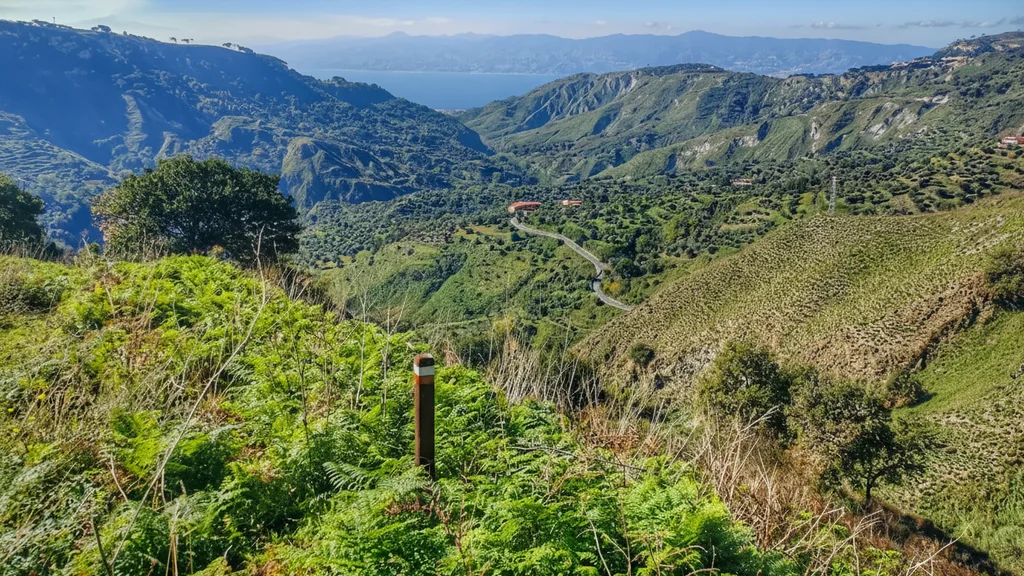
The growth of tourism in Aspromonte National Park is an important element in supporting the local economy, but it also poses ecological challenges for park managers. In 2021, Aspromonte joined the UNESCO Global Geoparks Network, which raised the region's profile but also increased the importance of effective landscape and geodiversity protection.
Aspromonte is not just peaks and waterfalls but also fiumare – wide, seasonal riverbeds typical of Calabria. Valuable habitats include beech forests, chestnut groves, oak forests and Mediterranean scrub, so even a local increase in tourist traffic quickly affects the more delicate parts of the environment.
Trails leading to popular waterfalls and viewpoints attract many visitors, which can cause erosion on steep slopes and littering at the most frequented spots. Summer fires and car pressure at the most popular panoramic points are also real problems. Ecosystem protection is crucial for maintaining the standards associated with UNESCO Global Geopark status and for preserving the natural character of the massif.
Sustainable tourism strategies must combine the promotion of the region with the protection of its resources, so that tourist traffic does not damage the habitats for which the park was created. The park carries out monitoring of wolves and birds of prey, including the peregrine falcon and lanner falcon (Falco biarmicus), as well as monitoring of bird migration.
Watch on YouTube
Aspromonte – cultural heritage and social role
Aspromonte National Park is a place where culture and tradition meet raw nature. The area inhabited by Calabrian Greeks remains a stronghold of ancient customs, and the Calabrian Greko language is regarded as seriously endangered in UNESCO atlases and studies. Local traditions such as the lively tarantella, Grecanic songs and religious rites have survived longest in isolated mountain villages.
The region is rich in folklore, steeped in tales of historical brigands as well as local legends of witches and folk magic. The works of authors such as Corrado Alvaro document this world and help to better understand the social history of Aspromonte. Alvaro was born in San Luca in 1895, died in 1956, and is among the most important Calabrian writers of the 20th century; in 1951 he received the Premio Strega for "Quasi una vita".
His work repeatedly refers to Calabria and the world of Aspromonte, which is why he remains one of the most important literary voices of the region. The park plays a role in the life of Aspromonte's municipal communities; according to park documents, 273,159 people lived in the park municipalities in 2016, and 18,540 people lived within the park itself according to MATTM data from 2012.
Tourist infrastructure in Aspromonte – nature above convenience
Tourism in Aspromonte National Park is largely focused on contact with pristine nature. One of the main bases is the village of Gambarie, known as a mountain resort from which it is easy to plan trips into the higher parts of the massif. The park also has a network of visitor centres, including Centro Visita di Bova, Centro Visita di San Giorgio Morgeto, Centro Visita di San Luca - Casa Fera, Centro Visita Villaggio De Leo, Centro Visita Zomaro, Osservatorio per la Biodiversità and Porta di Accesso di Bagaladi.
For those travelling without a car, the main hub is Reggio Calabria, but the park has no single "main entrance". For trekking, most people head to Gambarie d'Aspromonte and the Montalto area; for Grecanic culture – Bova, Gallicianò, Roghudi and Pentedattilo; and for the sanctuary – Polsi and San Luca. The Centro Visita di Bova is located in Palazzo Tuscano, is dedicated to linguistic minorities and, according to the park website, is open on working days from 8:00 to 13:00.
From Reggio Calabria to Gambarie is approximately 35 km by mountain road, a drive of usually 45–60 minutes. To Bova is approximately 55–60 km, usually 1 hr 15 min–1 hr 30 min, while Pentedattilo is approximately 33 km away, about 45 minutes’ drive. The Ionian Trenitalia railway reaches Bova Marina, but onward public transport to the mountain villages is limited.
| Destination | Transport | Journey time |
|---|---|---|
| Gambarie | Car / local bus | approx. 45–60 min |
| Bova Marina | Trenitalia train | approx. 35 min |
| Pentedattilo | Car / taxi | approx. 45 min |
Frequently Asked Questions
Where is Aspromonte National Park located?
The park is situated in the southern part of the Calabria region, within the Metropolitan City of Reggio Calabria, at the extreme southern end of the Calabrian Apennines. It is the southernmost national park on the Italian Peninsula.
What can you see in Aspromonte National Park?
The main attractions include the Pietra Cappa monolith, the Maesano waterfalls, the abandoned village of Pentedattilo, the highest peak of Montalto, and Grecanic villages such as Bova.
How to get to Aspromonte?
The best way is to travel to Reggio Calabria by train or plane, and then rent a car or use local transport. The park has no single entrance – for trekking most people head to Gambarie, for Grecanic culture to Bova and Gallicianò, and for the sanctuary to the Polsi and San Luca area.
What hiking trails are there in Aspromonte?
The park offers the Sentiero dell'Inglese (Englishman's Trail), the Sentiero del Brigante (Brigand's Trail) and numerous routes to waterfalls and the summit of Montalto at varying difficulty levels. The most convenient base for many mountain trails is Gambarie d'Aspromonte.
What animals live in Aspromonte Park?
The park is home to the Apennine wolf, the European wildcat, the Italian roe deer and numerous birds of prey, including the golden eagle and the peregrine falcon.
Top Attractions of Aspromonte Park
Pietra Cappa
A gigantic 140-metre monolith dominating the Valley of Great Stones. Nearby – caves carved by Basilian monks.
Montalto (1,956 m a.s.l.)
The highest peak in the park with panoramic views of the Ionian and Tyrrhenian Seas, the Strait of Messina and Mount Etna in Sicily.
Pentedattilo
An abandoned village at the foot of a rock resembling the five fingers of a hand – one of the most striking sights in Calabria.
Cascate del Maesano
A three-tiered waterfall with natural rock pools – a perfect spot for a refreshing stop on a hot day.
Bova – capital of Calabrian Greeks
One of Italy's most beautiful villages, a stronghold of Grecanic culture and the Calabrian Greko language, linked to Byzantine heritage and the earlier Greek presence in southern Italy.
Sanctuary of Madonna di Polsi
Hidden in an inaccessible valley, this is the spiritual heart of the massif, drawing thousands of the faithful during September processions.
Getting there
The nearest airport is Reggio Calabria (REG) – about 30 km and 40 minutes from Gambarie; the park has no railway station, with Reggio Calabria Centrale serving as the rail gateway.
Reggio Calabria airport (REG)
- Drive to GambarieAbout 40 minutes to central Gambarie. Use the public parking areas near Piazza Mangeruca.
- Aeroporto → CentraleTake a regional train from Reggio Calabria Aeroporto station to Reggio Calabria Centrale, by Piazza Garibaldi.
- ATAM 319From Piazza Garibaldi, take ATAM bus 319 via Santo Stefano in Aspromonte to Gambarie – around 1 hr 15–30 min.
Lamezia Terme airport (SUF)
- A2 and SS 184 by carAbout 120 km and 1 hr 30 min: take the A2 south, exit at Reggio Calabria–Gallico, then follow SS 184 / Gallico–Gambarie.
- Lamezia AirlinkThe Lamezia Airlink bus runs from the airport to Lamezia Terme Centrale about every 30 minutes; the Trenitalia add-on costs €1.80.
- Train + ATAM 319Take Trenitalia from Lamezia Terme Centrale to Reggio Calabria Centrale, then change near Piazza Garibaldi to ATAM 319 for Gambarie.
From Poland – direct flights
- Katowice → REGREG is the closest option: Ryanair flies from Katowice on Mondays and Thursdays in summer only; the final 2026 seasonal flight is on 22 October.
- Flights to SUFRyanair flies seasonally to SUF from Kraków, Wrocław and Warsaw-Modlin; Wizz Air flies from Katowice Tue/Thu/Sat and Warsaw-Chopin Mon/Wed/Fri.
- Then as from REGThen continue as from REG airport – the fastest option is driving, about 40 minutes to Gambarie.
From Rome or Naples
- Frecciarossa or ItaloTo Reggio Calabria Centrale: about 5.5–6 hours from Rome and 4.5–5 hours from Naples. Intercity trains are slower: about 7.5–8.5 hours from Rome.
- ATAM 319 from CentraleAt Piazza Garibaldi beside the station, take ATAM 319 to Gambarie – approximately 1 hr 15–30 min.
From Reggio Calabria
- Drive to GambarieAbout 30 km and 40 minutes to Gambarie; use the public parking areas in the centre, near Piazza Mangeruca.
From Bova
- Drive through AspromonteAbout 50 km by car to Gambarie. The park has no railway station, so driving is the most practical option.
From Scilla
- Drive through AspromonteAbout 65 km by car to Gambarie. The park has no railway station, so driving is the most practical option.
From Locri
- Drive through AspromonteAbout 85 km by car to Gambarie. The park has no railway station, so driving is the most practical option.
From Gerace
- Drive through AspromonteAbout 90 km by car to Gambarie. The park has no railway station, so driving is the most practical option.
From Stilo
- Drive through AspromonteAbout 105 km by car to Gambarie. The park has no railway station, so driving is the most practical option.
Journey times are approximate. Timetables: Trenitalia, Ferrovie della Calabria, local operators.
Near Aspromonte
Sources
The information in this article was verified against the following sources:
- Ferdinandea-Marmarico - Parco delle Serre – parcodelleserre.it
- parconazionaleaspromonte.it – parconazionaleaspromonte.it
- parconazionaleaspromonte.it – parconazionaleaspromonte.it
- static.parconazionaleaspromonte.it (PDF) – static.parconazionaleaspromonte.it
- static.parconazionaleaspromonte.it (PDF) – static.parconazionaleaspromonte.it
- Bova Visitor Centre | Parco Nazionale dell'Aspromonte – parconazionaleaspromonte.it
- Itinerari | Parco Nazionale dell'Aspromonte – parconazionaleaspromonte.it
- Parco dell'Aspromonte avvia primo monitoraggio dei rapaci rupicoli: Falco Pellegrino e… – parconazionaleaspromonte.it
- Flora | Parco Nazionale dell'Aspromonte – parconazionaleaspromonte.it
- Fauna | Parco Nazionale dell'Aspromonte – parconazionaleaspromonte.it
- parconazionaleaspromonte.it (PDF) – parconazionaleaspromonte.it
- Trenitalia – trenitalia.com
- Trenitalia – trenitalia.com
- Trenitalia – trenitalia.com
- parconazionaleaspromonte.it – parconazionaleaspromonte.it
- ATAM Reggio Calabria – atam.rc.it
- Ferrovie della Calabria – web.ferroviedellacalabria.it
- Wikipedia – Magna Graecia – en.wikipedia.org
Last updated: