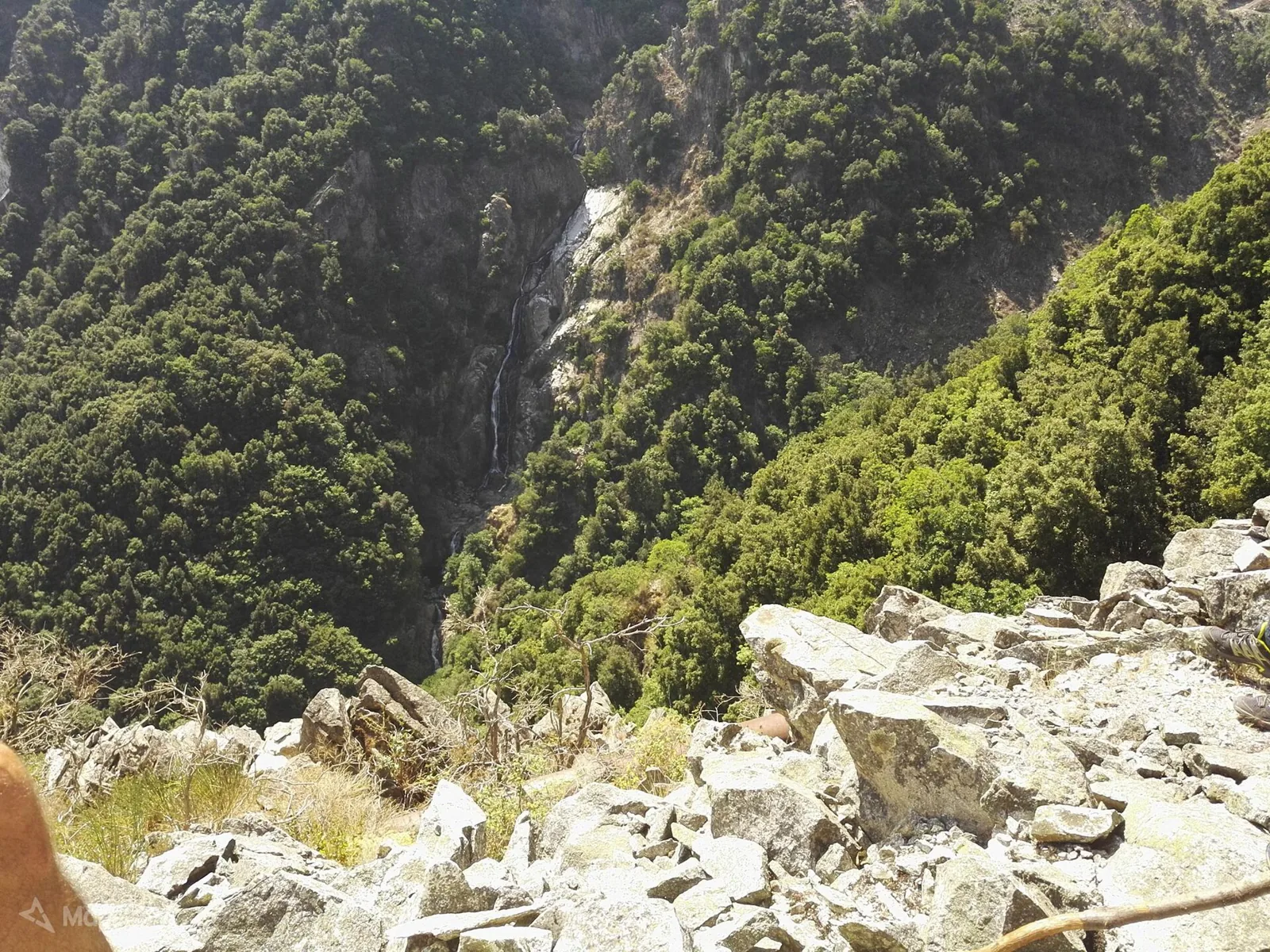
In the Serre Calabresi massif lies the Marmarico Waterfall (Cascata del Marmarico) – the tallest waterfall in Calabria. This imposing 114-metre cascade is located within the municipal boundaries of Bivongi, in the province of Reggio Calabria, within the Serre Regional Nature Park. It is usually at its most impressive after autumn-winter and spring rains, when the Folea stream carries more water and the surrounding vegetation is lush green. The site was also recognised in 2011 as part of the Meraviglie Italiane programme – a promotional project prepared for the 150th anniversary of Italian unification that highlighted lesser-known heritage and landscape sites.
Table of Contents
The Impact of Marmarico Waterfalls on Tourism Development in Calabria
The Marmarico Waterfall plays an important role in the development of nature tourism in this part of the region. As the tallest waterfall in Calabria, located in the scenic Stilaro valley, it attracts travellers seeking less obvious destinations than the coastal resorts. Growing interest in this area supports the local offer of excursions, accommodation, and services for visitors to the Bivongi and Stilo area.
Promotion of the waterfall through social media and tourism platforms strengthens Calabria's image as a region where little-known natural attractions can still be found. In practice, Marmarico works best not as a standalone attraction but as part of a full-day trip through the Stilaro valley – combined with a visit to Stilo, Bivongi, and the surrounding monuments. It is precisely this combination of nature and culture that most strongly builds the tourism value of the site.
Geology and Hydrology – The Crystalline Heart of the Serre Massif
The Marmarico Waterfall lies on the Folea stream, a tributary of the Stilaro, in the municipality of Bivongi, within the Serre Regional Nature Park. The height of the waterfall is usually given as 114 metres, which conveys the scale of this site relative to other Calabrian cascades. This is a landscape shaped by a mountain stream, steep slopes, and the crystalline bedrock of the Serre massif.
| Physical Parameter | Value/Characteristic |
|---|---|
| Total height | 114 metres |
| Number of main tiers | 3 cascades |
| Feeding watercourse | Folea stream (tributary of the Stilaro) |
| Location | Bivongi (Reggio Calabria) |
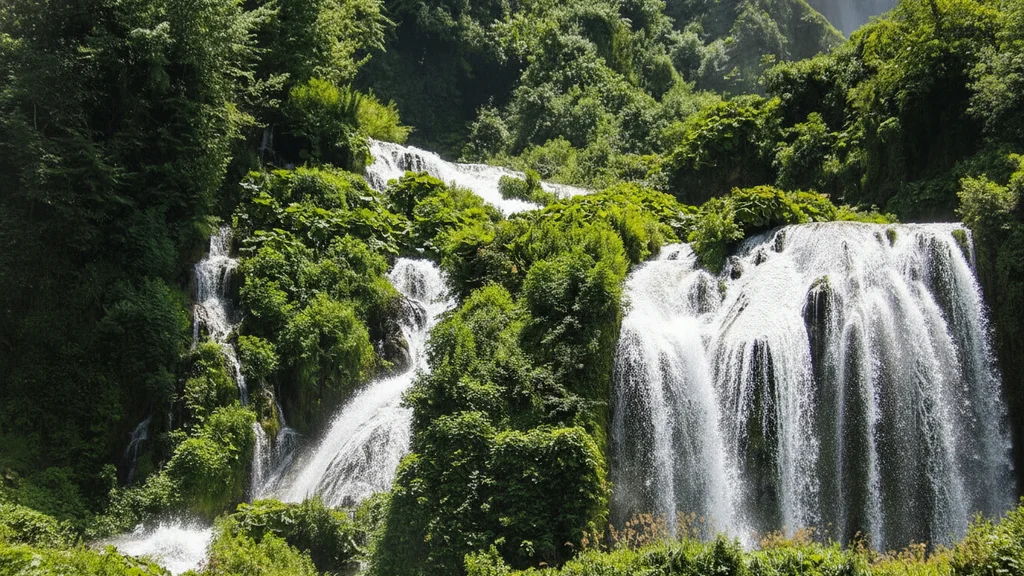
The total drop of 114 metres is distributed across three main tiers, which form the most recognisable image of Marmarico. Water flow is clearly seasonal and is usually highest after autumn-winter and spring rains. In summer, the waterfall is still impressive, but the volume of water may be significantly less than outside the dry season.
The Ecosystem Around Marmarico Waterfall
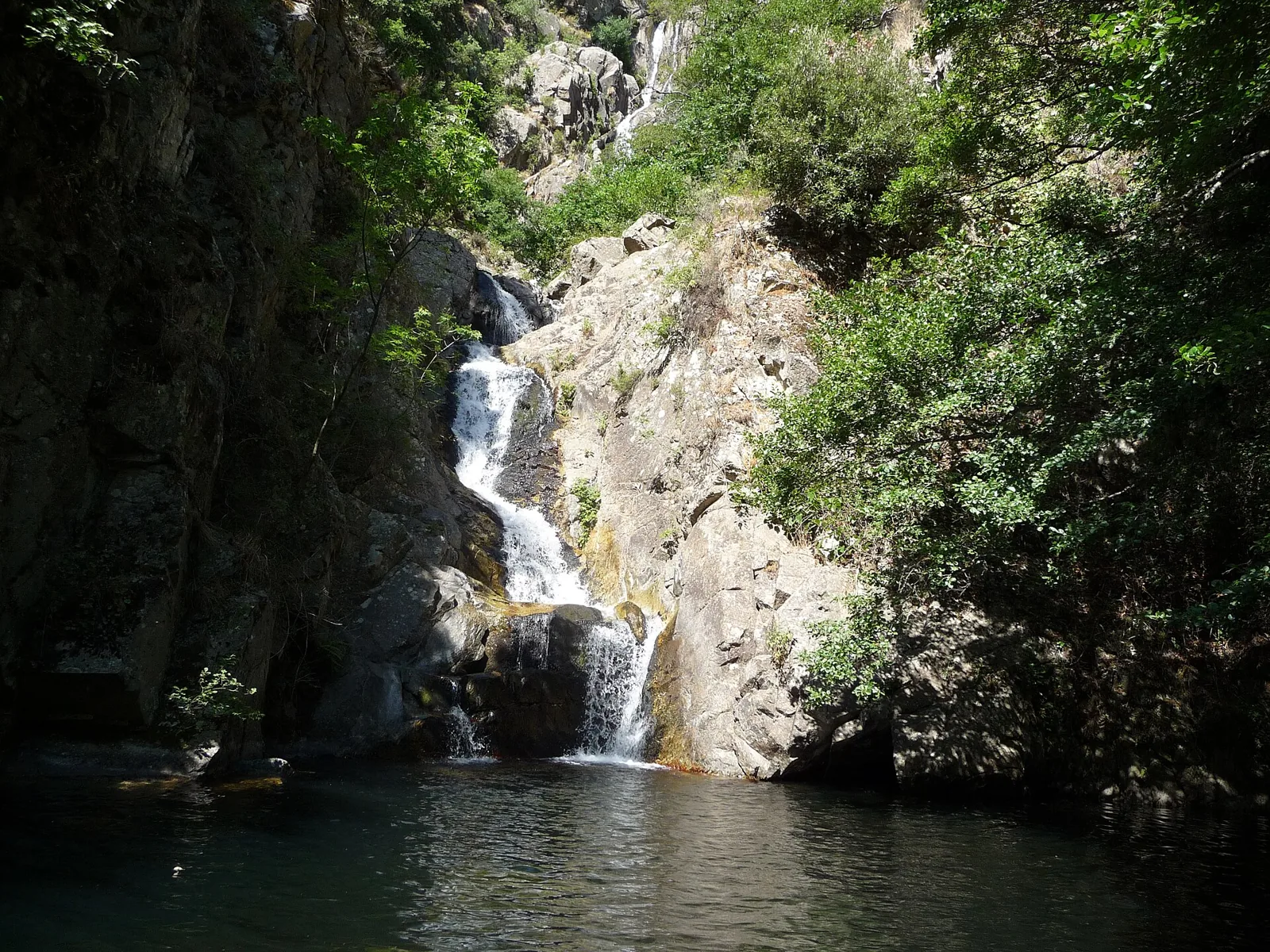
The surroundings of the Marmarico Waterfall are a humid habitat with a distinctive microclimate. The most precious element of the local vegetation is Woodwardia radicans – a large relict fern that has survived here thanks to the constant humidity from the waterfall's spray and protection from frost.
The Folea valley is covered with chestnut, oak, and beech forests. The clean waters of the stream are home to the brown trout (Salmo trutta fario), while peregrine falcons and hoopoes can be observed in the area. Because of its rare flora and fauna, the site is of significant natural importance and is protected.
Byzantine Heritage and the Cultural Landscape of Bivongi
The Marmarico Waterfall is best viewed in the broader cultural context of the Stilaro valley, which in the Middle Ages was an important area of Byzantine heritage in Calabria. The most important monument in the vicinity is the Monastery of St John the Harvester (San Giovanni Theristis) in the municipality of Bivongi, a few kilometres from Stilo. The present church is generally dated to the 11th century and is among the most important examples of Byzantine-Norman architecture in Calabria. San Giovanni Theristis – John the Harvester – is a local saint of the Byzantine tradition, and the complex was restored in the 20th century and is today used by an Orthodox community affiliated with the Romanian Orthodox Church.
The second key point on this route is the Cattolica di Stilo – a small 10th-century Byzantine church and symbol of Stilo. The church reopened to the public on 29 July 2026 after works to improve accessibility. According to the municipal notice, the site is closed on Mondays; on Tuesdays and Sundays it is open from 14:00 to 19:30, and from Wednesday to Saturday from 8:30 to 19:30, with the ticket office closing 15 minutes before closing time. Ticket prices listed by the DRM are €4 standard and €2 reduced, but opening hours should be checked before visiting.
The Ferdinandea–Marmarico route passes through the area of a former Bourbon ironworks, where mineral, morphological, and water conditions favoured the early industrial development of southern Italy. This heritage is organised by the Ecomuseo delle ferriere e fonderie di Calabria, an ACAI project from Bivongi launched in 1982 and focused on protecting the industrial archaeology of the Stilaro valley.
It is also worth noting the local wine tradition. Bivongi DOC is a Calabrian wine appellation established in 1996, covering red, rosé, and white wines produced in an area that includes Bivongi, Stilo, Camini, Monasterace, and Riace, among others. It is a credible element of local identity that nicely complements the cultural picture of this part of the region.
Watch on YouTube
Expedition Logistics and Practical Tips
The most common base is Bivongi, located just 3-4 km from Stilo. Stilo and Bivongi are reached from the Ionian coast via the SS106 Jonica road, then local roads into the Stilaro valley; roughly speaking, Reggio Calabria to Stilo is about 140–150 km, Catanzaro to Stilo about 75–90 km, and Soverato to Stilo about 35–40 km. Keep in mind that in mountainous Calabria, driving time is usually longer than the distance in kilometres suggests, as the roads are winding and narrow. In practice, many visitors drive by off-road vehicle or jeep to a higher point and only then continue on foot for the final section.
It is worth being honest that there is no single universal “trail from Bivongi” with fixed parameters for everyone. The official Parco delle Serre description for the Ferdinandea–Marmarico variant gives the start at Ferdinandea in the territory of Stilo and the finish at the Cascate Marmarico in Bivongi. The route is 9 km there and back, takes about 5 hours, has 441 m of elevation gain, reaches a maximum altitude of 1060 m above sea level and a minimum of 627 m above sea level. Its difficulty is described as medium-high, and the trail is marked by the CAI.
The full walking option from the lower parts of the valley can take several hours return, while the 4x4 option usually shortens the approach to about 20–40 minutes’ walk one way. Walking time also depends on conditions after rain and on where you actually start.
Water flow is usually highest after the period of autumn-winter and spring rainfall, and in summer the volume of water can drop noticeably. After heavy rain, the approach can be slippery and the gravel roads may be difficult to negotiate. Before setting out, it is best to check local weather conditions and current information from the municipality or 4x4 transport operators.
If you are planning 4x4 transport, bear in mind that availability is seasonal and depends on local operators or weekend events. Prices and meeting points can change from season to season, so it is best to check the current offer in Bivongi or Stilo before you arrive. When planning the day, you can include the Monastero Greco-Ortodosso di San Giovanni Theristis: the Comune di Bivongi gives the basic opening hours as daily 09:00–13:00 and 14:00–18:00. Because this is an active monastery, actual access may depend on services and the monastic community.
- Footwear – high trekking boots are essential, as the rocks and stones near the waterfall can be very slippery.
- Water temperature – the natural pool beneath the waterfall invites swimming, but the water is very cold, so caution is advisable.
- Monastery etiquette – when visiting the Monastero di San Giovanni Theristis, remember to dress modestly and respect service hours.
Frequently Asked Questions
How tall is the Marmarico Waterfall?
The Marmarico Waterfall stands at 114 metres, making it the tallest waterfall in Calabria.
How do you get to Marmarico Waterfall and how long does the trail take?
There is no single fixed route for all visitors. The official Ferdinandea–Marmarico variant is 9 km there and back, takes about 5 hours, has 441 m of elevation gain, and is of medium-high difficulty. Using 4x4 transport usually shortens the final approach to about 20–40 minutes’ walk one way. Before setting out, it is worth checking current conditions and the offer of local operators in Bivongi or Stilo.
When is the best time to visit the Marmarico Waterfall?
The best time is after the period of autumn-winter and spring rainfall, when the water flow is usually at its highest. In summer, the waterfall is still worth seeing, but the volume of water may be noticeably less.
Where exactly is the waterfall located?
The waterfall is located in the municipality of Bivongi (province of Reggio Calabria), within the Serre Regional Nature Park, on the Folea stream, a tributary of the Stilaro.
Is it safe to swim beneath the waterfall?
Swimming is possible, but caution should be exercised due to the slippery surface and very cold water. Particular care is advisable after rain, when the approach and the area around the pool are more hazardous.
Sources
The information in this article was verified against the following sources:
- Ferdinandea-Marmarico - Parco delle Serre – parcodelleserre.it
- La cattolica di stilo riapre al pubblico – comune.stilo.rc.it
- gazzettaufficiale.it – gazzettaufficiale.it
- Ecomuseo delle ferriere e fonderie di Calabria — Italiano – isprambiente.gov.it
- comunebivongi.it – comunebivongi.it
- ResearchGate - Temporarily Unavailable – researchgate.net
- Wikipedia – Romanian Orthodox Church – en.wikipedia.org
Last updated: