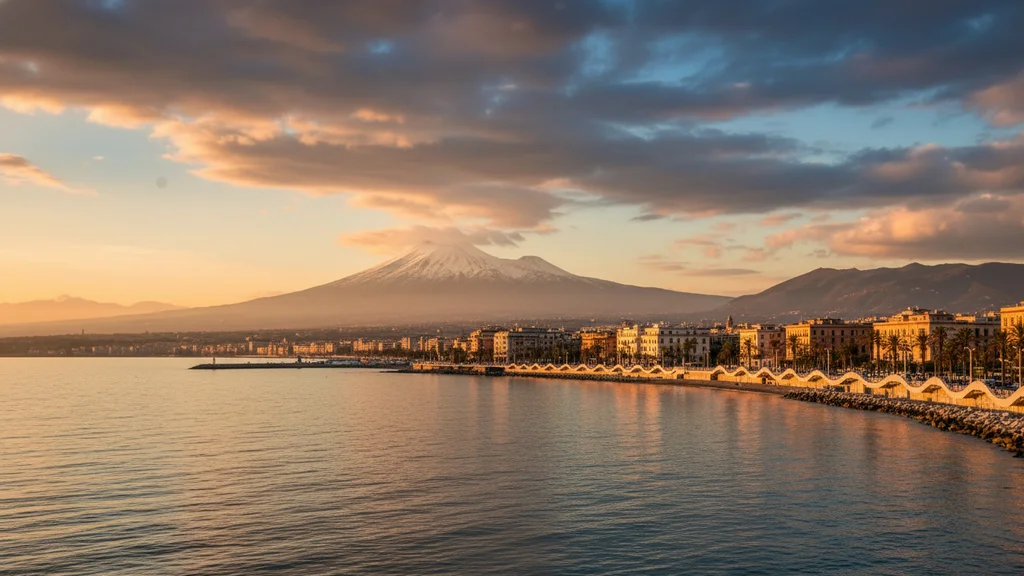
Reggio Calabria does not chase attention. It does not have Venetian grandeur or Roman scale, but it has the Strait of Messina, views of Sicily and a centre that is easy to explore on foot. In the evening on the Lungomare, when the sun drops behind the silhouette of Etna and the lights of Messina come on across the water, you quickly understand why this promenade is considered one of the city's greatest assets. Two days is the minimum you need to see the Riace Bronzes, walk through the centre and add a short trip to Scilla.
Table of Contents
Day 1 – Morning: Museo Nazionale della Magna Grecia
We start with the single most important point on the map – the National Museum of Magna Graecia (MArRC), where the Riace Bronzes await. These two Greek statues from the 5th century BC, pulled from the sea off the Calabrian coast in 1972, are among the best-preserved bronzes of antiquity. They stand in a room with a special microclimate that admits a maximum of 20 visitors at a time – first you pass through a decontamination chamber, then you get exactly 20 minutes face to face with the statues.
Reggio Calabria is ancient Rhegion, a Greek colony founded in the 8th century BC by settlers from Chalcis. Magna Graecia was the vast area of southern Italy heavily colonised by Greeks from the 8th century BC, so MArRC's collections are key to understanding the history of all Calabria, not just the city itself. In the museum you will see artefacts from across the region, including the famous pinakes from Lokroi Epizephyrioi – terracotta votive tablets from the 6th–5th century BC.
The museum is open from Tuesday to Sunday, 9:00–20:00, with last entry at 19:30. A standard ticket costs 10 euros, and a reduced ticket for visitors aged 18–25 costs 2 euros; entry is free, among others, for under-18s and other legally exempt visitors. Check the latest information before your visit, as museum hours and prices can change. My advice: arrive as early as possible, before the crowds build up. The full visit takes a comfortable 2–3 hours – beyond the Bronzes, there is an excellent collection of Greek and Roman artefacts and an underwater archaeology section.
Tip: After the visit, you can take a break in one of the cafés on the Lungomare, a few minutes' walk from the museum.
Day 1 – Afternoon: Exploring the Centro Storico
After the museum, head towards the city centre. Corso Garibaldi – Reggio's main pedestrian boulevard – stretches for almost two kilometres and is ideal for an afternoon stroll. Along the way you pass the Duomo, rebuilt after the 1908 earthquake, the Aragonese Castle, and dozens of small shops where local artisans sell ceramics and bergamot products.
It is the catastrophe of 28 December 1908 that explains why Reggio looks different from many other cities in southern Italy. The earthquake and tsunami in the Strait of Messina area destroyed much of Reggio Calabria and Messina, killing tens of thousands in Reggio alone. Today's city centre is largely the result of reconstruction in the early decades of the 20th century – which is why you will see more Liberty-style architecture (the Italian variant of Art Nouveau) and eclectic buildings than preserved medieval quarters.
For lunch, look for trattorias advertising cucina tipica. Order maccheroni con sugo di capra or melanzane alla parmigiana – the local aubergine version is superb. Portions are usually generous, and bills in simple places are considerably lower than in Italy's most popular tourist cities.
Day 1 – Evening: Lungomare Falcomatà and Dinner
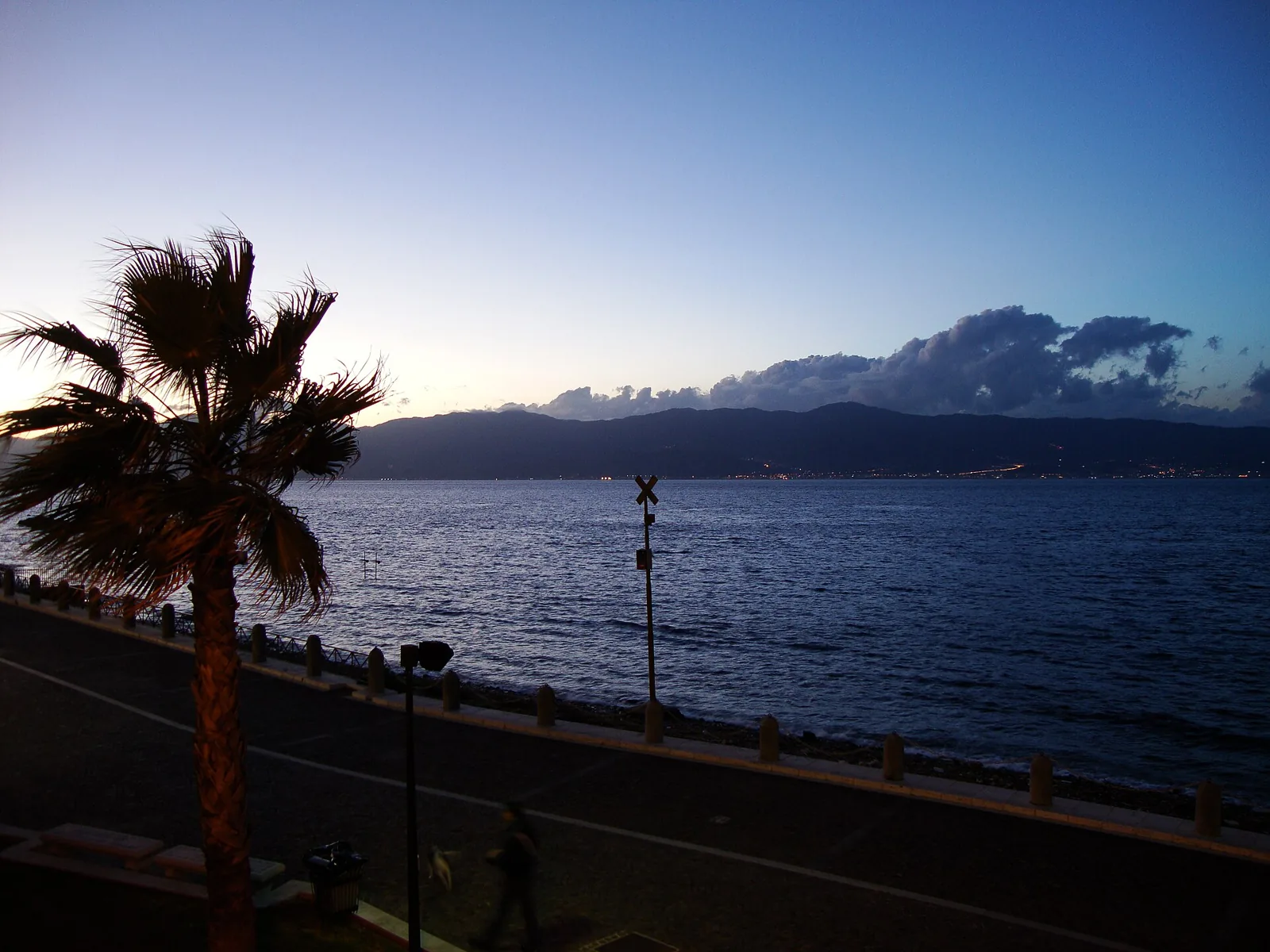
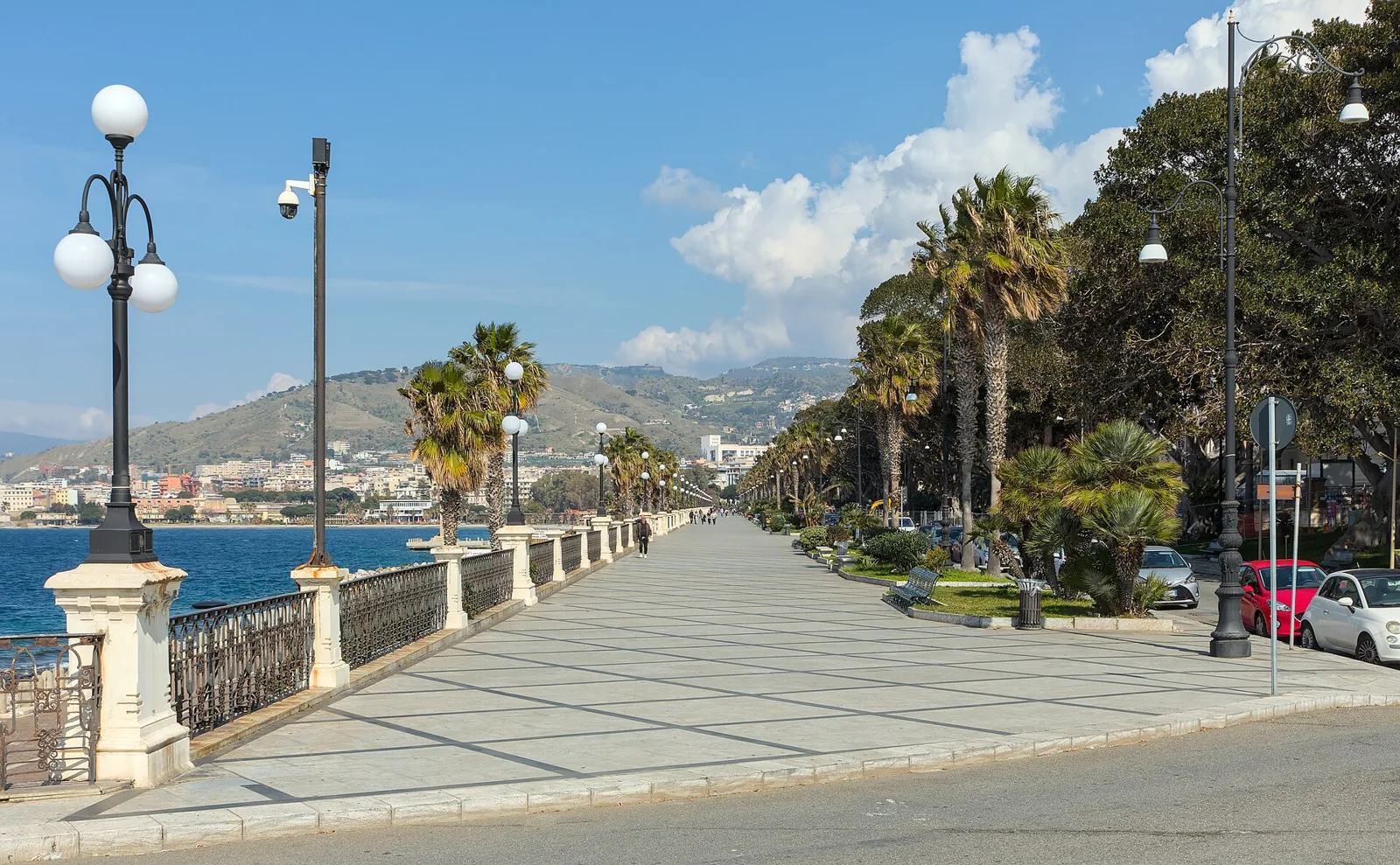
The evening begins on the Lungomare Falcomatà – the seafront promenade known as il più bel chilometro d'Italia. The phrase is sometimes attributed to Gabriele D'Annunzio, but that attribution is disputed and considered incorrect. I walked here at sunset and understood where the reputation comes from. On one side are Art Nouveau lampposts and palm trees; on the other, the Strait of Messina, with the outline of Sicily beyond it. On a clear day, you see Etna so sharply it feels almost next door. With a bit of luck, you might even catch the famous optical illusion known as the Fata Morgana mirage.
For dinner, duck into the side streets between the Lungomare and Corso Vittorio Emanuele. The local restaurants specialise in fish and seafood – order pesce spada alla reggina with capers, olives and cherry tomatoes. Pair it with a glass of local Cirò Rosato and you have a recipe for a great evening.
Swordfish is not just another menu item here. The catch in the Scilla and Messina area is a centuries-old tradition tied to the migration of fish through the Strait of Messina, particularly from late spring through the end of summer. Reggio's cuisine clearly reflects the mingling of Calabrian and Sicilian influences – alongside pesce spada alla ghiotta or the messinese-reggina version you will also find involtini di pesce spada and pasta with swordfish and aubergine.
Day 2 – Option A: Day Trip to Scilla
For your second day, I suggest one of two options. The first – and my favourite – is a trip to Scilla, a small town most conveniently reached by regional train from Reggio Calabria Centrale or Lido. Travel time and ticket price depend on the connection, so it is best to check them on the day. From the station, it is a few minutes' walk down towards Marina Grande.
Scilla is a town of three faces: Castello Ruffo di Scilla on the rock above Chianalea, the beach and promenade of Marina Grande, and Chianalea – the town's most famous quarter. It is Chianalea di Scilla – the town's fishing district – that is listed among I Borghi più belli d'Italia and remains the most recognisable part of Scilla. Pastel houses almost touch the water here, and narrow lanes end beside fishing boats.
If you want to see Scilla properly, plan a walk to Belvedere Piazza San Rocco, visit the church of San Rocco, and go up to the castle. Entry to Castello Ruffo is from Piazza Matrice (the castle is closed on Mondays, and admission costs around 3 euros). For sightseeing alone, allow about 4–6 hours; add a swim and lunch by the water and you will easily fill the whole day.
The essential stop: a panino con pesce spada – a grilled swordfish sandwich, one of the best street foods in Calabria. Under the local tradition protected by Slow Food, traditional feluccas catch swordfish from April to June along the Calabrian coast, and in July and August along the Messina coast. The boats have a long passerella, about 35–40 m, and a high antenna, about 22 m, used to spot the fish. In Scilla you can still see these characteristic vessels with a tall lookout tower and a long bow walkway, one of the most recognisable features of this coastline.
Lunch in Chianalea is an attraction in its own right. Restaurants stand right by the water, and tables often look straight onto the rocks and the strait. Sitting above the surface of the sea, you eat spaghetti con pesce spada e melanzane, and it is hard to imagine a more Calabrian scene.
Watch on YouTube
Day 2 – Option B: Arena dello Stretto and the Beach
If you prefer to stay in Reggio, head to the Arena dello Stretto in the morning – an open-air arena by the sea, overlooking the strait and Sicily. In summer it hosts concerts and performances, but even off-season it is a good place for a longer stop. The venue has the form of a seaside amphitheatre, but it is not an ancient monument.
Afterwards, walk down to one of the beaches along the Lungomare. They are not picture-perfect coves, but the sand is pleasant, the water is clean, and the lack of crowds lets you catch your breath after walking around the city. Locals come here after work for a quick swim – and that says a lot about the rhythm of Reggio.
Spend the afternoon on bergamot – the most characteristic product of the Reggio area. Around 90% of the world's production of this fruit comes from the Ionian coast in the province of Reggio Calabria, and its peel oil is essential to the perfume industry. On the spot you can also sample more down-to-earth versions of this flavour: jams, liqueurs, granita and sweets.
Practical Tips for a Weekend in Reggio
Getting there: Reggio has its own airport, Aeroporto dello Stretto (REG), located a few kilometres south of the centre. Alternatively, you can fly into Lamezia Terme and continue by train, but flying into Catania Fontanarossa or Palermo and travelling on through Sicily to the mainland can also be a sensible option. Ferries cross the Strait of Messina from Messina to Villa San Giovanni and Reggio, and Liberty Lines also operates fast hydrofoil services between Messina and Reggio Calabria. On weekdays there are a dozen or more sailings a day in each direction, with a journey time of just 30–35 minutes; there are fewer sailings on weekends and public holidays.
Getting around: Reggio is fairly compact and works well for a car-free weekend. From MArRC to Reggio Calabria Centrale station is about 1.5 km on foot along the centre and lungomare, though the Reggio di Calabria Lido station sits right next to the museum, saving you the walk if you are heading straight on to Scilla. For Scilla, the regional train from Reggio Calabria Centrale or Lido is the most practical option, but once there, be prepared for short climbs and descents between the station, Marina Grande and Chianalea.
Where to stay: Central Reggio is compact – look for accommodation between Reggio Calabria Centrale station and the Lungomare. B&Bs and apartments cost 50–80 euros per night, 3-star hotels 80–120 euros.
When to go: The best months are May–June and September–October. In summer, temperatures reach 35–38°C and the streets empty out during the day, though the city comes back to life in the evening. Winter is mild, but museums and restaurants operate as normal.
What to buy: Bergamot is the safest bet. The DOP designation Bergamotto di Reggio Calabria – olio essenziale is tied specifically to the Reggio metropolitan area, and the fruit ends up not only in perfume but also in confectionery, liqueurs, jams and granita. If you want to bring home the taste of the city, aim for bergamot products.
Budget: Reggio is usually cheaper than Italy's most popular tourist destinations, but prices depend on the season, location and standard. Before your trip, check current rates for accommodation, restaurants and tickets. This is especially true for weekends, holidays and periods when accommodation close to the Lungomare is more likely to be expensive.
Reggio Calabria is not a typical postcard city. It does, however, have the Riace Bronzes, a long promenade along the strait, cuisine built around swordfish and bergamot, and a good base for a trip to Scilla. If you have only a weekend in this part of Calabria, the plan is simple and effective: museum, centre, Lungomare, fish dinner and one day by the water in Scilla or a slower day in Reggio itself.
Sources
The information in this article was verified against the following sources:
- Opening hours and informations – museoarcheologicoreggiocalabria.cultura.gov.it
- Castello Ruffo - Comune di Scilla – comune.scilla.rc.it
- museoarcheologicoreggiocalabria.cultura.gov.it – museoarcheologicoreggiocalabria.cultura.gov.it
- enit.it (PDF) – enit.it
- Pesca tradizionale dello stretto di Messina - Presìdi Slow Food - Fondazione Slow Food – fondazioneslowfood.com
- STRETTO DI MESSINA | Liberty Lines – libertylines.it
- Wikipedia – Lungomare Falcomatà – it.wikipedia.org
- Wikipedia – Reggio Calabria – en.wikipedia.org