Fileja is a handmade pasta from the province of Vibo Valentia – one of the most characteristic pasta shapes in Calabria. The dough is rolled around a thin iron rod (ferretto) to form a long, hollow tube that catches thick sauces beautifully. If you are planning a trip to southern Italy, this is a dish best tried on its home turf.
Table of Contents
The history of fileja – peasant pasta with deep roots
Fileja pasta (pronounced fee-LEH-yah, with the "j" sounding like "y" in "yes") traces its origins to the peasant kitchens of Vibo Valentia province, along Calabria's Tyrrhenian coast. It is a pasta of domestic tradition, passed down mainly orally, which is why there is no single commonly cited "birth date." It is safe to say this is a pre-industrial tradition, well established long before factory-made pasta became widespread in the 20th century.
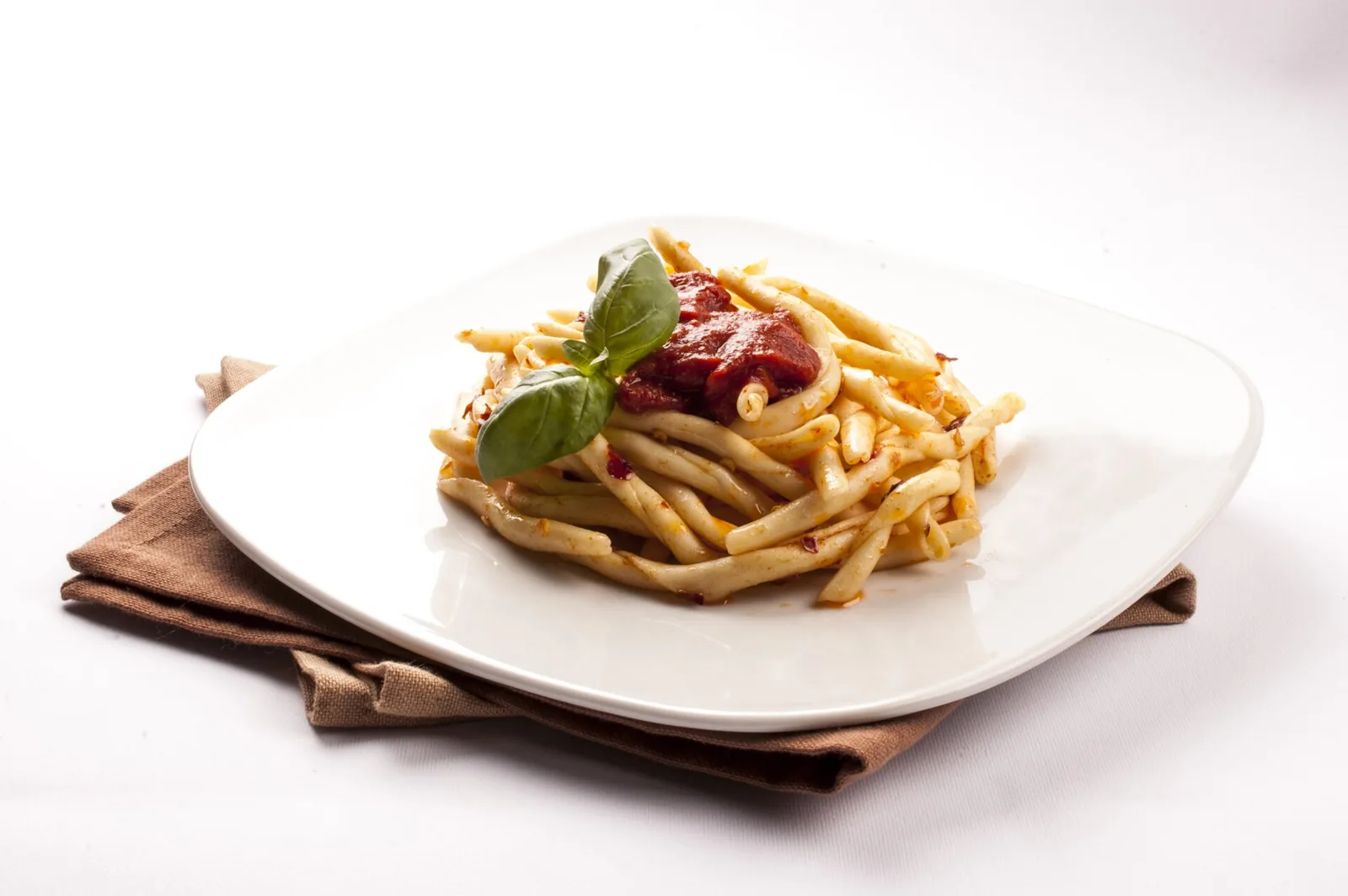
In local usage, you may also encounter related names such as maccarruna, maccarruni, filedda, or sometimes ricci di donna – though these are not strict synonyms for fileja across all of Calabria. The most widely recognised name for the shaping tool remains simply ferretto. Before metal tools became common, women also wrapped dough around thin sticks or dried stalks. Italian sources also mention an old local name for this small rod: virgula, meaning a little twig or wand. It was made from the stalk of a wild plant called disa, locally known as gutamara.
Fileja is pasta povera – poor man's pasta from just two ingredients: durum wheat semolina and water. The absence of eggs was not accidental, but economic. Eggs were a luxury; hard wheat flour and well water were enough to feed a family. Today, pasta fileja appears on the Italian list of Prodotti Agroalimentari Tradizionali (PAT) for Calabria, in the category of fresh pasta and bakery-confectionery products. This formally confirms its place in the region's culinary tradition.
Fileja is most strongly associated with the province of Vibo Valentia, particularly the Monte Poro area and the hinterland towns of the Costa degli Dei, such as Spilinga, Zungri, Limbadi, Rombiolo, and the surroundings of Tropea and Vibo Valentia. It is here that the fileja tradition naturally intersects with 'nduja from Spilinga and the red onion from Tropea – the two flavours most closely associated with this part of Calabria.
How fileja is made – step by step
Making fileja demands patience and practice. The method is simple to describe, but mastering the right finger pressure takes time.
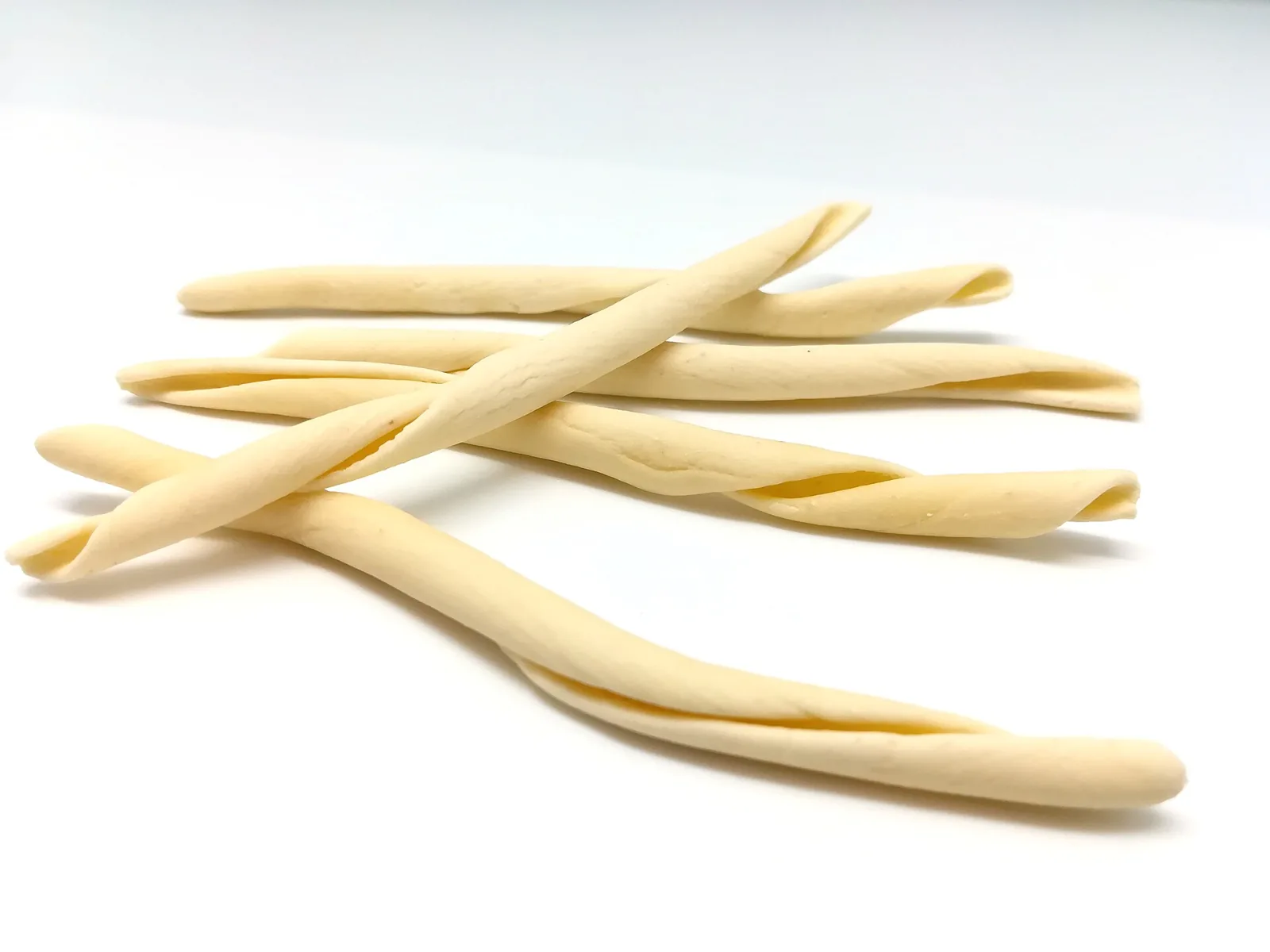
- Dough: durum wheat flour (semola di grano duro), warm water, a pinch of salt. Ratio: roughly 80–100 g flour per person. Knead vigorously for at least 15–20 minutes until smooth and elastic.
- Resting: the dough rests for 30 minutes under a cloth at room temperature.
- Shaping: cut off pieces of dough and roll them into thin ropes (pencil thickness, 3–4 mm). Wrap each piece (about 10–12 cm long) around the ferretto – a thin metal rod or wooden stick.
- Rolling: using light palm pressure, roll the rod with dough away from you and back several times. The dough wraps itself around the tool, forming a long tube with a slightly twisted surface.
- Sliding off: slide the finished fileja off the rod and place it on a flour-dusted board to dry slightly (20–30 minutes).
Fileja belongs to the broad southern Italian family of pasta made al ferretto. In Calabria, this particular local form took hold, while in Basilicata and Campania you will find various versions of fusilli al ferretto, and in other parts of the south, related maccarruni.
The finished fileja does not resemble a classic, tightly wound corkscrew but rather an elongated, hollow tube with grooves that trap sauce. Fresh fileja typically cooks in about 4–6 minutes, depending on thickness – it is best to lift it out once it floats and check it after a minute. Artisan dried fileja usually needs 9–13 minutes, as indicated on the package.
| Feature | Fileja | Fusilli |
|---|---|---|
| Region of origin | Vibo Valentia, Calabria | Broad category of pasta found across many regions of Italy |
| Shaping tool | Ferretto | Fuso (spindle) or ferretto |
| Dough | Semolina and water, traditionally no eggs | Various versions; in southern Italian tradition often also without eggs |
| Shape | Long, hollow tube, sometimes slightly twisted | Shorter, more compact spiral |
| Texture | Rough, porous | Smooth or rough |
| Classic sauce | 'Nduja, pork ragù | Very varied, depending on region and form |
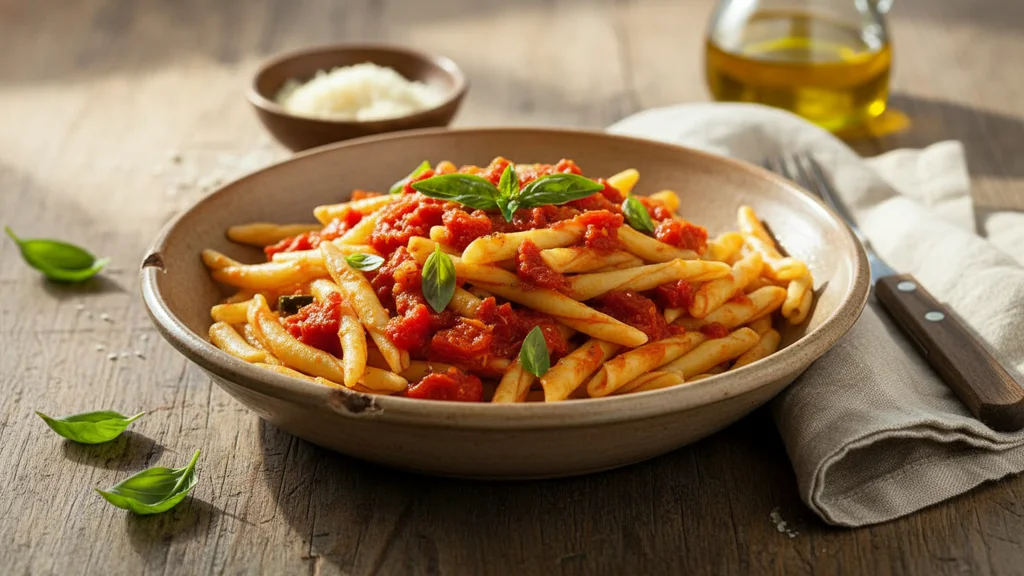
Traditional sauces for fileja
Fileja shows its true character when paired with a thick, bold sauce. In the province of Vibo Valentia, the most recognisable combination is with tomatoes, 'nduja from Spilinga and grated pecorino.
Spilinga lies within the province of Vibo Valentia and is considered the main centre of 'nduja production. Meanwhile, Cipolla Rossa di Tropea Calabria has held IGP status since 2008 and very often appears in sauces from this area, adding sweetness that balances the heat well.
- Fileja alla 'nduja – the most popular version. Soft, spicy 'nduja from Spilinga melts into a tomato sauce with finely chopped Tropea onion, olive oil, and grated pecorino. This is the most classic pairing from the area where fileja truly originates.
- Fileja alla Tropeana – a summer version with aubergine, courgette, cherry tomatoes, Tropea onion, and a generous amount of peperoncino. Its flavour captures the cuisine of the Tropea coast and hinterland.
- Fileja alla Silana – more a variant inspired by Sila cuisine than a strict fileja classic. A ragù of spicy pork sausage, tomatoes, and pecorino gives a hearty, more mountainous interpretation of this pasta.
- Fileja with goat ragù – one of the traditional versions of Vibonese cooking; the thick goat meat sauce works perfectly with the pasta's rough, hollow shape.
- Fileja with ricotta and pecorino – the simplest preparation: fresh ricotta, grated pecorino, black pepper. Minimalism that lets you taste the pasta itself.
In practice, pecorino is what you will most often find here, especially with spicy and rustic sauces. The most local choice is Pecorino del Monte Poro DOP, a cheese from the Monte Poro area in the province of Vibo Valentia. It received DOP registration in 2020, and its production area includes municipalities of this province, including Spilinga, Zungri, Rombiolo, Limbadi, Tropea, and Vibo Valentia. It is a more traditional choice than Parmigiano Reggiano, though home and restaurant versions can differ.
Watch on YouTube
Where to eat fileja in Calabria
The best place to look for fileja is in the province of Vibo Valentia, especially in the hinterland of Tropea and the Monte Poro area. This is where the tradition of this pasta is strongest – in towns such as Spilinga, Zungri, Limbadi, Rombiolo, and the wider surroundings of Vibo Valentia. In August, look out for posters of local sagre (food festivals): Pannaconi (municipality of Cessaniti) has hosted the Sagra di Fileja e Ceci – fileja with chickpea sauce – for over 30 years, on 6 August in 2026, and Filandari and Briatico, among others, hold fileja sagre of their own. It is the easiest way to try this pasta in a lively, local setting.
Rather than hunting for specific addresses, look for menu items such as: fileja, fileja alla 'nduja, maccarruni al ferretto, pasta fatta in casa, or primo della casa. The best chance of finding a traditionally made version is at family-run trattorias and agriturismi, where the pasta may be made on the premises.
One practical thing to remember: fileja appears more often at lunch and on weekends as a daily special. If you are set on having it, ask as soon as you arrive or check the board with house specialities.
Pizzo Calabro, a picturesque town north of Tropea, can also be a good place for a plate of homemade pasta in local trattorias. And after lunch, you know what comes next – tartufo di Pizzo ice cream for dessert.
Buying tips and what to bring home
Fileja makes an excellent edible souvenir from Calabria. Before buying, check a few simple things, because good pasta reveals itself on the label faster than through pretty packaging.
- Artisan dried fileja – check the ingredients: ideally just semola di grano duro and water; you may also find semola integrale. A typical package is 500 g, and the approximate price in Italy for artisan dried pasta is around €3.50–6.50.
- Fresh fileja – buy at delis, small grocery shops, or at the market. Pasta sold by weight often costs around €8–14/kg, depending on the shop and season.
- Flavoured varieties – you may find modern, niche versions with peperoncino or other flavours. These are contemporary interpretations rather than traditional fileja from the province of Vibo Valentia.
- Ferretto as a souvenir – the simple tool for hand-shaping fileja can be bought at kitchen supply shops. If you want to recreate this pasta at home, it is a more practical souvenir than another fridge magnet.
Store dried fileja in a cool, dry place and seal tightly after opening; best used within a few months. Keep fresh fileja in the refrigerator for a maximum of 1–2 days. For freezing, first spread it loosely on a tray, then transfer to a bag and store for up to about 2 months. Cook from frozen, adding 1–2 minutes to the cooking time.
Fileja pasta – frequently asked questions
What's the difference between fileja and fusilli?
Both pastas can be shaped on a rod, but fileja is usually longer, hollow inside, and has a more hand-crafted, irregular texture. Traditionally it is made from semolina and water, without eggs, though home versions can vary. Fusilli is a broader category of pasta found across many regions of Italy.
How do you pronounce "fileja"?
Fee-LEH-yah, with the stress on the second syllable. The "j" sounds like English "y" in "yes." The spelling "fileja" reflects the local dialect pronunciation – you will also see other spelling variants depending on the village and transcription, because Calabrian dialects can differ even between neighbouring municipalities.
Can I make fileja at home without a ferretto?
Yes. You can use a wooden barbecue skewer, a thin chopstick, or a metal rod of similar thickness. The key is even hand pressure and the diameter of the tool, which allows the pasta to keep its hollow centre.
What is the best sauce for fileja?
The most classic pairing is fileja alla 'nduja – a tomato sauce with melted 'nduja from Spilinga, Tropea onion, and pecorino. Fileja also works well with thick meat and vegetable sauces. Its rough surface and hollow centre perform best with something substantial rather than a very light sauce.
How much does fileja cost in a Calabrian restaurant?
A plate of homemade pasta as a primo piatto typically costs the same as other local first courses in a trattoria or agriturismo. If you are buying pasta to take home, artisan dried fileja in a 500 g pack usually costs around €3.50–6.50, and fresh pasta by weight often runs €8–14/kg.
Sources
The information in this article was verified against the following sources:
- Wikipedia – Fileja – en.wikipedia.org
- Wikipedia – Calabria – en.wikipedia.org
- Sagra Popolare Fileja e Ceci – Pannaconi – sagreautentiche.it
Last updated: