Pollino National Park, the largest national park in Italy, stands out for its rugged, high-mountain landscape. Located on the border between Calabria and Basilicata, this vast protected area covers an impressive 192,565 hectares, making it one of the most interesting natural sites in the entire Mediterranean basin. It offers diverse landscapes – from the mighty peaks of Monte Pollino to gorges and caves shaped by karst processes and river erosion. Its geoheritage, protected as the Pollino UNESCO Global Geopark, is one of the main reasons to explore this massif on foot, slowly and with a map in hand.
Table of Contents
- The Development of Pollino National Park – Conservation and Natural Heritage
- The Significance of Pollino National Park for the Region
- Unique Fauna and Flora of Pollino National Park – Natural Riches
- Geology and Rock Formations in Pollino National Park
- Tourism and Recreation in the Heart of Pollino National Park
- Challenges in Managing Pollino National Park – Conservation and Sustainable Development
The Development of Pollino National Park – Conservation and Natural Heritage
Established at the meeting point of southern Italy's regions, Pollino National Park is an important area for protecting unique ecosystems in the Southern Apennines. A key moment was the framework law on protected areas no. 394 of 6 December 1991, and the Parco Nazionale del Pollino was formally established by a decree of the President of the Republic on 15 November 1993. In 1994, administrative structures were organised covering 56 municipalities on both sides of the regional border. The park's headquarters are located in Rotonda, which serves as the central logistical hub for the entire region.
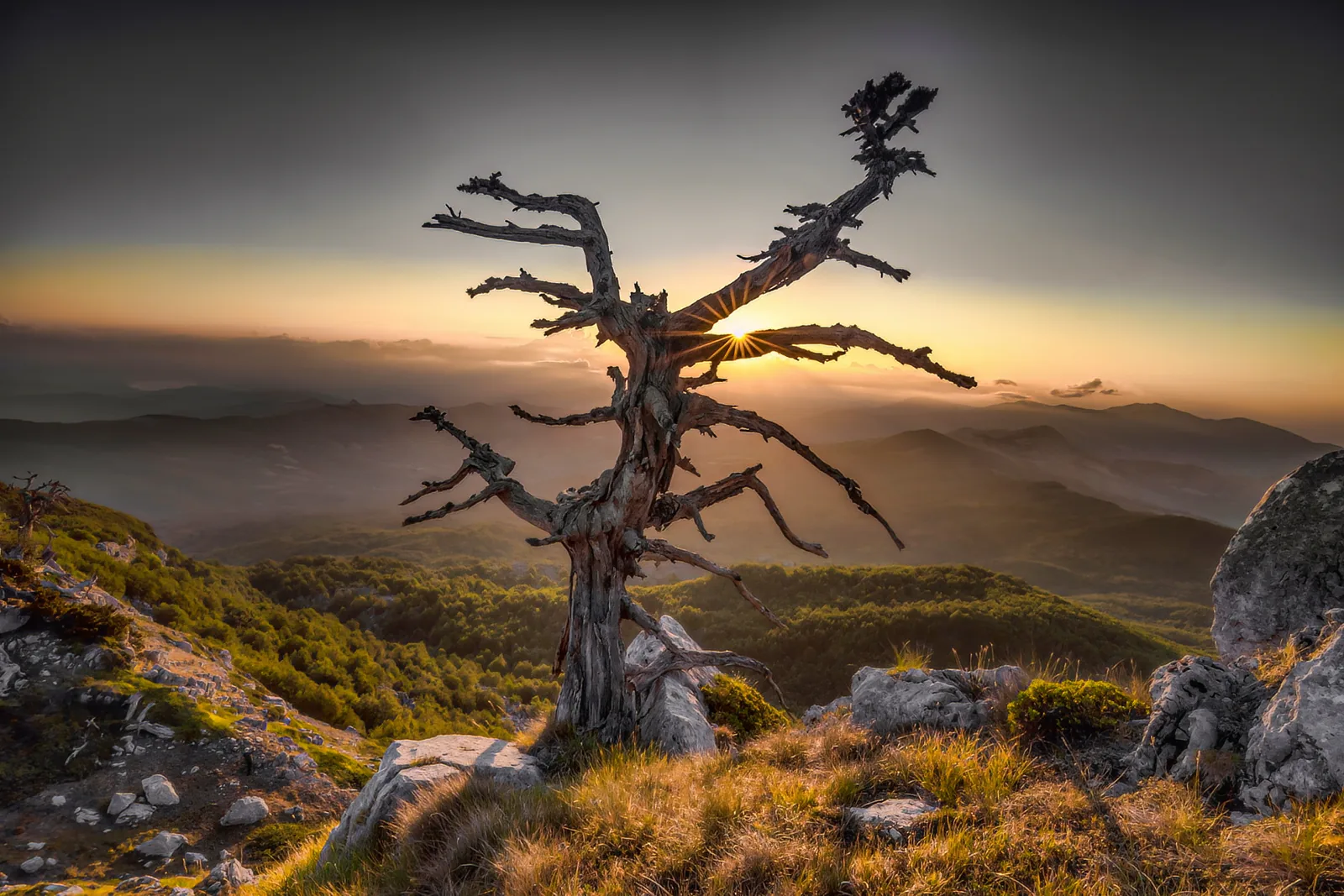
The park's highly varied terrain, particularly the watersheds of major rivers, mountain massifs, and karst forms and canyons shaped by erosion, is essential for preserving local biodiversity. A decisive role is played by the protection of characteristic species such as the Bosnian pine (Pinus heldreichii), and the valuable beech forests associated with the Pollino area. It is precisely such elements – from ancient stands to rugged limestone ridges – that build the exceptional natural value of the entire massif.
| Administrative Parameter | Value / Description |
|---|---|
| Total Area | 192,565 ha |
| Area in Calabria | 103,915 ha |
| Area in Basilicata | 88,650 ha |
| Number of Municipalities | 56 |
| Park Headquarters | Rotonda (PZ) |
The park's development initiatives focus on promoting sustainable tourism, including managing trails such as the Civita trekking route and exploring Bosco Magnano. These efforts aim to reduce visitor pressure on delicate ecosystems through education, trail signage and better organised infrastructure. In addition to joining the UNESCO geoparks network in 2015, the park also has two beech forest areas included in the transnational UNESCO property “Ancient and Primeval Beech Forests of the Carpathians and Other Regions of Europe”. These are Faggeta Vetusta di Cozzo Ferriero, listed since 2017, and Faggeta Vetusta del Pollinello, listed since 2021; both sites strengthen Pollino's role as an area for the protection of old-growth forests in the Southern Apennines.
The Significance of Pollino National Park for the Region
Pollino National Park plays a strategic role in the local ecosystem as well as in the economy and culture of surrounding communities. As Italy's largest national park, it lies between the spheres of influence of the Tyrrhenian and Ionian Seas, resulting in varied natural conditions across the region. Over the years it has become an important point of reference for nature conservation in southern Italy, protecting unique life forms including the region's icon – Pino loricato.
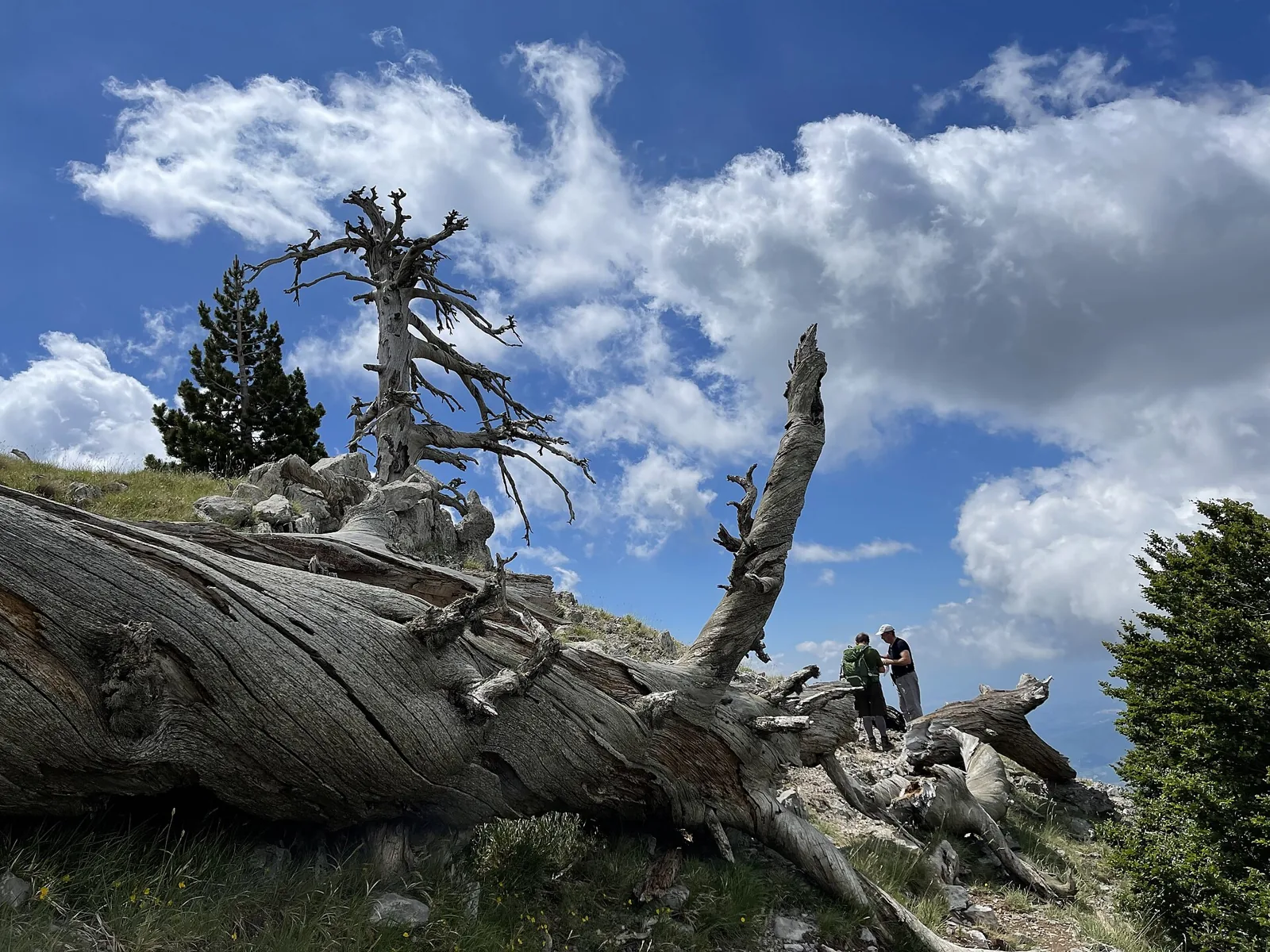
Beyond protecting flora and fauna, the park stimulates local tourism, which matters for the regional economy. Hiking trails leading through the highest peaks attract people looking for contact with nature, while also supporting small crafts, accommodation and local food. The Arbëreshë communities, descendants of Albanian migrants settling in southern Italy from the 15th century, are one of the strongest cultural features of the Pollino area, particularly in places such as Civita, Frascineto, San Basile, Lungro and Acquaformosa.
Some of these communities have preserved the Arbëresh language, traditional costumes, ceremonies and the Byzantine-Greek liturgy within the Byzantine rite Catholic Church. Lungro is the seat of the Eparchy of Lungro degli Italo-Albanesi dell’Italia Continentale, established on 13 February 1919 by the apostolic constitution Catholici fideles. It is an important point of reference for Byzantine rite Catholics in Arbëreshë communities. For the residents of surrounding villages, the park remains an important source of identity, connecting nature with the history of the borderlands; the Pollino area also has archaeological sites such as the Grotta del Romito in Papasidero, known for its Palaeolithic remains.
Unique Fauna and Flora of Pollino National Park – Natural Riches
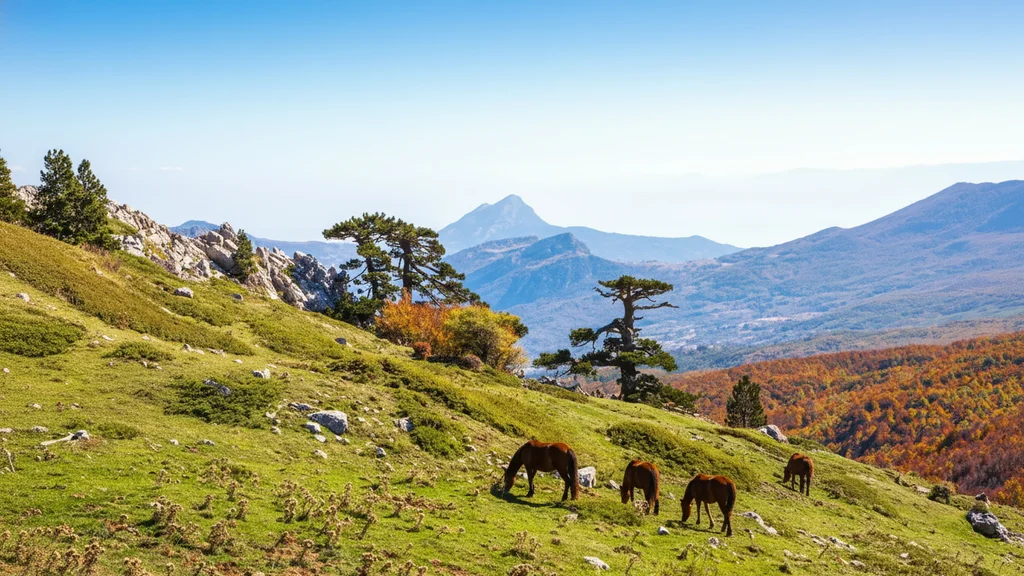
Pollino National Park is one of the most important reservoirs of life in Southern Europe, where approximately 1,700 plant species occur. The altitudinal variation means you can encounter both Mediterranean vegetation and high-mountain grasslands. One of the most remarkable discoveries in recent years is Italus – a Bosnian pine estimated to be at least 1,230 years old, considered one of the oldest scientifically dated trees in Europe.
Botanical Diversity
The park's flora is a mosaic of unique habitats, from deciduous forests in the valleys to high-mountain meadows on the peaks. The lower areas are dominated by scrub and Mediterranean forests and various oak woods, while higher up extensive beech forests and mountain communities appear. Pino loricato, the park's symbol, typically grows above approximately 1,000 m a.s.l. and reaches about 2,200 m a.s.l., especially on exposed limestone slopes and ridges of Pollino. It is a relict mountain species with fissured bark (its Italian name refers to bark resembling Roman armour – Latin lorica), capable of surviving for hundreds of years on limestone and windswept sites.
Wildlife
The fauna of Pollino is very diverse, and among its most recognisable species the Apennine wolf remains prominent. The park is also home to the Eurasian otter, associated with the clean waters of rivers, and birds of prey nesting on limestone cliffs. An important indicator of habitat quality is also the spectacled salamander, found in the moister parts of the forest.
| Species | Ecological Significance |
|---|---|
| Apennine Wolf | Apex predator, symbol of the region's wildness |
| Eurasian Otter | Indicator of the highest river water quality |
| Golden Eagle | Nests on inaccessible limestone cliffs |
| Spectacled Salamander | Italian endemic, bioindicator of habitat quality |
Geology and Rock Formations in Pollino National Park
The geological history of this area dates back to the Mesozoic era, and the modern landscape is the result of the collision of the African and European tectonic plates. The Pollino massif is built mainly of Mesozoic carbonate rocks – limestones and dolomites – which favour the development of karst phenomena such as caves, sinkholes, springs and canyons. The Pollino area was included in the UNESCO Global Geoparks network in 2015 due to its exceptional geoheritage, clearly visible both on the ridges and in the deeply incised river valleys.
Geological Formations
The rich relief includes numerous caves and caverns that are the result of long-term karst processes and water-modelling of the mountains. The main rivers shaping the massif are the Lao, Raganello, Sinni, Coscile, Esaro and Sarmento. The Gole del Raganello are among the most famous canyons in southern Italy, and the Lao valley has long attracted river sports enthusiasts.
Watch on YouTube
Tourism and Recreation in the Heart of Pollino National Park
Pollino National Park is an excellent destination for hikers, as it includes the highest peaks in southern Italy. The highest peak of the massif is Serra Dolcedorme, reaching 2,267 m a.s.l., from which in very clear air you can see both the Tyrrhenian and Ionian Seas. The park's orography includes five summits exceeding 2,000 metres, creating high-mountain conditions for a large part of the year.
Hiking Trails and Natural Attractions
A popular destination is Monte Pollino (2,248 m a.s.l.), with classic approaches usually starting from Colle dell'Impiso at around 1,570 m a.s.l. Depending on the route, the round trip takes roughly 5–7 hours. Serra di Crispo, known as the Garden of the Gods, has a similar round-trip time from/to Colle dell'Impiso and is considered a moderately difficult route, while offering stands of Pino loricato along the way.
A longer and more demanding option is Serra Dolcedorme, usually planned as a 7–9 hour round trip, with elevation gain exceeding 800–1,000 metres depending on the variant. For an easier outing, choose Piano Ruggio – a popular plateau serving as a starting point for shorter walks and winter snowshoe outings. For adrenaline seekers, the Lao river offers some of Italy's best rafting conditions, but in the case of the Raganello gorges it is essential to check current access rules.
Recreation and Rest
Besides trekking, the park offers mountain biking, birdwatching and winter snowshoeing on the Piano Ruggio plateaus. The refuge network, though varied, requires advance planning – check the status of facilities such as Rifugio Fasanelli and Rifugio Biagio Longo. Base towns such as Civita, Morano Calabro and Castrovillari make good starting points, and along the way you can easily find local sheep and goat cheeses, dishes with beans and wild herbs, and bread and pastries from Arbëreshë cuisine.
On the Basilicata side of Pollino, Fagioli Bianchi di Rotonda DOP, a product with protected designation of origin, are particularly well known. Admission to Pollino National Park as a protected area is generally free, while separate charges apply for guide services, rafting, canyoning, private car parks and museum exhibitions on the edges. On many trails there are no gates or ticket offices, which is why in practice the most important resources are tourist information points and local AIGAE guides and official park guides.
Challenges in Managing Pollino National Park – Conservation and Sustainable Development
Managing Italy's largest protected area requires balancing nature conservation with tourism development. Heavy tourist presence in places such as the Raganello gorges requires strict regulations to prevent the degradation of unique ecosystems. Park managers must also contend with the risk of fires and droughts, which in the era of climate change threaten Bosnian pine populations.
An additional challenge is cooperation with local communities regarding land use, pastoralism and managing conflicts between nature conservation and the presence of wild fauna. This dialogue is essential to preserve cultural heritage such as the culinary and linguistic traditions of the Arbëreshë minority, while enforcing strict environmental protection standards. Pollino's sustainable development rests on promoting so-called slow tourism, which encourages exploring nature without destroying it.
The Gole del Raganello are a high-risk area during sudden heavy rainfall. After the tragedy of 20 August 2018, when a sudden flash flood caused the death of 10 people, access to parts of the gorge is subject to strict regulations, temporary closures and safety rules. Entry to certain trail sections often requires the use of authorised guides and checking current communications from the municipality of Civita and civil protection services.
Pollino National Park – Frequently Asked Questions
Where is Pollino National Park located?
The park is located on the border between the Calabria and Basilicata regions in southern Italy, covering the provinces of Cosenza, Potenza and Matera.
Why is Pollino unique among Italy's national parks?
It is Italy's largest national park (over 192,000 ha), holds UNESCO Global Geopark status, and protects one of the oldest scientifically dated trees in Europe – the Italus pine.
Which peaks can you climb in Pollino?
The most important summits include Serra Dolcedorme (2,267 m a.s.l.), Monte Pollino (2,248 m a.s.l.) and Serra del Prete (2,181 m a.s.l.).
What is the Bosnian pine and where can you see it?
It is a rare tree species (Pinus heldreichii), the park's symbol, characterised by bark resembling armour. The most characteristic specimens grow on exposed limestone slopes and ridges of Pollino and Serra di Crispo; the species typically occurs above approximately 1,000 m a.s.l. and reaches about 2,200 m a.s.l.
How should you best plan a visit to Pollino Park?
It is best to arrive by car via the A2 motorway (toll-free south of Salerno), choose a base in towns such as Castrovillari, Morano Calabro, Civita or Rotonda, and if needed use the services of certified park guides. The most versatile months for trekking are May–June and September–October. Bear in mind that snow cover in the higher parts of the massif can linger until May, and the weather can change quickly.
Main Attractions of Pollino National Park
Serra Dolcedorme
The park's highest peak (2,267 m a.s.l.). In good weather you can see both the Tyrrhenian and Ionian Seas simultaneously.
Gole del Raganello
A spectacular 13 km canyon carved by the river through limestone. One of the most popular canyoning areas.
The Italus Pine
One of the oldest scientifically dated trees in Europe (approx. 1,230 years old). It grows in the Pollino area and is a symbol of the longevity of the local mountain pines.
Civita – Arbëreshë Village
A unique village inhabited by descendants of Albanian refugees, preserving their original culture, language and traditions.
Rafting on the Lao River
Some of the best rafting conditions in Italy. The river flows through pristine areas in the province of Cosenza.
Getting there
The nearest airport is Lamezia Terme (SUF): about 140 km and 1 hr 45 min by car to Castrovillari. There is no railway station in the park; the nearest rail interchange stations are Sibari for Castrovillari and Sapri for Rotonda.
Lamezia Terme airport (SUF)
- By car via SS280 and A2About 140 km and 1 hr 45 min to Castrovillari. Take SS280 then the northbound A2 (toll-free); exit at Frascineto – Castrovillari or Morano Calabro – Castrovillari.
- Exits for RotondaFor Rotonda, use the Lauria Sud, Laino Borgo or Campotenese exit. Use signed parking by the trailhead or in your base town.
- Airlink to the stationLamezia Airlink links the terminal with Lamezia Terme Centrale about every 30 minutes. Select “Lamezia Terme Aeroporto” in Trenitalia; the bus supplement is €1.80.
- Sibari to CastrovillariTake the train to Sibari, then the Busitalia Crotone–Salerno service to Castrovillari. There are four daily services; higher trailheads require a transfer or car.
Reggio Calabria airport (REG)
- Aeroporto to CentraleRegional trains run from Reggio Calabria Aeroporto station to Reggio Calabria Centrale. From there, the most practical option is to continue with a hire car.
- ATAM into townATAM city buses and taxis link the airport with Reggio Calabria. Use a car for the onward journey into Pollino.
- Northbound on the A2Take the northbound A2: for Castrovillari and Morano use the Frascineto – Castrovillari or Morano Calabro – Castrovillari exit; for Rotonda use Lauria Sud, Laino Borgo or Campotenese.
From Poland – direct flights
- Flights to SUFIn summer 2026, Ryanair flies to SUF from KRK, WRO, WMI and KTW Tue/Thu/Sat; Wizz Air flies from KTW Tue/Thu/Sat and WAW Mon/Wed/Fri.
- Then as from SUFChoose Lamezia Terme because it is the nearest airport: the fastest option is by car, about 140 km and 1 hr 45 min to Castrovillari via SS280 and the A2.
From Rome or Naples
- Train to LameziaFrecciarossa or Italo to Lamezia Terme Centrale: about 4–4.5 hours from Rome and 3–3.5 hours from Naples. Intercity trains are slower: about 5.5–6.5 hours from Rome.
- A2 to CastrovillariFrom the station, a hire car is most practical: take the northbound A2 and exit at Frascineto – Castrovillari or Morano Calabro – Castrovillari.
- Bus via CosenzaAlternatively, take FlixBus or MarinoBus to Cosenza, then Ferrovie della Calabria line 377 to Castrovillari. The line runs Monday–Saturday, excluding Sundays and public holidays.
From Cosenza
- A2 to CastrovillariTake the northbound A2 and use the Frascineto – Castrovillari or Morano Calabro – Castrovillari exit. Continue by car for the park’s higher areas.
- FdC line 377Ferrovie della Calabria line 377 links Cosenza with Castrovillari from Monday to Saturday. A car or transfer is needed for high-mountain trailheads.
From Castrovillari
- Trailhead parkingCastrovillari is one of the park’s main gateways. Drive to your chosen starting point and use the signed parking area by the trailhead.
From Morano Calabro
- Local drive to trailheadsMorano Calabro lies by one of Pollino’s gateways. Drive to your chosen access point and use the signed parking areas.
From Civita
- Local drive to trailheadsFrom Civita, a car is the most convenient way to reach other parts of Pollino National Park. Park only in signed areas by roads and trailheads.
From Rotonda
- Local drive to trailheadsRotonda is the park headquarters and a convenient base for the western part of the massif. Drive to trailheads and use parking at the starting points.
From Maratea
- Drive towards RotondaThe most convenient option is to drive towards Rotonda and Pollino’s western access points. A car is needed to reach the higher parts of the massif.
Journey times are approximate. Timetables: Trenitalia, Ferrovie della Calabria, local operators.
Near Pollino National Park
Sources
The information in this article was verified against the following sources:
- Versante Lucano – parconazionalepollino.it
- Where we are – parconazionalepollino.it
- Parco Nazionale del Pollino – parconazionalepollino.it
- La storia - EPARCHIA DI LUNGRO degli Italo Albanesi dell’Italia Continentale – eparchialungro.it
- Normattiva - Errore – normattiva.it
- Pino loricato – parconazionalepollino.it
- Parks.it | Database | Parco Nazionale del Pollino – parks.it
- Parco Nazionale del Pollino: Ortaggi e legumi: Fagiolo Bianco e Poverello di Rotonda DOP -… – parks.it
- Trenitalia – trenitalia.com
- Trenitalia – trenitalia.com
- fsbusitalia.it – fsbusitalia.it
- Ferrovie della Calabria – web.ferroviedellacalabria.it
- castrovillari.archivioclienti.it – castrovillari.archivioclienti.it
- Wikipedia – Bosnian pine – en.wikipedia.org
Last updated: