The MARCA Museum in Catanzaro is an important point on the cultural map of Calabria and a place where contemporary art meets the region’s historical collections. Located in the city centre, it showcases works connected with local identity while remaining open to a broader perspective. It is a good choice for those who want to understand Catanzaro better through art.
The museum is situated at Via Alessandro Turco 63, 88100 Catanzaro, in the historic centre, a few minutes’ walk from Corso Mazzini. Official opening hours are 10:00–13:00 and 16:00–19:00; the museum is open from Tuesday to Sunday and closed on Mondays. It is also closed on 1 January, 1 May and 25 December, and on public holidays that fall on a Monday, except Easter Monday. Phone: 0961 746797. Catanzaro Città railway station is about 1–1.5 km away, while the seaside district of Catanzaro Lido is roughly 10–12 km from the centre. Allow 45–90 minutes for the museum itself, and if you also plan to visit the sculpture park in the Parco della Biodiversità, the whole outing will typically take 2–3 hours.
Table of Contents
- The Role of MARCA Museum in Catanzaro in Promoting Contemporary Art
- Architecture and Revitalisation – New Life for a Historic Palazzo
- Mimmo Rotella – Master of Décollage and His Place in the Museum
- Greek Heritage of Calabria and the Museum’s Profile
- Historical Collection – Foundations of Calabrian Art from the 16th to 20th Century
- Artistic Events at MARCA Museum – Modern Calabria on the International Stage
- Murals in Diamante – Contemporary Art in Public Space
- MARCA Open – International Sculpture Park as a Space for Dialogue
- Education – MARCA as a Learning Space
The Role of MARCA Museum in Catanzaro in Promoting Contemporary Art
MARCA Museum, or Museo delle Arti di Catanzaro, holds an important place in Calabria’s cultural landscape, promoting contemporary art and artists connected with the region. The institution was opened in 2008, creating a space that combines a contemporary exhibition programme with the memory of the province’s artistic history. The museum is a good stop for those who want to see Calabria beyond the familiar, purely coastal image.
MARCA’s institutional status should be described precisely: it is linked to the administration of the Province of Catanzaro and is not a privately run foundation museum. The Fondazione Rocco Guglielmo remains an important programme and exhibition partner, but the museum itself should be described as a public institution. MARCA also combines contemporary art with the historical collections of the Provincial Pinacoteca and Gipsoteca.
Through regular exhibitions and cooperation with external partners, the museum enriches the city’s cultural offering and today ranks among the key attractions of Catanzaro for art enthusiasts. It fits naturally into a walk through the historic centre and lets you see Catanzaro from a less obvious angle.
| Key Facts about MARCA | Details |
|---|---|
| Date of establishment | 2008 |
| Location | Via Alessandro Turco 63, Catanzaro |
| Structure | Three exhibition levels, garden and terrace |
| Institutional status | Museum linked to the administration of the Province of Catanzaro |
Architecture and Revitalisation – New Life for a Historic Palazzo
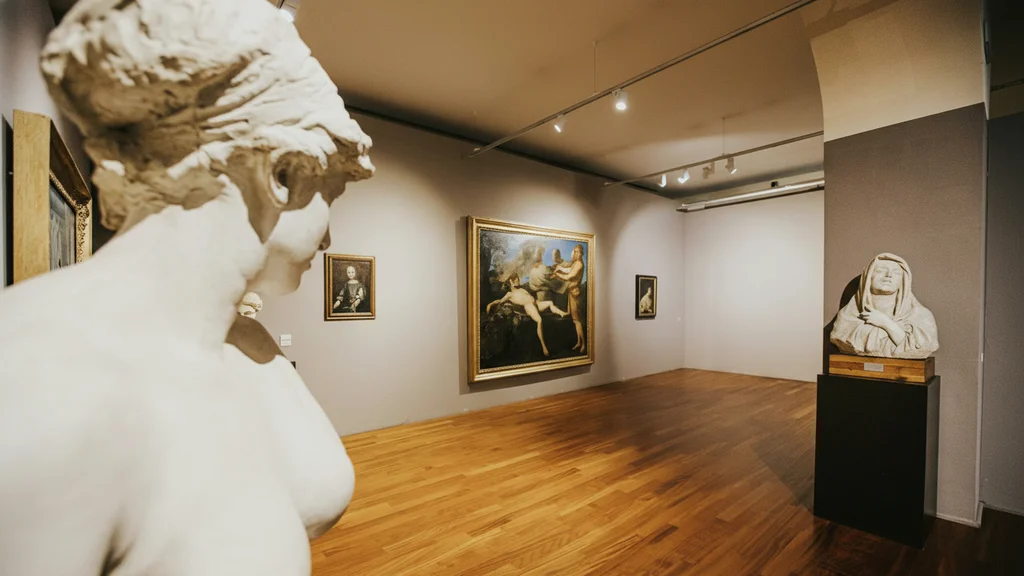
The museum occupies the 16th-century Palazzo Marincola di San Floro, one of the old noble palaces of Catanzaro’s historic centre. Before the restoration that prepared it for its role as a museum, it housed an institute for the deaf and a printing works. The building has three levels and is surrounded by a garden and courtyard, and the interiors have been designed around the exhibition and comfortable viewing. A visit here has a more urban than monumental character – this is a museum you naturally drop into during a walk through the centre.
The interiors are well-organised and focused on presenting works. This layout works well both for the contemporary collection and for the historical holdings. MARCA is not a place of one single narrative, but of several layers of art shown in one building. Look out for the entrance area, bookshop and reading room designed by Alessandro Mendini, the Italian architect and designer who worked with the museum from 2009.
From the museum terrace there is a view of Ponte Bisantis, one of the city’s most recognisable symbols. This detail sets the perspective of the visit nicely: MARCA does not exist in isolation from Catanzaro but remains part of its everyday landscape.
Mimmo Rotella – Master of Décollage and His Place in the Museum
Mimmo Rotella, born in Catanzaro on 7 October 1918 and died in Milan on 8 January 2006, is a key figure in MARCA’s narrative. His presence in the museum stems directly from the artist’s strong ties with the city. The first floor, where Rotella’s works are displayed, is one of the highlights of the visit.
The artist developed his décollage technique from the early 1950s, with its breakthrough usually dated to 1953. It involved tearing posters from city walls and transforming them into a new image built on layers, chance and the energy of the street. It was this that made Rotella one of the most important Italian post-war artists, associated with the Nouveau Réalisme movement.
The collection lets you trace different stages of his work, from early explorations to pieces deeply rooted in the language of mass culture. Rotella’s presence at MARCA gives the museum a clear local centre of gravity while simultaneously opening it to the broad context of European art after 1945.
Greek Heritage of Calabria and the Museum’s Profile
Calabria grows out of a long history of contact with Greek culture, having been part of Magna Graecia from the 8th century BC. The region’s most important colonies were Kroton, today’s Crotone, Sybaris near Cassano all’Ionio, Lokroi Epizephyrioi in Locri and Rhegion, today’s Reggio Calabria. Although this heritage underpins the region’s identity, MARCA deliberately shifts the focus.
Instead of archaeology, of which the region has plenty (think of the National Archaeological Museum in Reggio Calabria), MARCA tells the story of art from the 16th to the 20th century and of the present day. It is a useful contrast: Calabrian culture did not end with antiquity.
Historical Collection – Foundations of Calabrian Art from the 16th to 20th Century
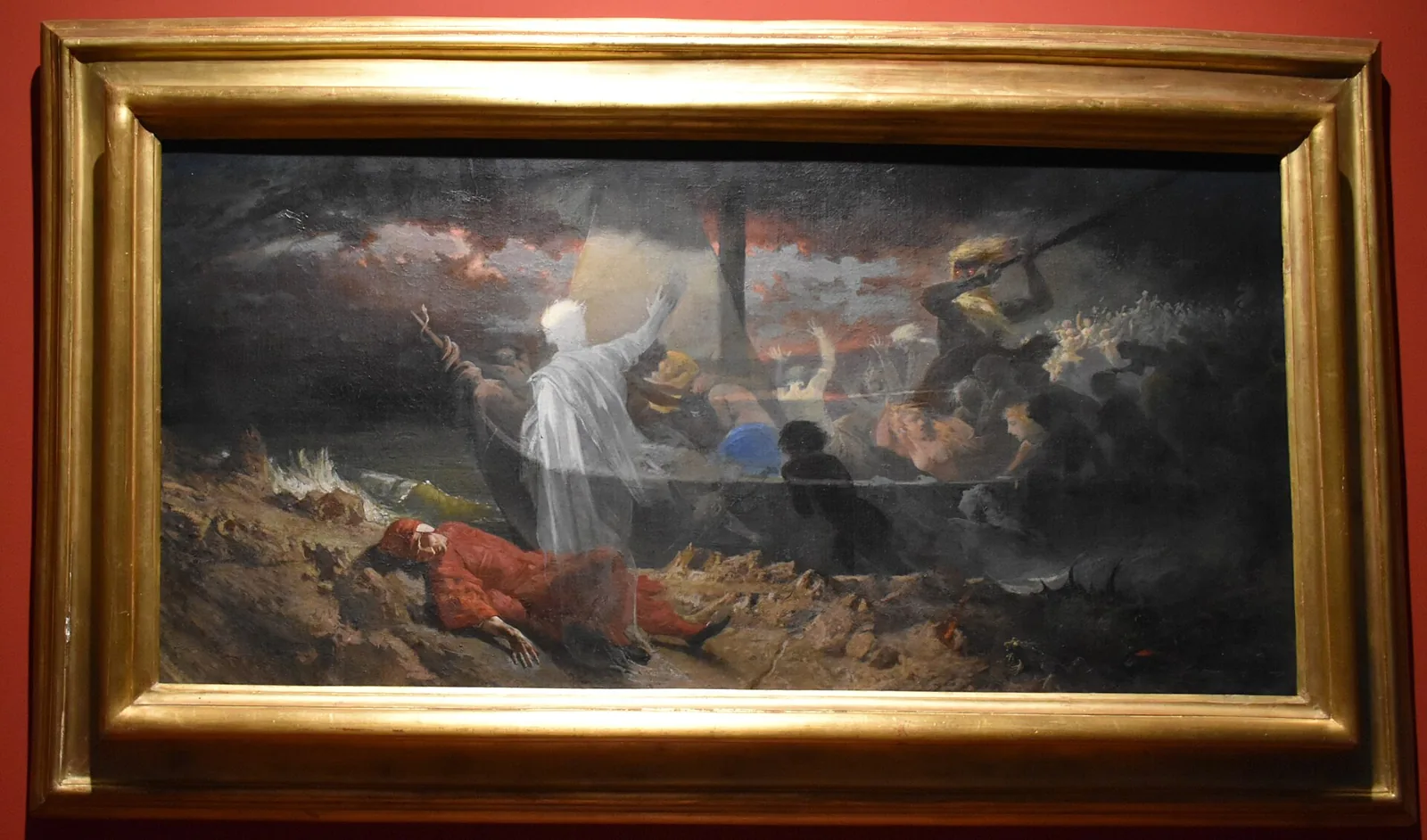
Although MARCA is mainly associated with contemporaneity, an important part of any visit remains the Provincial Pinacoteca and Gipsoteca. It is here that you see the museum is not limited to a single century or a single aesthetic. The historical dimension of the collections, covering works from the 16th to the 20th century, grounds the contemporary galleries in a longer story of Calabrian art.
A key name is Mattia Preti (1613–1699), known as “Il Cavalier Calabrese”, born in Taverna near Catanzaro and regarded as the most important Baroque painter from the region. The 19th century is well represented by Andrea Cefaly (1827–1907), a painter from Cortale, associated with the spirit of the Risorgimento. Meanwhile, Francesco Jerace (1853–1937), born in Polistena, is a reminder of the significance of Calabrian sculpture in the region’s modern history.
The scale of the collections is larger than a quick visit might suggest: the official service charter lists 364 inventoried works, 214 of which are on display. The total exhibition area is 1050.80 m²: the S1 temporary exhibition hall covers 220.80 m², the ground floor with the Gipsoteca and Pinacoteca 369.10 m², and the Pinacoteca on the first floor 460.90 m². MARCA’s official description also mentions around 120 works in the province’s Pinacoteca and Gipsoteca.
The presence of these names under the same roof as contemporary artworks lets you view MARCA more broadly. For visitors this is a real advantage – a single visit covers several eras.
Artistic Events at MARCA Museum – Modern Calabria on the International Stage
MARCA plays a significant role in promoting Calabria through its exhibition activity and cooperation with external partners. The programme changes over time, so it is worth returning on subsequent visits to the city.
MARCA attracts the attention of not only local but also foreign artists. Thanks to this, the museum strengthens Catanzaro’s position as a city where contemporary art has real space to operate. For tourists, this means something simple: even if you already know the permanent collection, the current exhibition can completely change the character of your visit.
The choice of artists and themes often remains tied to the region’s wider heritage, even though the language of the exhibitions is modern. Calabria is not reduced to folklore here but is shown as a place of current cultural production.
Murals in Diamante – Contemporary Art in Public Space
If you are interested in contemporary art in Calabria, it is worth looking beyond museum walls. The best-known example of public art in the region is the murals in Diamante. Operazione Murales was inaugurated here in 1981 on the initiative of painter Nani Razetti and mayor Evasio Pascale, and the walls of the historic centre gradually began to be covered with paintings. Today there are several hundred, so walking through the town feels like passing through an open gallery.
Diamante lies in the province of Cosenza, on the Tyrrhenian coast, about 135 km by road from Catanzaro (around 2 hours 15 minutes via Lamezia Terme and the coast). It is therefore not an add-on to an afternoon at MARCA, but a separate stop on a longer tour of the region.
If you see both, you will experience two different ways art is present in the region – in the museum and on the street.
Watch on YouTube
MARCA Open – International Sculpture Park as a Space for Dialogue
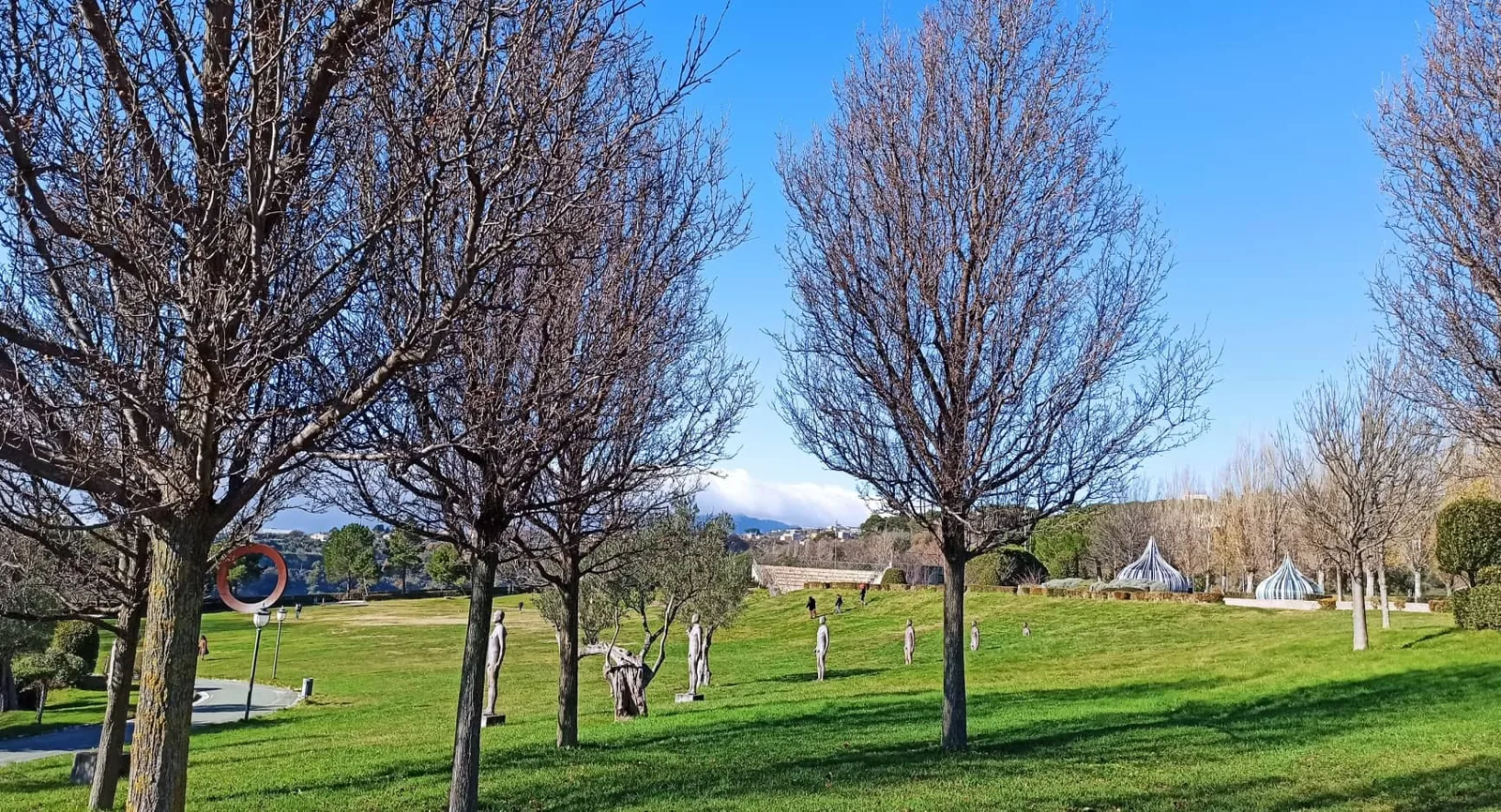
A much closer complement to a museum visit is the open-air art space in the Parco della Biodiversità Mediterranea. This is a large municipal park in Catanzaro that combines green areas with an outdoor exhibition of contemporary art. After the museum galleries you can move straight on to works viewed at a more relaxed pace.
Parco Internazionale della Scultura, also known as MARCA Open, has been growing since 2005. Between 2005 and 2008, works by Tony Cragg, Mimmo Paladino, Jan Fabre, Antony Gormley, Marc Quinn, Stephan Balkenhol and Wim Delvoye were installed there. In the following years, from 2009 to 2014, works by Dennis Oppenheim, Michelangelo Pistoletto, Mauro Staccioli and Daniel Buren, among others, were added. The best-known piece is “L’uomo che misura le nuvole” (The Man Who Measures the Clouds, 1998) by Jan Fabre – a figure on a ladder measuring the sky with a ruler. Other works in the park include “Cast Glances”, “I testimoni”, “Seven times”, “Concrete mixer”, “Catanzaro ’11” and “La cabanne eclatée”.
Both places are easy to combine in a single day – walking or a short drive from the centre takes around fifteen minutes. If you have a little more time in Catanzaro, this combination – museum and park – gives a fuller picture of the city’s contemporary side.
Education – MARCA as a Learning Space
MARCA Museum also places emphasis on its educational dimension, engaging with audiences of all ages and building a relationship with art that goes beyond simply viewing exhibitions. Activities of this kind are particularly important in a venue that combines a contemporary and historical collection, because they help visitors read works in a broader context.
The institution offers a programme for schools and groups, and the workshop character of these activities suits the language of modern art well. With Mimmo Rotella’s work or the historical collections, sessions can be built around image, material and the memory of place. From a visitor’s perspective, this means a living museum, not a purely ceremonial one.
Frequently Asked Questions
What can you see at the MARCA Museum in Catanzaro?
At the museum you can see the permanent collection of works by Mimmo Rotella, the Pinacoteca and Gipsoteca with works from the 16th to the 20th century, including pieces by artists such as Mattia Preti, Andrea Cefaly and Francesco Jerace. The museum also organises temporary exhibitions dedicated to contemporary art.
How much does a ticket to the MARCA Museum cost?
A full-price ticket for the whole museum (three rooms) costs €8, reduced €6; tickets for two rooms (€6 / €4) or the temporary exhibition only (€4 / €3) are cheaper. Prices may change, so confirm them with the museum before your visit.
What exhibitions does the MARCA Museum offer?
The museum offers permanent exhibitions related to Mimmo Rotella and the province’s historical collections, as well as a changing programme of temporary exhibitions dedicated to contemporary art.
What are the museum’s opening hours?
The museum is open from Tuesday to Sunday from 10:00–13:00 and 16:00–19:00. It is closed on Mondays, 1 January, 1 May and 25 December, as well as on public holidays that fall on a Monday, except Easter Monday.
Is the museum accessible for people with disabilities?
Yes. According to the service charter, all rooms and outdoor spaces are step-free – there are ramps and a lift, and toilets on every floor. The museum has no designated disabled parking, however.
Nearby
Sources
The information in this article was verified against the following sources:
- MARCA – Museo delle Arti Catanzaro - Musei Provincia di Catanzaro – museiprovinciacz.it
- museiprovinciacz.it (PDF) – museiprovinciacz.it
- 11 marca open – provincia.catanzaro.it
- Biografia – Fondazione Mimmo Rotella – fondazionemimmorotella.net
- Wikipedia – Catanzaro – en.wikipedia.org
- Museo MARCA | I Luoghi del Cuore – FAI – fondoambiente.it
Last updated: