Catanzaro Lido is the seaside district of Catanzaro on the southern coast of Italy, known for its wide beaches on the Ionian Sea. The Calabria region, where it is located, has a mild climate and clear water, making it suitable for seaside stays from late spring to early autumn. The area offers a wide range of recreation – from water sports to relaxed walks – and provides a fine combination of urban convenience and a seaside atmosphere. It is also a distinctive point on the map of Italy: it sits on the Isthmus of Catanzaro (Istmo di Catanzaro), the narrowest part of the Apennine Peninsula, where the distance between the Ionian and Tyrrhenian Seas is only about 30–35 kilometres.
Table of Contents
Catanzaro Lido – from Railway Station to Seaside Resort
Catanzaro Lido is the seaside district of Catanzaro, the capital of the Calabria region, and has been an important point on the Ionian coast for years. It owes its development to its location in the Gulf of Squillace and a modern urban structure that clearly differs from the historic city centre. The heart of the district is Lungomare Stefano Pugliese, a palm-lined promenade that sets the rhythm of daily life and summer recreation.
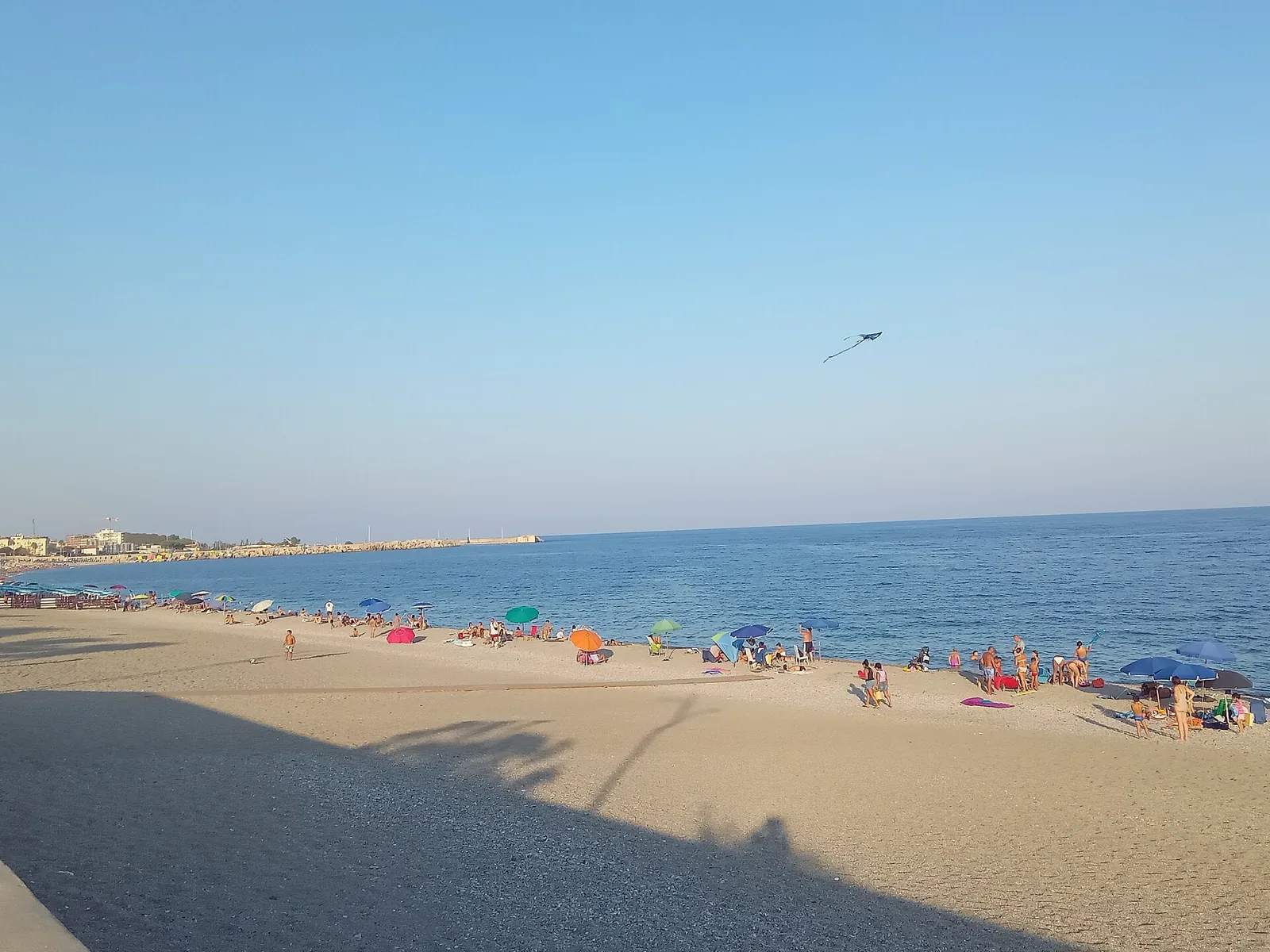
The district developed on the shores of the Gulf of Squillace, along a stretch on the Costa degli Aranci (Orange Coast). The changes of the 19th and 20th centuries had a major impact on the popularity of the area, when the expansion of railway infrastructure transformed the coastal part of the city into an important service and residential centre. The presence of Catanzaro Lido railway station facilitated an influx of residents and tourists seeking time by the Ionian Sea.
The tourist growth of the district is one story; its year-round rhythm another. The University of Magna Græcia in nearby Germaneto began shaping life in this part of the city only much later, giving Lido a more residential and student-driven character outside the summer season. Thanks to this, the area around Piazza A. Garibaldi stays lively beyond summer too.
Today, Catanzaro Lido offers the infrastructure needed for a seaside stay, including restaurants, bars and ice cream parlours. The district's core strength remains easy access to the beach, the promenade and everyday seaside life.
It helps to understand the relationship between Catanzaro Lido and Catanzaro itself. The historic city developed on hills, inland, while the seaside part grew later as a port, railway and residential zone. Present-day Catanzaro Lido lies on the Ionian Sea in the Gulf of Squillace, about 13 km from the historic centre of Catanzaro, and its growth accelerated with the Ionian railway and the urbanisation of the coast.
Catanzaro Lido Beaches Compared to Other Calabrian Resorts
The beaches of Catanzaro Lido are an important point on the Ionian Calabrian coast, especially for visitors looking for a long shoreline without giving up urban services. The official Visit Catanzaro portal describes Catanzaro Marina as more than 5 km of urban shoreline, and the Giovino area as an additional section of lungomare with about 1 km of coast. The beaches have wide stretches with a mix of sand, fine gravel and, in places, pebbles, well suited to walks and beach recreation. Their location right next to the urban district means bars, the promenade and everyday services are within easy reach.
| Technical Parameter | Beach Characteristics |
|---|---|
| Surface type | Sand and pebbles |
| Seabed structure | Mixed (sand/gravel), gentle slope |
| Water clarity | Generally high; Blue Flag awards assess water quality, safety, services and environmental management |
| Main sectors | Lido (central) and Giovino (eastern) |
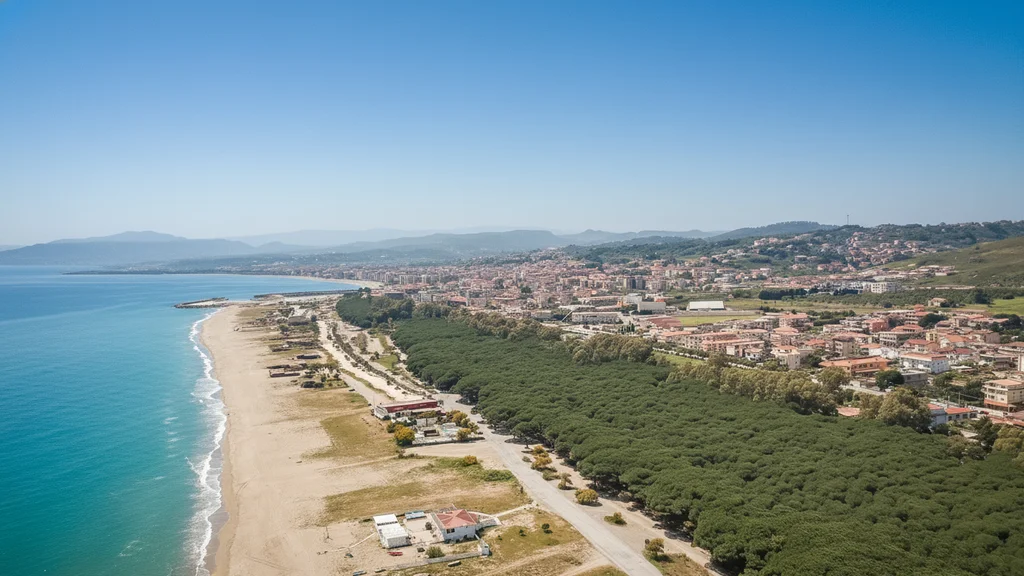
The coastline has two main areas: the more urbanised centre and the quieter Giovino sector. The Giovino sector borders an extensive pine forest (Pineta), which provides a more natural backdrop and some shade on hot days. Visit Catanzaro identifies Giovino as a stretch with a wide beach, about 1 km of coastline and a pine forest beside the lungomare. It is a good choice for those who prefer a less urban feel than the central part of Lido.
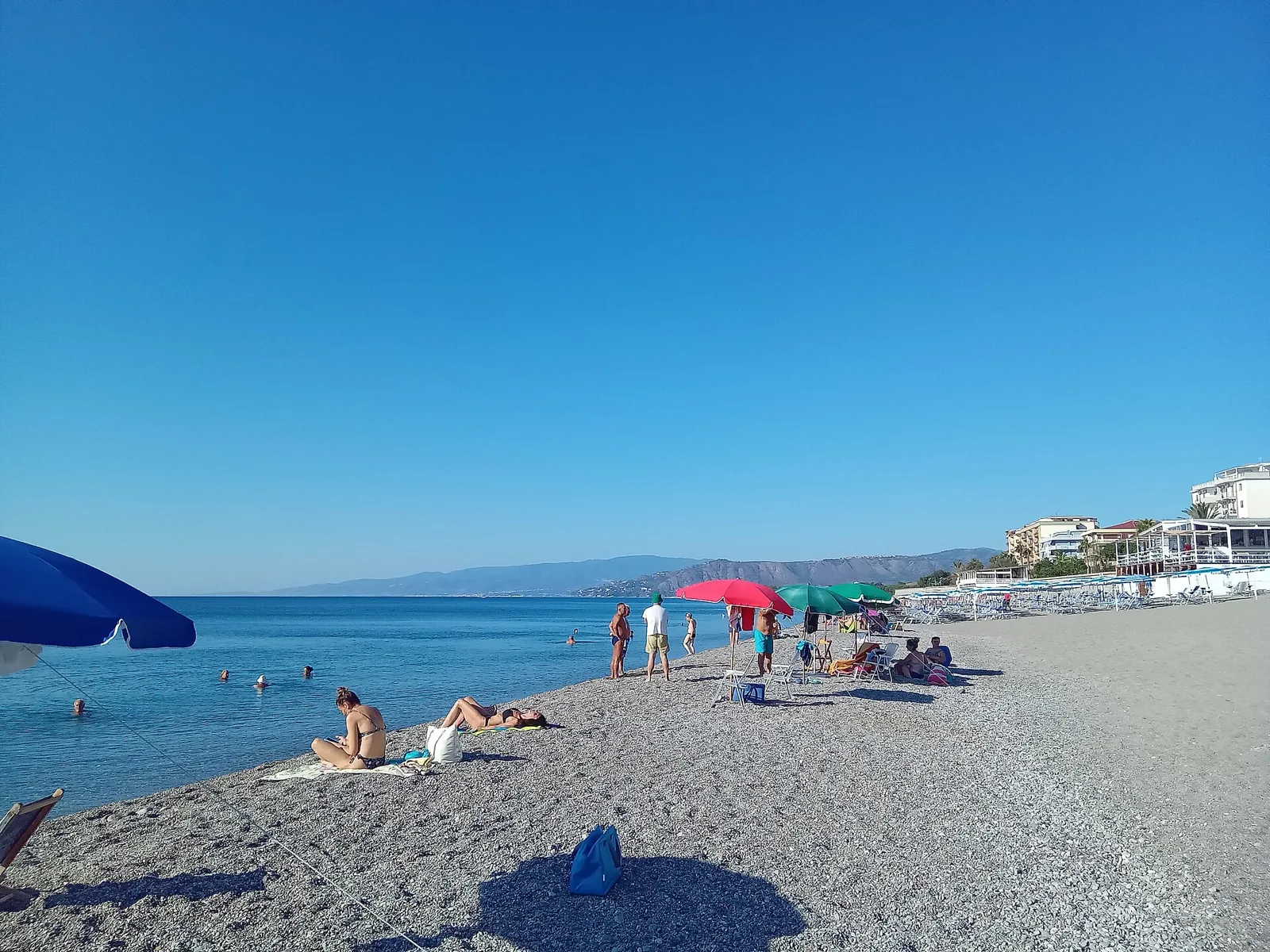
In practice, the beaches here are convenient because they combine developed sections with freer stretches. In season, stabilimenti balneari rent sunbeds and umbrellas, and alongside them lie sections of spiaggia libera. As a rough guide, two sunbeds and an umbrella in Calabria in summer typically cost around €20–35 per day depending on the month and the row. In 2026, Catanzaro/Giovino received the Bandiera Blu for the fourth year in a row; the official Comune di Catanzaro notice of 14 May 2026 named Giovino beach as the awarded area for quality and environmental management.
When comparing Catanzaro Lido to other spots in the region, it helps to look at specific criteria. Soverato has a more resort-like character, Caminia and Copanello offer smaller bays and rockier stretches, while Giovino feels calmer and more natural thanks to the adjacent pine groves. Unlike beaches such as Arcomagno or Michelino, Catanzaro Lido is not a cove beneath a cliff but a long urban shoreline with easy access and solid facilities.
The Impact of Tourism on the Local Economy – Opportunities and Challenges
Catanzaro Lido plays an important role in the local economy, with tourism supporting hospitality, gastronomy and seasonal services. Tourist spending drives daily life in the district, especially in summer, when the promenade, beaches and venues operate at full capacity. For many local businesses, the holiday months are the most important part of the year.
The beach usage structure reflects the typical Italian model of division into paid zones (stabilimenti balneari) and free zones (spiagge libere). Private beach clubs offer full facilities and in the evenings some of them become a natural extension of social life along the lungomare. Meanwhile, spiagge libere near the port and Giovino are valued for their greater freedom and more natural character.
Despite the benefits, the seasonality of the sector generates challenges related to uneven revenues and greater pressure on infrastructure in summer. A key element of development remains the protection of natural resources, especially the strip of beaches, dunes and coastal greenery. In practice, it is precisely the balance between tourist convenience and preserving the character of the coast that will shape the future of Lido.
Watch on YouTube
Water Sports and Active Leisure in Catanzaro Lido
Catanzaro Lido is a good choice for those who enjoy an active day by the sea. In season, water sports and beach activities are readily available along the beaches and the promenade, and conditions on the Ionian Sea suit both recreation and relaxed training. The most action takes place from June to September, when the beaches are alive from morning to evening. As a local example of beach services, Santa Fe Beach on Via Lungomare Stefano Pugliese lists a daily package with an umbrella, a sunbed (sdraio) and a sun lounger (lettino) for €30. The same venue states opening hours of 07:00–23:59, which gives a good sense of the seasonal rhythm of beach venues along the lungomare.
The bathing season usually runs from June to September, with the best conditions for swimming in July, August and September. Average daily temperatures are roughly 26–29°C in June, 30–33°C in July and August, and 26–29°C in September. The Ionian Sea along this coast typically reaches around 22–24°C in June, 25–27°C in July and August, and about 24–25°C in September.
Popular activities include snorkelling, swimming, SUP, sailing and beach sports. Bear in mind that sea conditions change with the weather, so after storms the entry into the water and the seabed layout may look different from a few days earlier. If you are planning a longer beach stay, check conditions as you go.
- Sailing – in season, you can look for courses and sessions organised by local clubs and water-sports schools.
- Boat rental – around the port and the seaside district, short trips and recreational vessel hire are sometimes available.
- Beach sports – the wide beach is well suited to beach volleyball, running and simple activities on the sand.
Cultural Heritage and Travel Logistics
Just a few kilometres from Lido, in Roccelletta di Borgia, lies the Parco Archeologico di Scolacium. This site reveals several layers of history at once – Greek, Roman and medieval. Within the park you will find a Roman theatre, a forum, sections of ancient roads and the monumental church of Santa Maria della Roccella from the 11th–12th century, associated with the Norman era.
The site is linked first to the Greek Skylletion or Skylakeion, and later to the Roman colony Minervia Scolacium, established in 123–122 BC; under Emperor Nerva it was founded again and took the name Colonia Minervia Nervia Augusta Scolacium. Scolacium is not just a single monument but an entire site that clearly shows the continuity of settlement on this part of Ionian Calabria. If you are interested in regional history, this is one of the most important stops near Catanzaro Lido.
Museo e Parco archeologico nazionale di Scolacium is located at Via Scylletion, 88021 Borgia. According to museum information, the site is open from Tuesday to Sunday from 09:00–19:00 and closed on Mondays. A full ticket costs €5, a reduced ticket €2, and the museum phone contact is +39 0961 391356. Check the opening hours before you go, especially outside the main season.
Catanzaro Lido is also an important transport hub. It has a railway station on the Ionian line, with regional connections towards Soverato, Crotone and Reggio Calabria. A major advantage is the direct rail link to Lamezia Terme Centrale (the journey across the Isthmus of Catanzaro usually takes about 45–50 minutes). From Lamezia Terme Airport, you can reach Catanzaro Lido by car on the excellent SS280 expressway (Strada Statale 280 dei Due Mari). The route is just under 40 km, and the drive usually takes about 35 minutes.
Evening life in Lido revolves around the promenade and the classic Italian rhythm of the day. After about 19:00–20:00 the struscio begins – a relaxed stroll along the lungomare, past bars, ice cream parlours and beachside venues. The busiest period is July and August, especially the week around Ferragosto on 15 August.
While in Catanzaro Lido, it is worth trying the local cuisine. The undisputed king of Catanzaro's gastronomy is morzello (morzeddhu in dialect) – a spicy, slow-cooked stew of veal offal in tomato sauce, traditionally served in a round bread called pitta. It is also worth seeking out dishes made with swordfish (pesce spada), sardella from the Crucoli area, and excellent Calabrian olive oil and peperoncino. The famous Tartufo di Pizzo ice cream, while widely available in local gelaterias, is the culinary signature of the town of Pizzo, on the other, Tyrrhenian side of the isthmus.
Frequently Asked Questions
What sea is Catanzaro Lido on – Tyrrhenian or Ionian?
Catanzaro Lido is situated on the Ionian Sea, in the Gulf of Squillace. It is this Ionian position that gives this stretch of coast its more open and sunny character.
Is it worth going to the beach at Catanzaro Lido?
Yes, especially if you are looking for a long urban beach with convenient access and good facilities. In season you will find both stabilimenti balneari and spiaggia libera sections, with a quieter setting particularly in the Giovino area.
How far is Catanzaro Lido from the city centre?
The seaside district is about 13 km from the historic centre of Catanzaro. The travel time depends on whether you are heading to the railway stations or the old town high up on the hills, so check current connections before you go.
What are the main historical attractions nearby?
The most important site is the Parco Archeologico di Scolacium with its Greek, Roman and medieval layers, including the Roman theatre, forum and the church of Santa Maria della Roccella from the 11th–12th century.
Can you do water sports at Catanzaro Lido?
Yes, in season you can enjoy a range of water and beach activities, from swimming and snorkelling to sailing, SUP and recreational sports on the sand. The best conditions for bathing are usually from July to September.
Sources
The information in this article was verified against the following sources:
- Catanzaro Lido (marina) – Visit Catanzaro – visit.catanzaro.it
- musei.calabria.beniculturali.it – musei.calabria.beniculturali.it
- Bandiera Blu per il quarto anno consecutivo a Catanzaro e alla spiaggia di Giovino – Comune… – comune.catanzaro.it
- trenitalia.com (PDF) – trenitalia.com
- Acquista biglietto autobus - Aeroporto Lamezia Terme - Catanzaro Lido - Bilotta Autolinee – bilottaautolinee.it
- Wikipedia – Magna Graecia University of Catanzaro – en.wikipedia.org
Last updated: