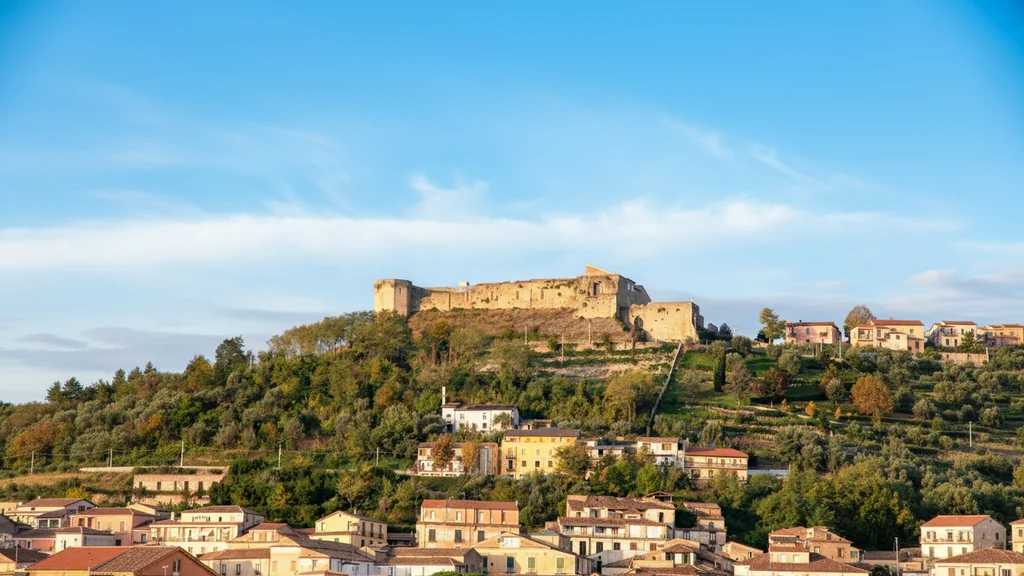
Castello Normanno-Svevo in Cosenza, situated on Pancrazio Hill, is one of the most important traces of the city's Norman-Swabian past. The castle dominates the historic centre, and its very position explains why it held such great defensive and political significance for centuries. To this day it remains one of the most recognisable points in Cosenza's panorama.
| Geographical Feature | Description and Location |
|---|---|
| Elevation | On Pancrazio Hill, 383 m above sea level, above Cosenza's historic centre |
| Location | Pancrazio Hill (one of the seven hills of Cosenza); site coordinates: 39°17′11.76″N, 16°15′27.36″E |
| Visibility | Sila Mountains, pre-Apennine range, Crati Valley |
| Original function | Control of trade routes and territorial defence |
Table of Contents
- Architectural Heritage of Castello Normanno-Svevo – A Testament Through the Ages
- The Strategic Significance of Castello Normanno-Svevo in the History of Cosenza
- Culture and Education at the Castle – Modern Functions of Castello Normanno-Svevo
- The Castle on Pancrazio Hill as a Symbol of Calabrian Identity
Architectural Heritage of Castello Normanno-Svevo – A Testament Through the Ages
Castello Normanno-Svevo is not merely a fortress, but also a complex architectural structure that underwent numerous functional and aesthetic transformations over the centuries. Pancrazio Hill may have had defensive significance earlier, but the present castle is primarily associated with the Norman period. It is these medieval phases of development that best explain the building's character today.
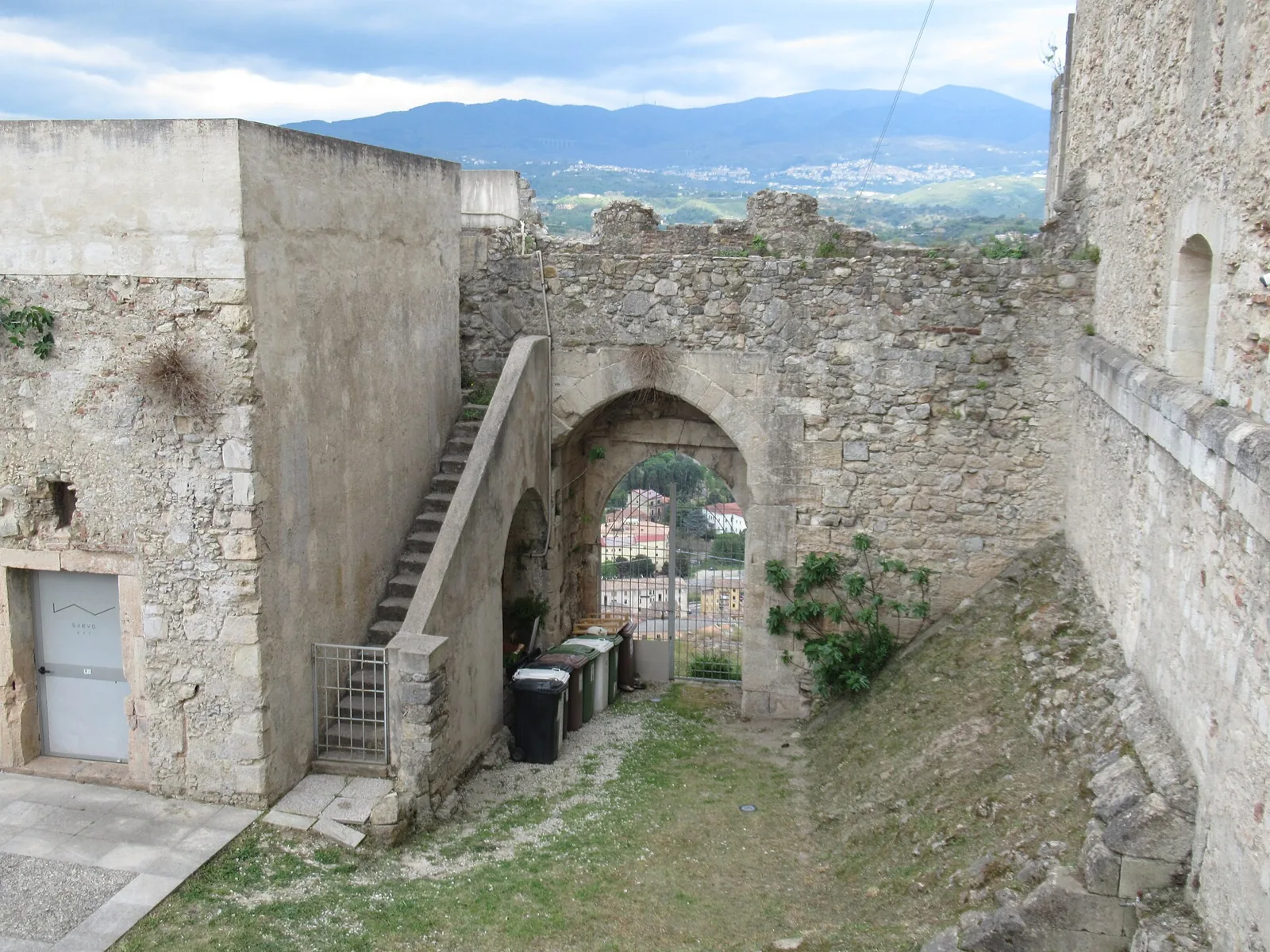
The castle's chronology can be summarised as follows: sources mention a fort from 937 on Colle Pancrazio, and from the 12th century Roger II enlarged the castle. The earthquake of 1184 destroyed the rocca, while in the 13th century Frederick II restored and expanded the building. During the Angevin-Aragonese period the castle served as a princely residence, mint and political prison, and after the earthquake of 1638 its decline began. After another earthquake, in 1870, the castle was purchased by the Comune di Cosenza by deed dated 23 December 1885.
The major reconstruction of the castle took place under Frederick II of Swabia, who in the 1230s gave it a form suited to the needs of his era. Under his rule, Castello Normanno-Svevo strengthened its role as an important defensive and administrative point in southern Italy. Today's structure is largely the result of these medieval transformations.
Frederick II reinforced the network of castles in the Kingdom of Sicily as a tool of administrative and military control. The reconstructions of this period combined defensive function with a more representative character and better spatial organisation. This places Cosenza within the emperor's broader policy, rather than merely within local city history.
Over the years, the castle in Cosenza underwent further changes, including in the 15th century when it was still being adapted and used in a residential capacity as well. As a result of modern renovations carried out between 2008 and 2015, the castle became a contemporary cultural centre. This revitalisation sparked controversy due to modern elements, such as the distinctive yellow external lift, which continues to divide the opinions of residents and conservators.
Castello Normanno-Svevo remains a clear symbol of the city's continuous evolution. Its position atop Pancrazio Hill, at 383 m above sea level, provides not only a commanding vantage point but also opens broad views over Cosenza. It is precisely the juxtaposition of military past and contemporary cultural function that makes the castle still so striking.
Watch on YouTube
The Strategic Significance of Castello Normanno-Svevo in the History of Cosenza
The Origins of Castello Normanno-Svevo
Castello Normanno-Svevo in Cosenza, also known as Rocca Normanna, is one of the most important castles in southern Italy. Situated on Pancrazio Hill, the castle secured the surrounding area and served as a strategic hub for the development of Cosenza. The hill may have served a defensive function as early as the early medieval period, and the castle itself developed primarily during the Norman and Swabian eras.
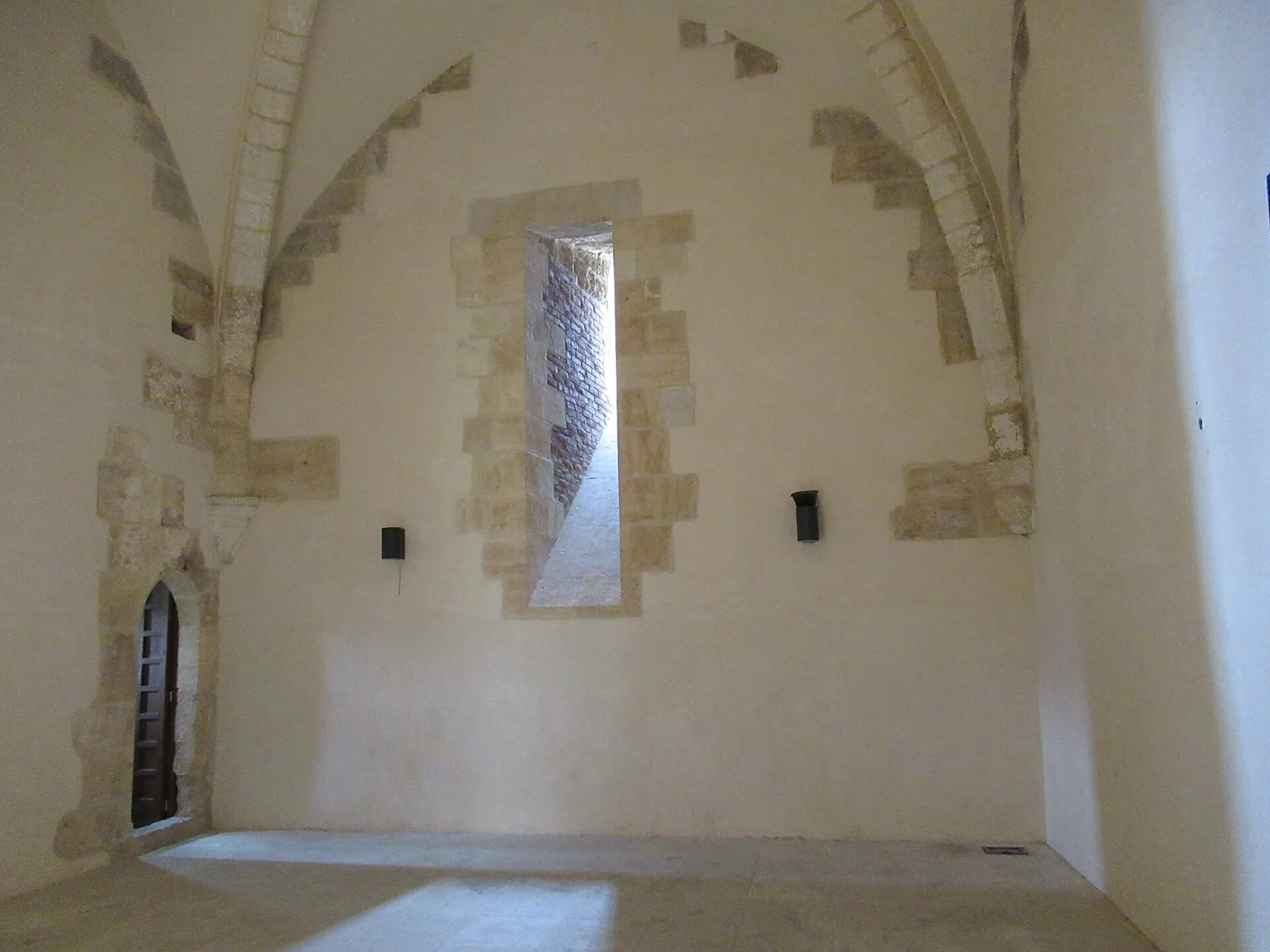
The importance of this site stemmed directly from the city's location. Cosenza lies at the confluence of the Crati and Busento rivers, and the castle towers over the historic centre, controlling access to the city from the Crati valley side as well as the connections between Calabria's interior and the Tyrrhenian and Ionian coasts. This topography best explains its former military and political role.
The castle emerges on the historical map as a fundamental defensive point for old Cosenza. The history of the hill is older and less clear-cut than the history of the present castle: sources indicate the site's earlier defensive significance and later Norman and Swabian transformations. As a result, the history of the building cannot be reduced to one simple construction phase, but instead to successive layers visible in its functions and reconstructions.
Norman Dominance and the Influence of the Hautevilles
The Norman era in this part of southern Italy is associated with the mid-11th century, and it was then that the castle began to take on clearer political and military significance. The Norman period brought the strengthening of the fortress and the growing role of Cosenza as an important point for territorial control. In the following decades the building served a defensive and administrative function.
Under Norman rule, the castle symbolised the strengthening of the Latin ecclesiastical and administrative order. Its position above the city emphasised authority over the surrounding area and Cosenza's importance in the regional balance of power. This prepared the ground for the later, more extensive transformations of the Hohenstaufen era.
Swabian Rule – The Hohenstaufen Era
Under Frederick II's rule, the fortress was significantly expanded, becoming an important element of the castle system of the Kingdom of Sicily. The reconstructions carried out in the 13th century had not only military but also administrative significance, as the emperor used such structures for more effective governance of southern Italy. In this context, Cosenza occupied an important position owing to its location and control over the region's routes.
The castle played an important role in the politics of this part of Calabria, and its development well illustrates how a medieval fortress could combine defensive function with a representative one. To this day, the building remains a witness to successive changes from the Middle Ages to the present. It is one of those monuments where the city's history becomes truly legible.
Culture and Education at the Castle – Modern Functions of Castello Normanno-Svevo
Castello Normanno-Svevo in Cosenza has gained contemporary significance as a centre of culture and education. Following thorough renovation, the castle has ceased to be merely a witness to history, becoming a space open to residents and tourists. The modern use of the building fits into the promotion of the cultural heritage of the Calabria region.
The castle is one of the most important symbols of old Cosenza, alongside the cathedral, Teatro Rendano and Museo dei Brettii e degli Enotri. Thanks to its location above the centro storico, it functions not only as a monument but also as a viewpoint and a venue for city events promoting local heritage. This makes it a good complement to a walk through the oldest part of the city.
Museum and Historical Use
After the revitalisation, the most striking impression comes from the castle's form itself, its walls, and its position above old Cosenza. Inside, exhibition spaces are used for temporary shows and events, so the character of a visit may change depending on the programme. This is more a place of living culture than a classic museum with a single permanent trail.
For visitors, the courtyard and viewing terraces are also particularly valuable, offering panoramas of Cosenza, the Crati valley and, in clear weather, the Sila massif. A relaxed visit without special events usually takes 30–60 minutes, but if exhibitions are on, allow more time. It is a good spot for a brief stop or the finale of a stroll through the centro storico.
Cultural Events and Festivals
The castle courtyard and interiors are sometimes used for concerts, meetings and other cultural events connected with city life. During larger festivals in Cosenza, the building may host selected accompanying initiatives, though it is not always their permanent main venue. In practice, it is best to treat the castle as one of the important spaces of the city's cultural life.
Role in Education and Tourism
The castle offers guided tours for an additional €3, by reservation for groups of at least 15 people; audio guides are also available in Italian and English. Officially available spaces include, among others, the Sala del Trono for up to 150 people, the Sala delle Armi for up to 120 people, the Sala del Ricevimento/Sala del Camino for up to 80 people, and the Sala Militare for up to 100 people. There is also a garden with a small stage and two terraces, including a larger terrace covering the entire roof area of the castle. The castle's significance is underscored by its role in social integration and in introducing visitors to the city's history, especially if you are deciding what to see in Cosenza first.
The Castle on Pancrazio Hill as a Symbol of Calabrian Identity
The Castle's Significance in the Calabrian Landscape
Castello Normanno-Svevo in Cosenza is not merely an important monument of defensive architecture but also one of the strongest reference points in the city's panorama. Its significance derives from its position above the historic centre and the role it played through successive eras. The castle survived political changes, reconstructions and earthquakes, remaining a permanent part of Cosenza's landscape.
History as a Pillar of Local Identity
Built after 1000 AD, the castle served defensive, administrative and political functions. Its strategic position meant that it dominated the city of Cosenza and reinforced the importance of this place in the history of the region. The castle's history is inextricably linked with the story of medieval and early modern Cosenza, which is why it remains an important element of local memory to this day.
The Castle as a Modern Cultural Centre
Today, the castle is a cultural centre that combines history with modern forms of heritage use. Contemporary adaptations aim to conserve the structure and adapt it to the needs of today's audiences. Thanks to this, medieval walls continue to live as an active part of the city, rather than merely a sealed relic of the past.
If you are planning a visit, it is worth knowing that the castle sits above the centro storico of Cosenza on Colle Pancrazio. The walk up from the old town is steep and usually takes about 15–25 minutes depending on your starting point, while by car or taxi you can reach the hilltop via the access road. From Cosenza station to the old town is several kilometres, so a taxi or city bus to the centre is most convenient, followed by the walk up on foot.
The best light for photographs and panoramas is usually in the late afternoon. In summer the climb to the hill can be tiring, so bring water and a hat. Shoes with good grip are also helpful, as the stone surfaces of the old town and the steep approach can be slippery.
| Key Dates and Events | Impact on the Castle |
|---|---|
| 11th–12th century | Main development of the castle during the Norman era. |
| 1230s | Major reconstruction under Frederick II of Swabia. |
| 15th century | Further modifications and residential use. |
| Early modern period | Gradual loss of military significance. |
| 2015 | Completion of modern renovation and opening to visitors. |
Frequently Asked Questions
What are the opening hours of the castle in Cosenza and how much does a ticket cost?
Official opening hours from 1 September to 30 June are Tuesday–Saturday 9:30–18:00 and Sundays and holidays 10:00–18:00; the castle is closed on Mondays. From 1 July to 31 August the castle operates with a midday break: Tuesday–Saturday 9:30–13:00 and 16:00–20:00, Sundays and holidays 10:00–13:00 and 16:00–20:00. A standard ticket costs €4, reduced ticket €2, FAI ticket €3, groups of more than 15 people €3, audio guide €1, and tablet €2.
What is the history of Castello Normanno-Svevo in Cosenza?
The castle's history is primarily associated with the Norman period (11th–12th century) and the important reconstruction under Frederick II in the 13th century. Pancrazio Hill had defensive significance earlier, and the building served military, administrative and later cultural functions through successive eras.
What can you see at the castle in Cosenza?
The most important features are the castle's walls and form after revitalisation, along with the spaces used for temporary exhibitions and events. It is worth visiting the courtyard and viewing terraces, which offer fine views of Cosenza, the Crati valley and, in clear weather, the Sila massif.
Is the castle accessible for people with disabilities?
Yes, during the last renovation a modern external lift was installed, providing access to the upper levels of the building for people with limited mobility, although its appearance has sparked aesthetic controversy.
Are special events held at the castle?
Yes, the castle is sometimes used for concerts, meetings and other cultural events connected with city life. The programme changes over time, so before visiting it is worth checking the current events calendar.
Nearby
Sources
The information in this article was verified against the following sources:
- contatti - Castello Svevo Cosenza – castellocosenza.it
- gli spazi - Castello Svevo di Cosenza – castellocosenza.it
- informazioni - Castello Svevo di Cosenza – castellocosenza.it
- mediaevalsophia.net (PDF) – mediaevalsophia.net
- Wikipedia – Castello normanno-svevo (Cosenza) – it.wikipedia.org
- Wikipedia – Cosenza – en.wikipedia.org
Last updated: