The Cathedral of Santa Maria Assunta in Cosenza is one of the most important architectural monuments in Calabria and the historic heart of the old town. The present church, erected after the catastrophe of the late 12th century, combines medieval austerity with later transformations that clearly illustrate the long history of Cosenza. It is not inscribed on the UNESCO World Heritage List, but in 2011 it received UNESCO recognition as a Patrimonio testimone di una cultura di pace. This distinction well reflects its significance – not only religious but also historical and symbolic.
The previous cathedral was destroyed by the earthquake of 1184. The current duomo was rebuilt at the end of the 12th century and consecrated in 1222 in the presence of Emperor Frederick II. It is this moment that is most strongly associated with the history of the church and the presence of the famous staurotheca.
Table of Contents
- Cathedral of Santa Maria Assunta in Cosenza – Architectural Evolution Through the Ages
- Cathedral of Santa Maria Assunta in Cosenza – Centre of Social and Cultural Life
- Architectural Treasures of Calabria – Cathedral of Santa Maria Assunta Among Other Monuments
- A Prestigious UNESCO Title – What Does It Actually Mean for Cosenza?
Cathedral of Santa Maria Assunta in Cosenza – Architectural Evolution Through the Ages
The Cathedral of Santa Maria Assunta, commonly known as the Duomo di Cosenza, is one of the most important churches in Calabria. An earlier cathedral existed here before 1184, but it was destroyed by a powerful earthquake. The reconstruction after this catastrophe was completed by Archbishop Luca Campano, and the consecration took place on 30 January 1222 in the presence of Frederick II.
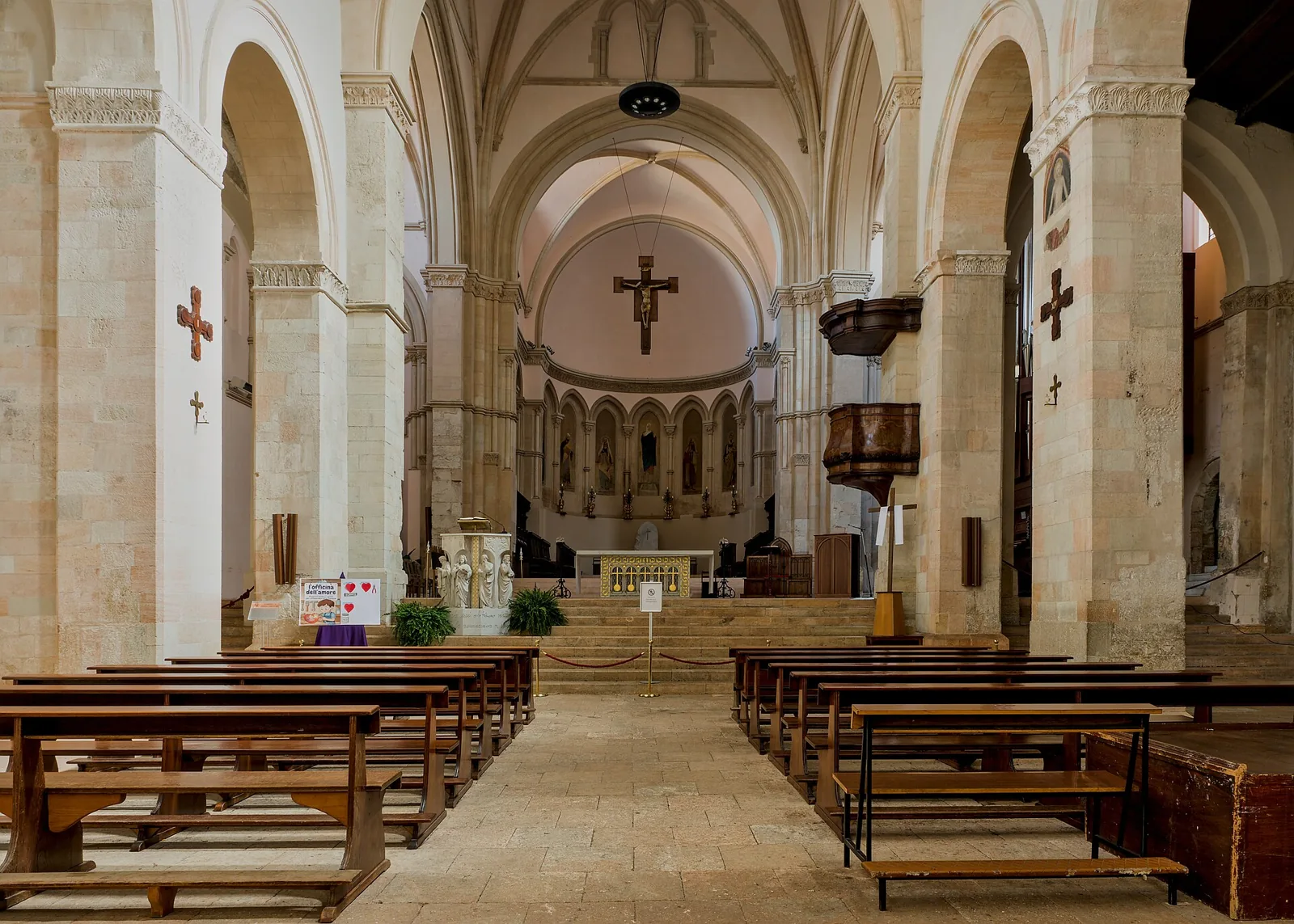
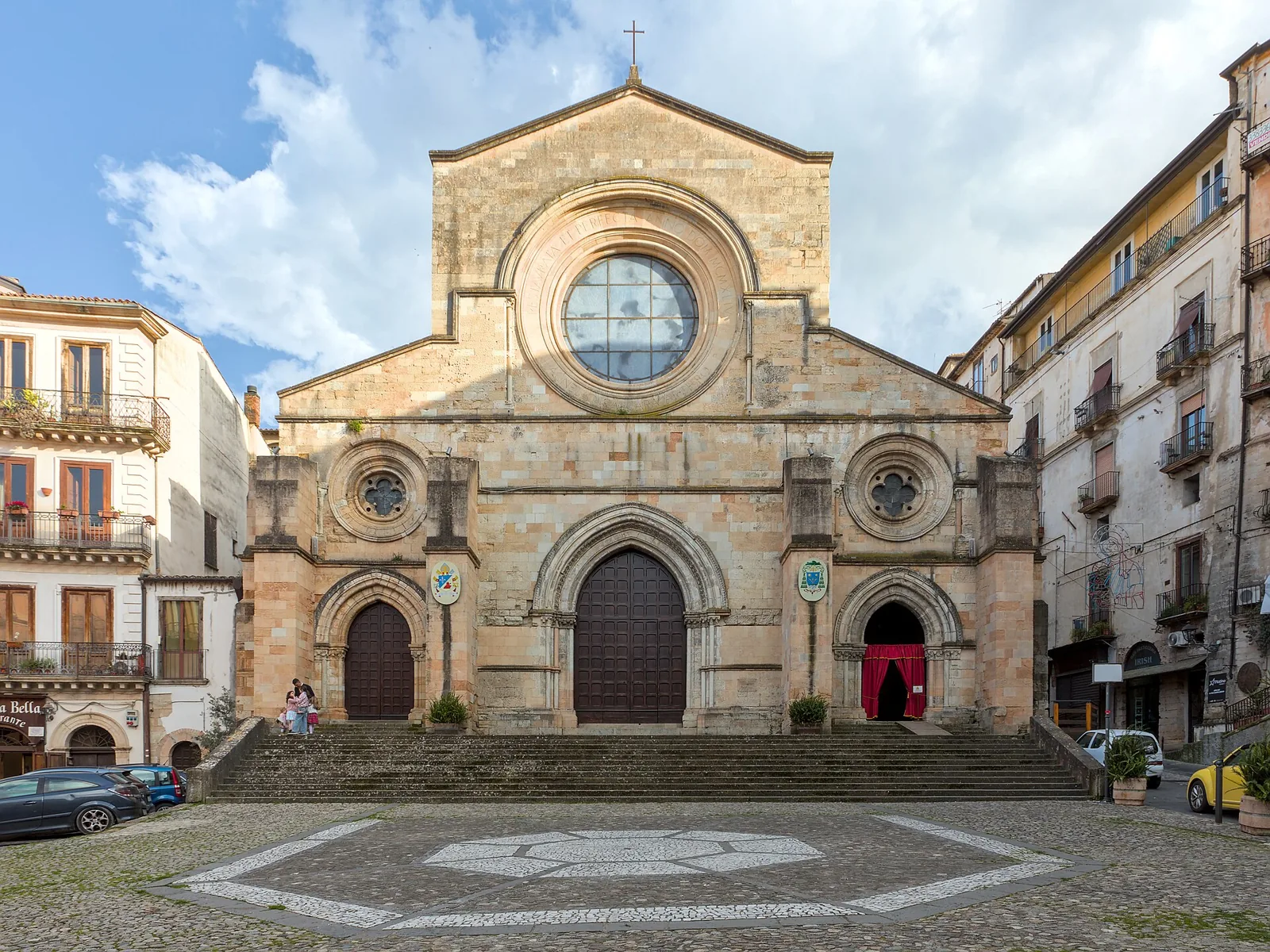
The Duomo di Cosenza is widely regarded as one of the most important examples of Cistercian Gothic architecture in southern Italy. The church has a basilican plan with three naves and a transept, and its form combines pointed-arch solutions with the restraint of decoration typical of Cistercian influences. It is precisely this austerity and legible monumentality that make the greatest impression here.
Over subsequent centuries, the cathedral underwent various transformations and restorations. Around 1750 the interior received a rich Baroque decoration, but in the 19th and 20th centuries a purist restoration removed most of these additions to restore the building's austere, original Gothic-Cistercian character. As a result, today's duomo impresses above all with monumental, stone simplicity rather than Baroque splendour.
Cathedral of Santa Maria Assunta in Cosenza – Centre of Social and Cultural Life
The Cathedral as a Centre of Religious Life
The cathedral in Cosenza serves not only as a place of worship but is a key element of the religious life of the city's residents. It is the sanctuary of the Madonna del Pilerio, patroness of the city and of the Archdiocese of Cosenza-Bisignano. Her icon, dated by the archdiocese to the 12th century, is held in special veneration – according to local tradition, it was this icon that saved the city from a plague epidemic in 1576.
For centuries, the church has been the centre of the most important religious ceremonies, solemn masses and diocesan celebrations. In the liturgical calendar of the archdiocese, 12 February is the feast of the Beata Vergine Maria nostra Signora del Pilerio, patroness of the archdiocese and Cosenza. Current diocesan announcements also indicate a settenario and celebrations at the cathedral around 8 September, so check the latest calendar when planning your visit.
A Venue for Cultural Events
The building also serves as a meeting place for the community, but its primary function remains liturgical. The cathedral is first and foremost a place of services, diocesan ceremonies and celebrations linked to the local devotion to the Madonna del Pilerio. Individual events are best checked in the current calendar of the archdiocese, as the programme depends on the liturgical year and the decisions of the organisers.
Tourism and Historical Education
The historic centre of Cosenza, including the cathedral, is a good starting point for exploring the city's medieval history and Calabria's sacred art. Visitors can combine the cathedral with the nearby Museo Diocesano di Cosenza, where the Stauroteca di Cosenza is displayed – a precious reliquary of the True Cross, traditionally associated with a gift from Frederick II at the consecration of the cathedral in 1222.
In the Museo Diocesano di Cosenza, the exhibition plan identifies room H as “Il Tesoro della Cattedrale: la Stauroteca”. The museum description states that the staurotheca and the icon of the Madonna del Pilerio are the two key works that structure the visiting route. This makes it best to treat the duomo and the diocesan museum as two complementary places in a single story about the cathedral.
The Cathedral on a Walk Through the Historic Centre
The cathedral is one of the main sights of Cosenza's old town. Its location at Piazza Duomo makes it a natural part of a walk along Corso Telesio, a visit to the museums and the climb towards the castle. Although the cathedral is not on the UNESCO World Heritage List, it remains one of the foundations of Calabria's cultural heritage and an important element of the local tourist offer.
Watch on YouTube
Architectural Treasures of Calabria – Cathedral of Santa Maria Assunta Among Other Monuments
Comparing the cathedral in Cosenza with other sacred monuments of the region, we see the diversity of influences that shaped the history of southern Italy. The Duomo itself stands out primarily as an important example of Cistercian Gothic, while other buildings in the region reveal the Byzantine, defensive or early modern face of Calabria. This comparison shows just how architecturally diverse Calabria is – from austere Cistercian Gothic to Byzantine domes and coastal fortifications.
| Monument | Architectural Style | Key Feature |
|---|---|---|
| Cosenza Cathedral | Cistercian Gothic | Staurotheca linked to the 1222 consecration and the royal tomb of Isabella of Aragon |
| Cattolica di Stilo | Byzantine | Five characteristic domes and precious frescoes |
| Castello Murat | Fortification | Site of Joachim Murat's execution |
Cattolica di Stilo
One of the most contrasting examples is the Cattolica di Stilo, a small Byzantine church probably dating from the 10th century, famous for its excellent proportions and unique frescoes. While the cathedral in Cosenza impresses with its scale and centuries of reconstruction, the church in Stilo is testimony to Greek influences in the region. The juxtaposition of these two buildings demonstrates the complexity of Calabria's history, where Latin tradition intertwined with Eastern heritage.
Regional and Historical Significance
The Cathedral of Santa Maria Assunta plays an important cultural role as the key point of reference in the historic centre of Cosenza. Its significance derives not solely from its religious function but also from the place it occupies in the memory of the city and all of Calabria. It is one of those monuments that best tell the story of the spirituality, politics and long endurance of southern Italy, from the Middle Ages to the present day.
A Prestigious UNESCO Title – What Does It Actually Mean for Cosenza?
It's worth stating clearly: the cathedral in Cosenza is not inscribed on the UNESCO World Heritage List in the traditional sense. In 2011, however, it received official recognition from the organisation as a Patrimonio testimone di una cultura di pace (Heritage testifying to a culture of peace).
This specific distinction concerns not architecture alone but the symbolism of the place. For centuries, Cosenza was a meeting point of different religious and political cultures. The presence in a single church of gifts from a Roman emperor (Frederick II's staurotheca) and the tomb of a Queen of France (Isabella of Aragon) led UNESCO to recognise the cathedral as a monument to dialogue and Europe's heritage of peace.
The cathedral stands at Piazza Duomo in the historic centre of Cosenza. Admission to the interior is usually free, but opening hours are best checked locally or on the archdiocese or parish website, as they vary depending on services. The duomo itself deserves about 20–30 minutes, and if you add the nearest monuments of the old town, a sensible walking plan takes about 1.5–2 hours.
Frequently Asked Questions
Is the cathedral in Cosenza listed as a UNESCO World Heritage Site?
No, the cathedral is not on the UNESCO World Heritage List. However, in 2011 it received UNESCO recognition as a Patrimonio testimone di una cultura di pace, which should be clearly distinguished from a standard World Heritage inscription.
What is the Stauroteca and where can you see it in Cosenza?
The Stauroteca is a precious reliquary of the True Cross. According to tradition, it was given by Frederick II at the consecration of the cathedral in 1222; today it is one of the most important cathedral treasures displayed in the Museo Diocesano di Cosenza.
What are the opening hours of the cathedral in Cosenza?
Opening hours may vary depending on the day and services, so it is best to check them locally or through church sources before your visit. The interior can usually be visited free of charge.
When was the cathedral built and in what style?
The present cathedral was rebuilt after the earthquake of 1184, at the end of the 12th century, and was consecrated in 1222. It is regarded as one of the most important examples of Cistercian Gothic architecture in southern Italy.
Are there tombs of famous figures in the cathedral?
Yes, it contains the tomb of Isabella (Elisabeth) of Aragon, daughter of James I of Aragon and wife of Philip III the Bold, King of France. The queen died in Cosenza in 1271; her Gothic funerary monument has survived in the cathedral. Following the medieval custom of mos teutonicus (separating the soft tissue from the bones by boiling), her body was buried in Cosenza, while the prepared bones were transported to the royal necropolis at the Basilica of Saint-Denis near Paris.
Nearby
The cathedral stands at Piazza Duomo, a square that opens directly off Corso Telesio – the main axis of the old town, making it easy to include in a short stroll through the historic centre. From the main Cosenza / Cosenza FS station (Vaglio Lise), the most convenient way is by bus, taxi or the Ferrovie della Calabria connection to Cosenza Centro; check the details of connections with Trenitalia/Ferrovie della Calabria. If you plan to visit the Svevo Castle, bear in mind that the uphill walk from the cathedral typically takes about 15–20 minutes.
Sources
The information in this article was verified against the following sources:
- Il percorso museale - Museo Diocesano di Cosenza – museodiocesanocosenza.it
- Catalogo Generale dei Beni Culturali – catalogo.cultura.gov.it
- Cenni Storici - ARCIDIOCESI DI COSENZA-BISIGNANO – diocesicosenza.it
- Madonna del Pilerio - ARCIDIOCESI DI COSENZA-BISIGNANO – diocesicosenza.it
- Calendario Liturgico Diocesano - ARCIDIOCESI DI COSENZA-BISIGNANO – diocesicosenza.it
- Appuntamenti Archive - ARCIDIOCESI DI COSENZA-BISIGNANO – diocesicosenza.it
- La Stauroteca - Museo Diocesano di Cosenza – museodiocesanocosenza.it
- Cosenza Centro, Rogliano e Marzi | Trenitalia – trenitalia.com
- Wikipedia – Cattolica di Stilo – en.wikipedia.org
- Isabella d'Aragona (1247-1271) – it.wikipedia.org
- Madonna del Pilerio – it.wikipedia.org
- Duomo di Cosenza – progettostoriadellarte.it
Last updated: