The Museo Archeologico Nazionale di Reggio Calabria – known as MArRC – is one of Italy's most important archaeological museums and the world's richest collection of artefacts from Magna Graecia. It is here, in a purpose-designed ground-floor gallery, that the celebrated Riace Bronzes stand – two monumental 5th-century BC Greek warrior statues widely regarded as masterpieces of ancient sculpture. The exhibition leads through millennia of southern Italian history, from the earliest settlements to the Greek colonies and the Roman period.
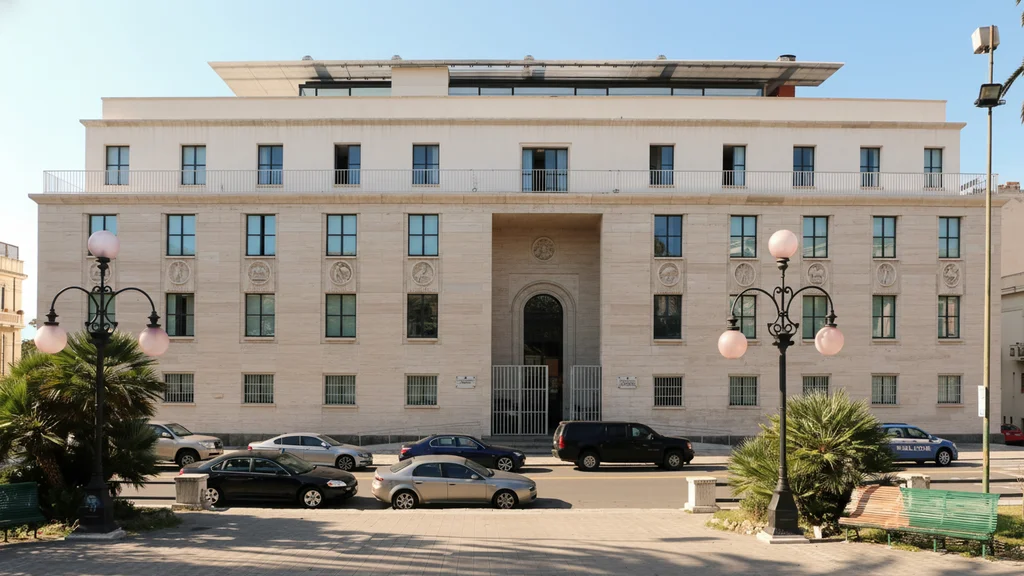
The building itself – the modernist Palazzo Piacentini of 1932–1941 – was the first building in Italy designed from scratch as a museum and is one of the country's finest examples of Rationalist architecture.
Table of Contents
History
The museum owes its existence to Paolo Orsi, a distinguished archaeologist from Trentino who conducted systematic excavations across Calabria and Sicily from the late 19th century onward. It was Orsi who assembled the core of the collection and persuaded the authorities that the treasures of Magna Graecia deserved a worthy home. He proposed a large national museum after the 1908 earthquake that destroyed the city.
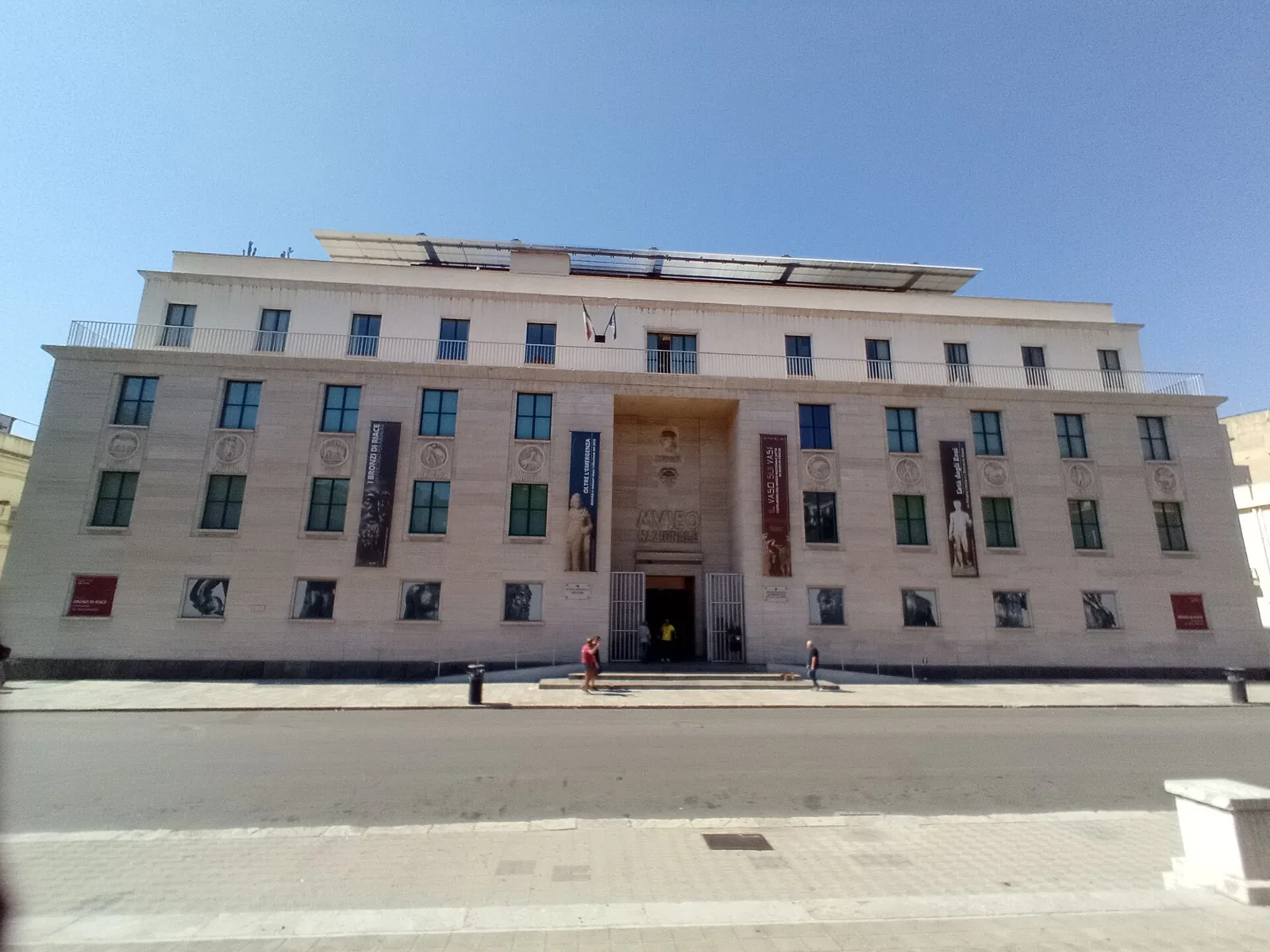
The roots of the museum go back to the Museo Civico di Reggio Calabria, inaugurated in 1882. Palazzo Piacentini was built between 1932 and 1941, but during the Second World War the collections were moved to safer locations. The museum partially opened in 1954 and was officially inaugurated in 1959. In 2009 it closed for a major renovation. The Riace Bronzes returned to display in December 2013, and the remaining galleries reopened in stages over the following years.
The building was designed by Marcello Piacentini – one of the most prominent Italian architects of the first half of the 20th century, whose works include the Ministry of Corporations building (Palazzo delle Corporazioni) on Via Veneto in Rome. Piacentini created a monumental Rationalist structure that integrated harmoniously into the fabric of a city being rebuilt after the 1908 earthquake. Large windows light the open-plan exhibition halls. It stands on the axis of Piazza De Nava and remains one of the most recognisable public buildings in Reggio Calabria from the interwar period.
During construction, the remains of a Hellenistic necropolis were discovered beneath the building – today they can be seen underground, on Level E.
Watch on YouTube
What to See
The permanent exhibition is arranged across several levels, which visitors follow in a logical chronological and thematic sequence:
Level A – Prehistory and Protohistory. Stone tools, ceramics, and objects from the Bronze and Iron Ages documenting the earliest settlement in Calabria. This is where the journey through time begins – from the Palaeolithic to the threshold of Greek civilization.
Level B – Cities and Sanctuaries of Magna Graecia. Pottery, votive offerings, bronzes, and architectural elements from the great Greek colonies: Kroton (modern Crotone), Sybaris, Hipponion (modern Vibo Valentia) and Lokroi Epizephyrioi (modern Locri). Among the highlights are the terracotta pinakes from Locri – relief panels depicting the myth of Persephone, unique in the world.
The pinakes from Locri are small terracotta votive tablets, mainly deposited at the Sanctuary of Persephone in Lokroi and dating primarily to the 5th century BC. They depict scenes associated with Persephone/Kore, Hades, marriage and the bride's transition to a new status, which is why they are considered one of the most important bodies of religious iconography from Magna Graecia.
Level C – Necropoleis and Daily Life. Grave goods, jewellery, vessels, and military equipment. The collection comes, among other sites, from excavations at Sybaris, Kroton, Hipponion and Kaulonia. This level reveals the everyday life of the inhabitants of Magna Graecia – from warriors to artisans and merchants.
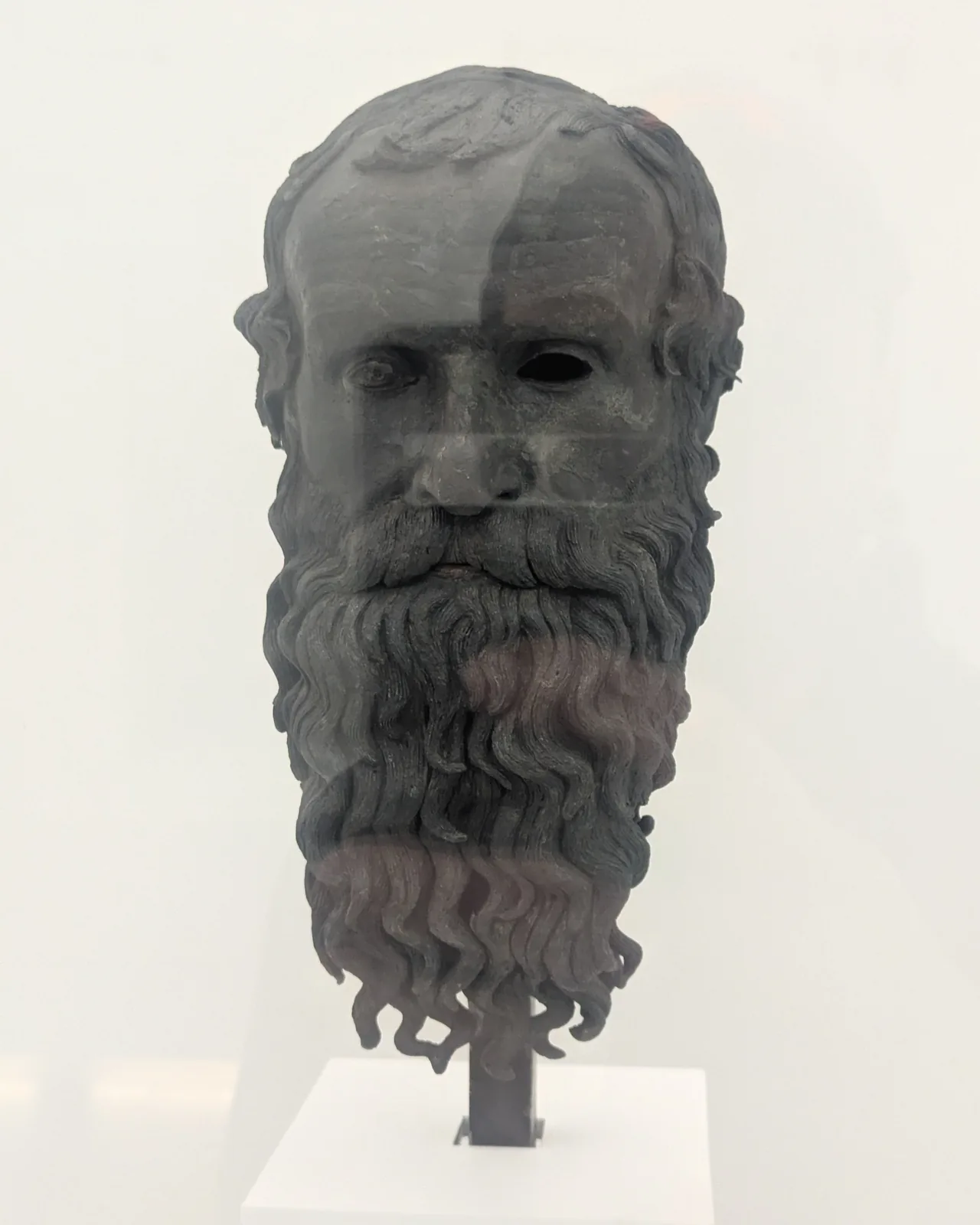
Level D – Reggio and the Riace Bronzes. The history of Reggio Calabria itself, from Greek Rhegion to Roman times. Here, in a specially designed room with controlled temperature and humidity, stand the Riace Bronzes. This section also displays finds recovered from the Porticello wreck, including the Head of Basel (Testa di Basilea) and the Head of the Philosopher (Testa del Filosofo) – rare examples of ancient bronze sculpture. Visitor numbers in the Bronzes gallery are limited for conservation reasons. Entry is through an air-filtering airlock, and visitors must follow the staff's instructions inside.
The Riace Bronzes were discovered on 16 August 1972 by Stefano Mariottini off the coast of Riace Marina in the Ionian Sea. Statue A is dated to approximately 460–450 BC, Statue B to approximately 430–420 BC; both stand about 2 metres tall and rank among the best-preserved full-size classical Greek bronzes in the world. They retain inlays of copper, silver and calcite, offering a vivid impression of the skill of ancient craftsmen.
Level E – Temporary exhibitions, lapidarium and Hellenistic necropolis. The semi-basement hosts temporary exhibitions, the lapidarium and part of the necropolis discovered in 1932 during construction of the museum – around one hundred tombs from the 4th–2nd century BC. The necropolis is opened by Touring Club Italiano volunteers; according to the museum website, on Wednesday, Friday, Saturday and Sunday mornings, and also in the afternoon on the first Sunday of the month – check the schedule before your visit.
Allow at least 2–3 hours for the museum, especially if you want to move through all levels at an unhurried pace and return to the most important display cases. An audioguide is available in several languages, including English and Italian.
Practical Information
Address: Piazza De Nava 26, 89123 Reggio Calabria
Opening hours: the museum is open Tuesday to Sunday from 9:00 to 20:00; last admission at 19:30; the museum is closed on Mondays
Tickets: the rates in force from 1 July 2024 are: standard ticket €10, reduced ticket for visitors aged 18–25 €2, MArRC SLIM from 18:00 – €5, MArRC PLUS €13 when paid temporary exhibitions are running; admission is free, among others, for visitors under 18
Website: museoarcheologicoreggiocalabria.cultura.gov.it
Getting there: the museum is at Piazza Giuseppe De Nava, a few minutes' walk from the Lungomare Falcomatà; the nearest railway station is Reggio Calabria Lido, about 2 minutes on foot from the museum; from Reggio di Calabria Centrale the walk usually takes 20–25 minutes, or it is a short ride by public transport or taxi, and from Corso Garibaldi it is only a few minutes on foot. From the airport (Aeroporto dello Stretto), ATAM city buses (including lines 27 and 28) run to the centre, or you can take a regional train from Reggio di Calabria Aeroporto station to Lido. Distances in the centre are short – most places are within walking distance.
Under the Domenica al Museo initiative, admission is free on the first Sunday of the month, but confirm this on the official website before travelling. If you want to see not just the Riace Bronzes gallery but also the main galleries, aim to arrive at least 60–90 minutes before closing.
Frequently Asked Questions
How much time do I need to visit the museum?
For a full visit to all four levels of the permanent exhibition, allow 2–3 hours. If you are mainly interested in the Riace Bronzes, you can head straight to the ground floor (Level D), which takes around 30–45 minutes.
Can I photograph the Riace Bronzes?
Photography for personal use is generally permitted without flash or tripods. However, pay attention to the signs, as temporary exhibitions or specific zones may have additional restrictions.
Is the museum accessible for visitors with disabilities?
Yes, the building is equipped with lifts and ramps providing access to all exhibition levels. Accessible toilets are also available.
When is the best time to visit to avoid crowds?
The best time to come is in the morning, just after opening, or outside weekends and free-admission days. During summer and at weekends, especially in the afternoon, the museum can be busy – in that case it is sensible to buy a ticket online in advance.
Sources
The information in this article was verified against the following sources:
- museoarcheologicoreggiocalabria.cultura.gov.it – museoarcheologicoreggiocalabria.cultura.gov.it
- museoarcheologicoreggiocalabria.cultura.gov.it – museoarcheologicoreggiocalabria.cultura.gov.it
- Bronzi di riace – museoarcheologicoreggiocalabria.cultura.gov.it
- museoarcheologicoreggiocalabria.cultura.gov.it – museoarcheologicoreggiocalabria.cultura.gov.it
- Come arrivare – museoarcheologicoreggiocalabria.cultura.gov.it
- museoarcheologicoreggiocalabria.cultura.gov.it – museoarcheologicoreggiocalabria.cultura.gov.it
- museoarcheologicoreggiocalabria.cultura.gov.it – museoarcheologicoreggiocalabria.cultura.gov.it
- Orari e informazioni – museoarcheologicoreggiocalabria.cultura.gov.it
- Palazzo Piacentini (Reggio Calabria) – it.wikipedia.org
- Wikipedia – Museo Nazionale della Magna Grecia – en.wikipedia.org
Last updated: