The swordfish, recognisable by its distinctive, elongated upper jaw shaped like a sword, has been a central element of life for the fishing communities in Scilla, a town on the Calabrian coast, for centuries. The museum dedicated to fishing and the sea in Castello Ruffo plays an important role in preserving and recalling this unique tradition, which for the inhabitants of the Costa Viola region remains one of the most important elements of local identity. In the museum, located within the walls of the majestic Castello Ruffo, visitors can learn about the history of swordfish fishing, see the tools associated with it, and better understand the cultural and economic impact of this practice on Scilla.
Table of Contents
- Swordfish and the Fishing Heritage of Scilla – Castello Ruffo
- Traditional Swordfish Fishing Methods in Scilla – From Luntre to Modern Feluccas
- Cultural and Economic Significance of Swordfish Fishing in Scilla
- Swordfish Conservation and the Marine Ecosystem in Scilla – Between Tradition and Modernity
Swordfish and the Fishing Heritage of Scilla – Castello Ruffo
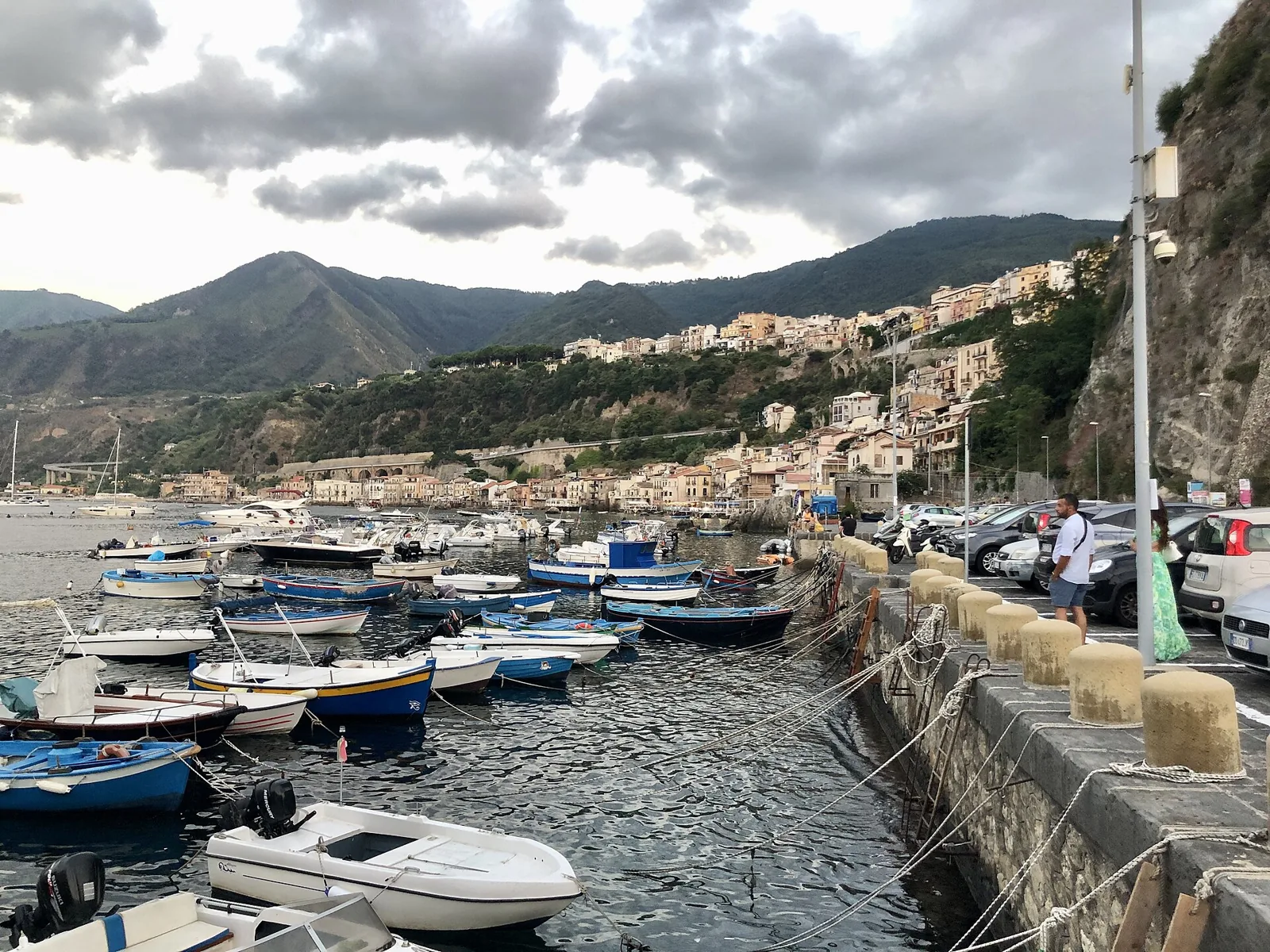
The history of swordfish fishing in Scilla is inseparably linked to the fishing hamlet of Chianalea, where culture and daily life have been intertwined with the sea for centuries. The hamlet, situated on the Costa Viola coastline, has preserved a layout in which houses rise from the shoreline and boats moor just beneath the balconies of colourful stone buildings. Castello Ruffo stands at a site of strategic importance since antiquity, and the current fortress is primarily the result of medieval and early modern reconstructions.
The hilltop above Scilla held strategic significance from antiquity because it controlled the Strait of Messina. The first fortifications on the rock of Scilla are traditionally associated with Anaxilas of Reggio and the beginning of the 5th century BC; in the Middle Ages a fortified monastery stood here. Paolo Ruffo bought the castle in 1533, while the surviving inscription and the renovation of the portal are linked to 1543. The lighthouse on the castle was built in 1913, at a time when the site already had public functions and was gradually becoming a place open to visitors.
The swordfish (Xiphias gladius) is not merely a catch for Scilla – it is a cultural and culinary icon of the region. Particularly for the Chianalea district, this fish remains a symbol connecting generations and recalling the importance of the sea in local life. Traditional fishing methods are still alive, and the museum exhibition helps trace how the tools and boats used by fishermen have changed over time.
These historic methods primarily involve the use of feluccas – specialised boats adapted for visual swordfish fishing in the waters of the Strait of Messina. Harpooning from the deck of a feluca is a distinct practice that should not be confused with net fishing techniques. This knowledge is passed from generation to generation, also through practice, commands shouted in the local dialect (known as banniata), and experience gained at sea.
The significance of swordfish in Scilla extends beyond economic benefits, becoming part of the local identity visible in residents' stories and the daily rhythm of Chianalea. Local guides bring the history of the sea to life, leading visitors through the narrow streets of the quarter and the castle walls towering over the strait. The combination of place, landscape, and living tradition makes a visit fascinating even for those who would not normally be interested in fishing.
Watch on YouTube
Traditional Swordfish Fishing Methods in Scilla – From Luntre to Modern Feluccas
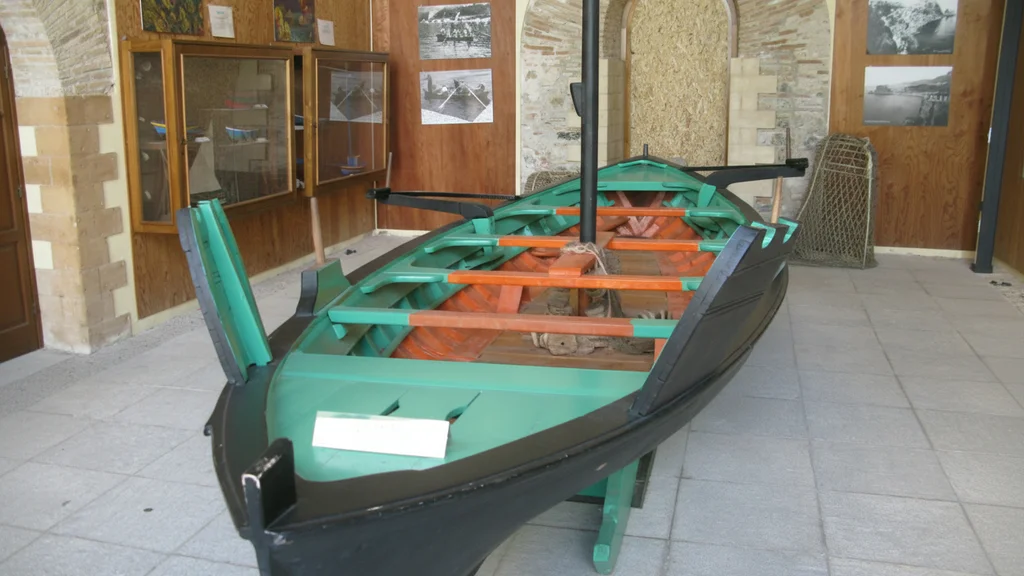
Traditional swordfish (Xiphias gladius) fishing methods in Scilla constitute an important element of the region's cultural heritage. The museum exhibition includes a luntre-type boat and other objects related to the old fishing practices. It is a good starting point for understanding how demanding fishing was in the difficult currents of the Strait of Messina.
Before the modern feluca appeared, fishermen used the luntru, also called luntre – a small, fast wooden boat designed for daytime swordfish fishing. Local descriptions give a length of about 6–7 m, black paint on the outside and a green interior. The crew consisted of rowers and a harpooner, and a successful catch depended on the speed of the manoeuvre and a good reading of the fish's movement near the surface.
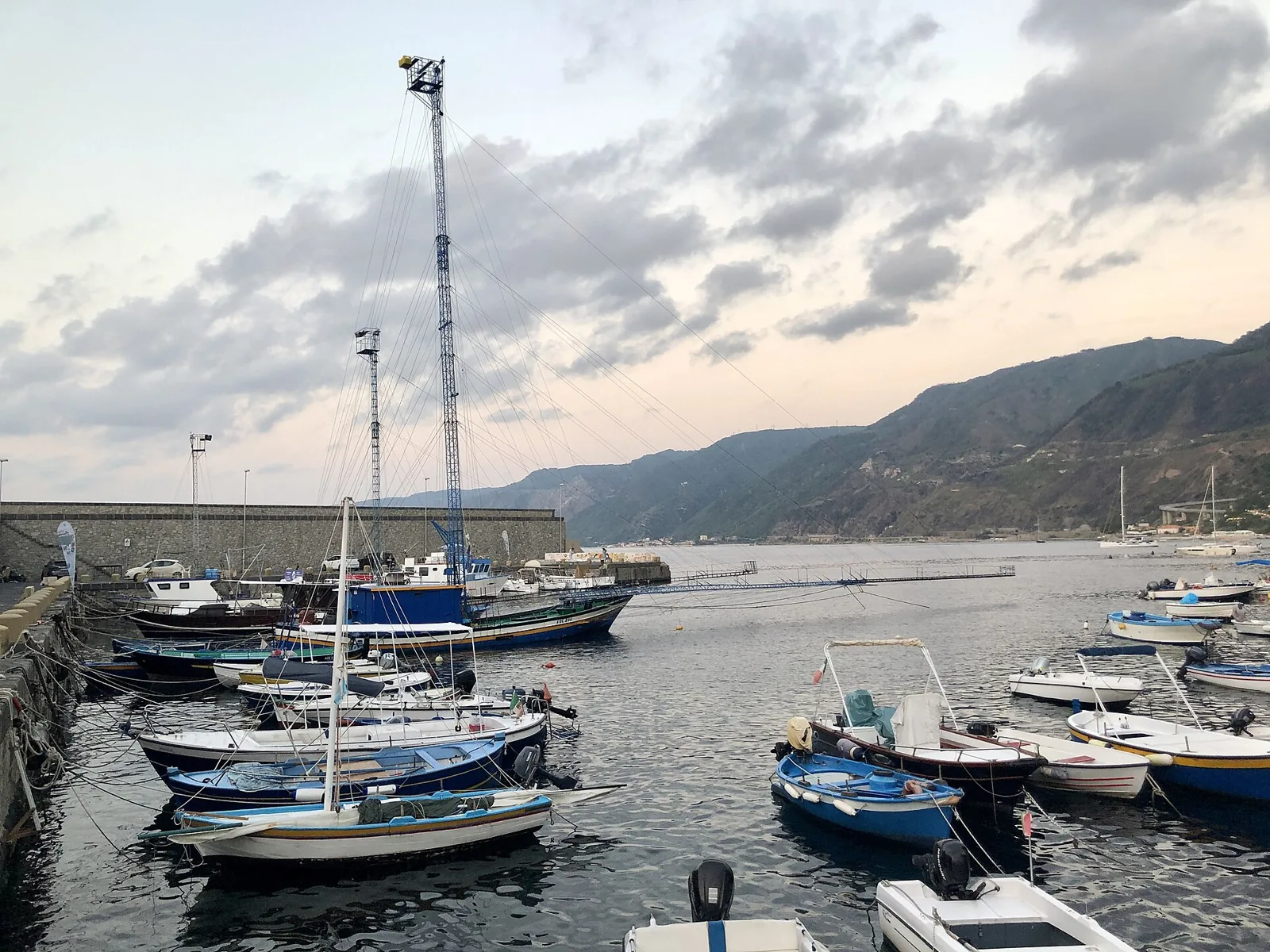
The feluca for swordfish fishing in the Strait of Messina is a long boat equipped with a very tall observation mast (antenna, which can reach as much as 30 metres in height) and a long bow walkway (passerella). The crew includes an observer on the mast and a harpooner on the platform. The fishing is visual and selective: the observer spots fish near the surface, the helmsman manoeuvres, and the harpooner makes a single strike. Such a tall mast heightens the impression as the boat manoeuvres in the strait's strong currents. This tradition is characteristic of the Scilla area and the Sicilian shore on the other side of the strait.
In Chianalea, regarded as one of the most beautiful hamlets in Italy, fishermen's houses are built directly on the rocks, with their foundations washed by waves. The focal point is the Scalo Alaggio – a concrete ramp where fishermen haul their boats straight from the sea for maintenance or protection from violent storms. A walk through the winding streets offers the chance to observe daily life in which swordfish remains an important cultural and culinary symbol.
It is not only the fishing techniques that attract attention but also the strong connection between swordfish and the landscape and life of Scilla. The waters around Ruffo Castle have been part of this history for centuries, and from the castle walls it is easy to understand why a tradition so closely linked to observing the sea developed here. The museum complements this view well – it shows that behind every catch stood precision, experience, and the close cooperation of the entire crew.
Cultural and Economic Significance of Swordfish Fishing in Scilla
The swordfish fishing tradition in Scilla has deep roots and is an integral part of the local economy. The significance of this practice for the local community is best seen in Chianalea, where for generations the work of fishermen has set the rhythm of daily life. It is not just a profession but one of the most recognisable markers of the town's identity.
Traditional swordfish fishing in the Scilla and Messina area is strongly seasonal and historically linked to the migration of fish through the Strait of Messina, especially from late spring into summer. Its economic importance was considerable for the fishing families of Chianalea, as the catch supplied the local fish trade and the cuisine based on pesce spada.
Economic and Culinary Significance
Swordfish fishing has a considerable impact on the local economy, shaping the rhythm of life along the entire coastline. The port in Scilla comes alive particularly in season, when swordfish goes directly from feluccas to the kitchens of restaurants in Chianalea and at Marina Grande. This well-organised activity supports local trade and strengthens Scilla's position as one of the most distinctive culinary destinations on the Costa Viola.
Swordfish meat from the Strait of Messina is prized more highly than that from other waters – strong sea currents, the same ones that gave rise to the myth of Scylla and Charybdis, force the fish into constant exertion, making their meat exceptionally firm and dense. In Scilla and more broadly in Calabria, swordfish is served as involtini di pesce spada, a grilled pesce spada steak, and in simple dishes with olive oil, lemon and herbs. In the Costa Viola area the fish is an element of culinary identity, particularly in restaurants in Chianalea and at Marina Grande.
Cultural and Mythological Impact
In cultural terms, fishing traditions are a manifestation of knowledge and skills passed down through generations. The fishing museum in Scilla serves as a link with the past, also recalling the legend of Scylla and Charybdis, which symbolically explained the navigational dangers of the Strait. It is also an important point for those who want to see how strongly local memory connects the sea, work, and storytelling.
- Luntre – a traditional rowing boat associated with the old swordfish fishing practices.
- Feluca – a long boat for visual swordfish fishing, equipped with a tall observation mast and a bow walkway (passerella).
- Passerella – a long platform at the bow of the feluca, from which the harpooner makes the strike.
Swordfish Conservation and the Marine Ecosystem in Scilla – Between Tradition and Modernity
Swordfish fishing in the Scilla region faces challenges related to species and marine ecosystem protection. Swordfish remains important to the local community, but modern fishing must operate within the framework of resource conservation rules. This is a particularly relevant topic in a place where tradition is still alive and visible in the daily landscape of the town.
Main Threats and Conservation Efforts
Swordfish fishing in the Mediterranean is subject to international and national regulations, including quotas, closed seasons and minimum sizes established within resource management frameworks. EU Regulation 2019/1154 provides, among other measures, for a closed season for Mediterranean swordfish from 1 January to 31 March each year. The minimum size is defined as a lower jaw to fork length of at least 100 cm or a weight of at least 11.4 kg live weight, equivalent to 10.2 kg after gilling and gutting. Traditional harpoon fishing is selective and is sometimes presented as less indiscriminate than some industrial fishing methods, but it still operates within the applicable regulations.
From a visitor's perspective, the museum makes clear that the future of this tradition depends not only on preserving the memory of old methods but also on a responsible approach to the sea. This is why the story of feluccas and harpooners does not end with folklore – today the rules designed to protect the resources of the Strait of Messina are equally important.
Castello Ruffo stands on the rock above the Chianalea quarter and Marina Grande; the entrance is reached on foot from Scilla centre. From Scilla railway station to the castle is about 15–20 minutes' walk uphill. A typical visit to the castle and exhibition takes about 30–60 minutes, longer if you linger on the viewing terraces.
According to information from the Comune di Scilla, updated on 29 June 2026, Castello Ruffo is closed on Mondays. From Tuesday to Sunday, the stated opening hours are 09:00–13:40 and 15:00–20:00. Admission costs €3.00; children up to 6 years old and people with certified disabilities accompanied by a carer enter free of charge. Before visiting, check the official website of the municipality of Scilla, as opening hours and visiting arrangements may change seasonally.
Frequently Asked Questions
What does the swordfish fishing tradition in Scilla involve?
The tradition is based on harpoon fishing from the deck of a feluca. It is a selective method requiring great precision, experience, and cooperation between the observer on a tall mast and the harpooner on the bow walkway (passerella).
Is the fishing museum in Scilla worth visiting?
Yes – above all because it is housed in Castello Ruffo and allows you to better understand Scilla's connection with the sea. It is a good place to see exhibits related to local fishing and a tradition that has preserved many old elements.
What exhibits can you see in the Scilla fishing museum?
The exhibition focuses on the fishing and maritime tradition of Scilla. You can see, among other things, a luntre boat and objects connected to swordfish fishing and the history of the local fishing community.
How much does admission to the museum in Castello Ruffo cost?
According to information from the Comune di Scilla, admission to Castello Ruffo costs €3.00. Children up to 6 years old and people with certified disabilities accompanied by a carer enter free of charge.
What are the opening hours of the Fishing Museum?
Opening hours at Castello Ruffo change seasonally; before visiting, it is best to check the current schedule on the official website of the municipality of Scilla.
Nearby
Sources
The information in this article was verified against the following sources:
- Castello Ruffo - Comune di Scilla – comune.scilla.rc.it
- eur-lex.europa.eu – eur-lex.europa.eu
- Just a moment... – iris.unirc.it
- Visita Chianalea di Scilla, borgo in Calabria - Italia.it – italia.it
- Pesce spada e feluca: tra Bagnara e Scilla il rito resiste - La Calabria che ci Piace – lacalabriachecipiace.it
- Wikipedia – Scilla, Calabria – en.wikipedia.org
Last updated: