The swordfish, recognisable by its long, sword-like snout, has been a central element of life for the fishing communities in Scilla, a picturesque town on the Calabrian coast, for centuries. The Fishing Museum in Scilla, officially known as the Museo delle Attività Marinare, plays an essential role in preserving and promoting this unique tradition, which for the inhabitants of the Costa Viola region holds an almost sacred character. In the museum, located within the walls of the majestic Castello Ruffo, visitors can explore a rich fishing history stretching back two millennia, discover diverse tools and methods, and understand the cultural and economic impact of these hunts on the local community.
Swordfish and the Magic of Scilla's Fishing Tradition – The Castello Ruffo Heritage
The history of swordfish fishing in Scilla is inseparably linked to the fishing village of Chianalea, where culture and daily life have been intertwined with the sea for centuries. The village, picturesquely situated on the Costa Viola coastline, captivates with its authenticity, where houses seem to rise from the shoreline and boats moor just beneath the balconies of colourful stone buildings. At the heart of this tradition is Castello Ruffo, a fortress of strategic importance whose origins date back to the 5th century BC, when the tyrant Anaxilas of Rhegion erected the first fortifications here against Etruscan pirates.
The swordfish (Xiphias gladius) is not merely a catch for Scilla but embodies a cultural and culinary icon of the region. Particularly for the Chianalea district, which regards this fish as a symbol connecting generations, reflecting its economic and social significance. Traditional fishing methods that have withstood the test of time remain alive thanks to the local fishing museum in Scilla, which documents the evolution of techniques from antiquity to the present day.
| Historical Period | Rulers / Families | Main Functions of the Site |
|---|---|---|
| 5th century BC | Anaxilas of Rhegion | Defence against Etruscan pirates |
| 1060 AD | Robert Guiscard (Normans) | Military garrison and operational base |
| 1533 AD | Ruffo family | Noble residence and cultural centre |
| From 1913 | Italian state | Fishing Museum and lighthouse |
These historic methods involve the use of feluccas – specialised boats with tall observation towers enabling the spotting of swordfish across the vast waters of the Tyrrhenian Sea and the Strait of Messina. Harpooning from height, using a technique known as sciabeca, reflects the precision and experience of local fishermen. This knowledge is passed from generation to generation, often in ritual form, as in the case of legendary songs in the Greco-Calabrian dialect, believed to lure the fish and ensure a successful hunt.
The significance of swordfish in Scilla extends beyond economic benefits, however, becoming the essence of local identity celebrated during festivals. Guided tours lead tourists through stories about the history and symbolism of swordfish, while also presenting the charms of Chianalea's narrow streets and the majestic Ruffo Castle. To better understand this fascinating tradition, it is worth visiting Reggio Calabria, where local archives and museums offer a wealth of materials exploring the genesis of this exceptional type of fishing.
Traditional Swordfish Fishing Methods in Scilla – From Luntre to Modern Feluccas
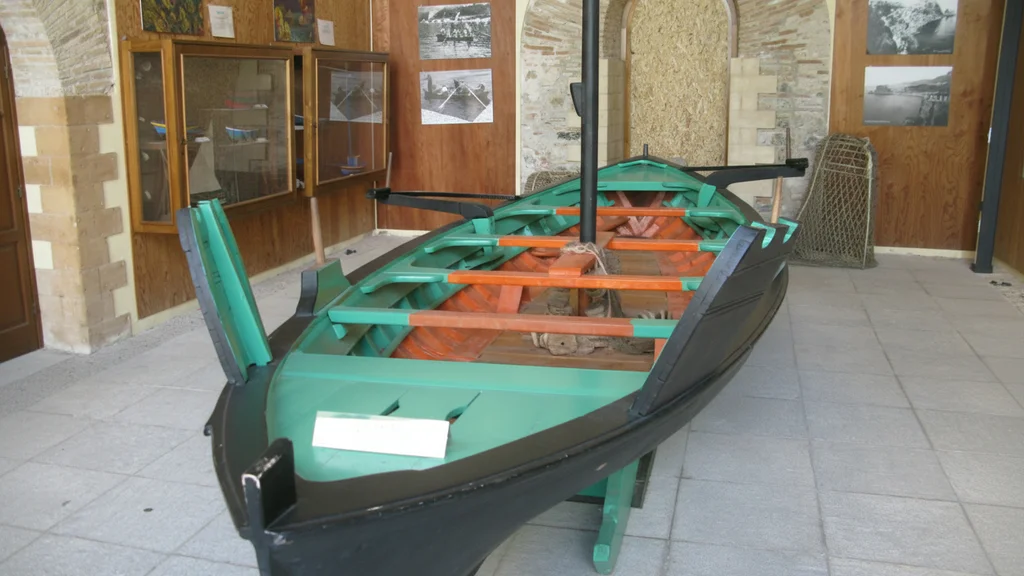
Traditional swordfish (Xiphias gladius) fishing methods in Scilla constitute an important element of the region's cultural heritage. The most important artefact of the Museo delle Attività Marinare is an original luntre-type boat, the only surviving example of a rowing vessel approximately 6.24 metres long. This unique construction, with a wide bow for the harpooner and an observation mast called fariere, represented the pinnacle of vernacular maritime engineering adapted to the challenging currents of the Strait of Messina.
One of the oldest and most characteristic methods is "trolling", known locally as "sciabica" or "feluca", involving the use of specialist boats and nets. Modern feluccas, called passarelle, evolved from ancient designs, today featuring metal masts up to 25 metres tall and long bow platforms. This allows the observer (il vardiano) to spot the fish's shadow from a great distance and precisely direct the harpooner using established gestures.
In Chianalea, regarded as one of the most beautiful villages in Italy, fishermen's houses are built directly on the rocks, with their foundations washed by waves. The focal point is the Scaro Allaggio, where fishermen haul their boats straight from the sea for maintenance or protection from violent storms. A walk through the winding streets offers visitors the chance to observe daily life, where swordfish serves as both a cultural symbol and the culinary foundation of local restaurants.
It is not only the fishing techniques that attract attention but also the strong connection between swordfish and the iconography and life of Scilla. The waters around Ruffo Castle and the Rock of Odysseus are rich in swordfish resources, which for centuries has enriched the local colour. Particularly fascinating is the Cardata da Cruci ritual, involving the scratching of four crosses on the cheek of the caught fish, a sign of gratitude towards the sea and recognition of the nobility of the swordfish's fight.
Cultural and Economic Significance of Swordfish Fishing in Scilla
The swordfish fishing tradition in Scilla has deep roots reaching back to ancient times and is an integral part of the local economy. Local associations such as Pro Loco Scilla actively support the fishing museum in documenting the techniques and tools used by fishermen. The significance of this practice for the local community can be compared to a lifeblood that integrates residents around a common purpose during the fishing season.
Economic and Culinary Significance
Swordfish fishing has a considerable impact on the local economy of Calabria, shaping the rhythm of life along the entire coastline. The port in Scilla comes alive particularly in summer, when swordfish goes directly from feluccas to the kitchens of restaurants in Chianalea, where it is served as involtini di pesce spada. This well-organised activity supports local infrastructure, transforming the town into a vibrant centre of trade and culinary tourism.
Cultural and Mythological Impact
In cultural terms, fishing traditions are a manifestation of knowledge and skills passed down through generations. The Fishing Museum in Scilla serves as an emotional link with the past, preserving the memory of the legend of Scylla and Charybdis, which symbolically explained the navigational dangers of the Strait. It is also an instrument for raising awareness about the need to protect the marine environment for the survival of both fish and tradition.
- Luntre – a traditional rowing boat with unique lateral stability, essential for the harpoon throw.
- Cardata da Cruci – a ritual mark made with a fingernail on the fish's skin, symbolising the fisherman's respect.
- Fariere – a tall observation mast from which swordfish are spotted in the blue waters of Costa Viola.
Swordfish Conservation and the Marine Ecosystem in Scilla – Between Tradition and Modernity
Swordfish fishing in the Scilla region faces numerous challenges related to species and marine ecosystem protection. The swordfish is the economic foundation of the community, but its population is threatened by climate change and commercial pressure. Rising water temperatures affect fish migration patterns, disrupting natural food chains and making traditional planning of the fishing season more difficult.
Main Threats and Conservation Efforts
Uncontrolled swordfish fishing on the open sea creates a risk of overfishing, requiring the introduction of rigorous regulations. Conservation efforts focus on establishing Marine Protected Areas to ensure safe breeding grounds for juvenile specimens. There are also population monitoring programmes in which scientists collaborate with local fishermen.
Marine plastic pollution and underwater noise are further factors disrupting swordfish navigation in the Strait. The future of the museum and the tradition itself depends on the ability to harmoniously combine innovation with ancestral heritage. A planned virtualisation of the exhibition (VR) is intended to allow visitors to "take part" in a hunt without disturbing nature, promoting the idea of sustainable tourism.
Frequently Asked Questions
What does the swordfish fishing tradition in Scilla involve?
The tradition is based on hunting with harpoons from the deck of specialist boats (luntre or feluccas). It is a selective method requiring tremendous precision, experience and cooperation between the observer on a tall mast and the harpooner at the bow of the boat.
Is the fishing museum in Scilla worth visiting?
Definitely yes, as it is housed in the historic Castello Ruffo and offers a unique insight into the region's history. It is one of the few places where you can see an authentic luntre boat and learn about fishing rituals that have remained unchanged for thousands of years.
What exhibits can you see in the Scilla fishing museum?
The main exhibit is the only surviving luntre boat. The museum also houses antique harpoons, felucca models, navigational tools and exhibitions dedicated to the mythology of Scylla and Charybdis and the biology of swordfish.
How much does admission to the museum in Castello Ruffo cost?
The standard admission ticket to the castle, which also includes a visit to the Fishing Museum, typically costs between €1.50 and €3.00, making it a very accessible attraction for tourists.
What are the opening hours of the Fishing Museum?
The museum is generally open from 8:30 to 19:30, though in low season there may be an afternoon break (siesta) between 13:40 and 15:00.