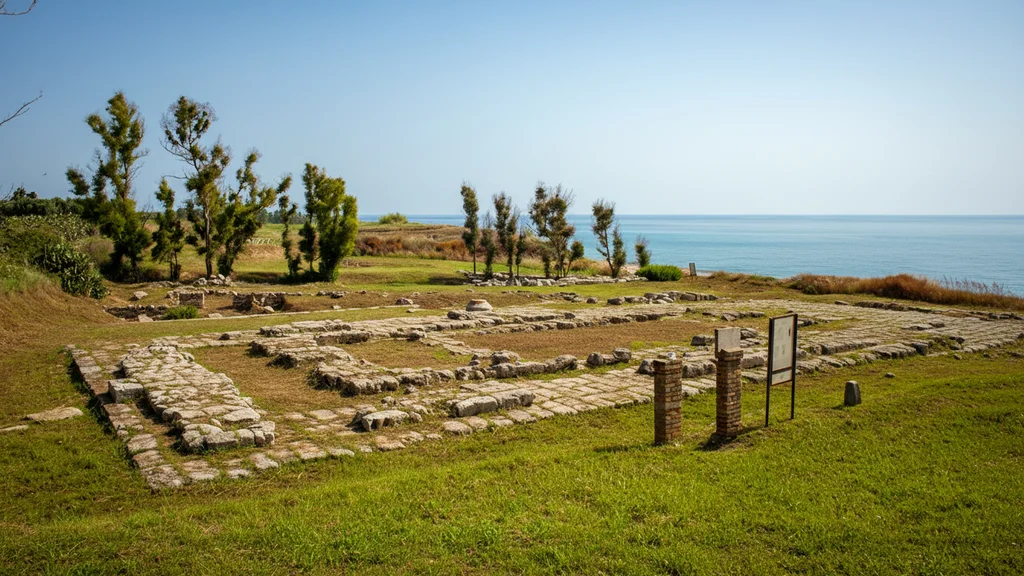
The ruins of Kaulon in Monasterace are a fascinating testament to the power of Magna Graecia, representing one of the best-preserved Achaean colonies on the Ionian coast. Founded as a strategic bastion, it played a crucial role in the development of trade and religion, becoming a unique cultural bridge between Greece and the local Italic peoples. For modern visitors, Kaulon is not merely an archaeological park but a living narrative of artistic sophistication and dramatic conflicts that shaped the ancient world.
Kaulon and Its Role in the Colonisation of Magna Graecia – Achaean Foundations
The Development of Kaulon Against the Backdrop of Magna Graecia Colonisation
Kaulon, situated on the scenic promontory of Punta Stilo in present-day Calabria, is a model example of Greek expansion within Magna Graecia. The city's foundation is dated to 700–690 BC, placing it alongside such powers as Sybaris and Kroton. The choice of this particular location was no accident but a deliberate strategic decision aimed at controlling maritime trade routes.
An intriguing aspect of the city's identity is the myth of the Amazon Clete, who according to legend founded the settlement after her ship was wrecked on the way from Troy. While archaeologists focus on historical facts, such legends built the colony's prestige in the eyes of the ancients. The chronology of early colonisation indicates that Kaulon was established almost simultaneously with the most important Achaean centres in the region, which determined its rapid rise to prominence.
| City (Colony) | Approximate Foundation Date (BC) | Origin of Settlers |
|---|---|---|
| Sybaris | 720–710 | Achaeans |
| Kroton | 710–700 | Achaeans |
| Kaulon | 700–690 | Achaeans from Kroton |
| Locri Epizephyrii | 690–680 | Locrians |
Foundation and Economic Significance
The city was founded by settlers from Kroton, serving as an advanced bastion protecting the boundaries of their sphere of influence against the expansion of Locri Epizephyrii. The fertile land allowed for the mass cultivation of grain, vines, and olives, yet it was a different resource that became the foundation of wealth. Thucydides unambiguously identifies Kaulon as the primary centre for timber export, which was indispensable for the ancient shipbuilding industry.
Thanks to excellent control over the Ionian Sea, Kaulon became a significant trading hub connecting Sicily with mainland Greece. The export of Calabria's natural resources, including resin and pitch (pece bruzia), enabled the city's rapid demographic growth. This wealth later manifested in monumental sacred architecture and an advanced defensive system that had to repel rival attacks.
Cultural Influences and Infrastructure Development
The urban planning of Kaulon is a textbook example of the Hippodamian layout, based on a regular grid of perpendicular streets. Such a system not only facilitated the fair distribution of land among colonists but also reflected the democratic aspirations of Greek poleis. Mighty defensive walls approximately 3 kilometres in length protected the city from enemies and the destructive force of the sea alike.
Cultural influences flowing from contacts with the metropolis and neighbouring colonies resulted in the creation of magnificent structures. The focal point was a Doric temple from the 5th century BC, a peripteral temple of impressive proportions. Architectural studies have revealed unique details there, such as terracotta lion-head waterspouts, testifying to the craftsmanship of local artisans.
Strategic Position and Conflicts
The history of Kaulon is one of constant struggle for dominance, culminating in the legendary Battle of the Sagra River (c. 560–530 BC). This conflict pitted the army of Kroton against the combined forces of Locri and Rhegion, with Kaulon's territory becoming the direct theatre of operations. The victory of the outnumbered Locrian army over the tenfold larger forces of Kroton was attributed to the intervention of the Dioscuri, permanently altering the balance of power in the region.
The outcome of this battle forced Kaulon to redefine its foreign policy and rapidly strengthen its municipal fortifications. The city participated in numerous disputes with Syracuse and other poleis, which ultimately weakened its political structure. Despite wartime destruction, the dynamism of this colony allowed it to survive into the Roman period, leaving behind a rich archaeological heritage.
Archaeological Discoveries at Kaulon – Unearthed Treasures of the Greek Past
The Parco Archeologico Kaulon in Monasterace Marina is the result of over a hundred years of scientific research, initiated by the distinguished archaeologist Paolo Orsi at the end of the 19th century. Contemporary excavations, supported by modern technologies such as ground-penetrating radar, continue to reveal successive layers of history hidden beneath the coastal sands. The site offers a unique insight into the evolution of a Greek city from its archaic foundations to Hellenistic splendour.
Defensive Walls and Acropolis
Archaeologists have uncovered at Kaulon the remains of mighty Cyclopean walls, built from massive stone blocks that testify to advanced construction techniques. Finds on the acropolis, including a temple with an altar and statues – among which the figure of the goddess Hygieia stands out – point to a developed religious cult. Votive deposits were discovered beneath the thresholds of city gates, suggesting that inhabitants performed propitiatory rituals when facing military threats.
Necropolises and Treasures from the Past
Necropolises discovered in the Bavolungi and Franchi di Stilo areas contain over a thousand tombs, serving as a treasure trove of knowledge about the elites of the ancient world. Magnificent gold and ivory jewellery and imported Euboean and Achaean ceramics have been found there. Such richness of grave goods demonstrates that Kaulon was a centre of high economic status, maintaining contacts with the farthest corners of the Mediterranean basin.
Urban Infrastructure and Underwater Discoveries
Underwater archaeology holds particular significance in the research, as tectonic processes have caused a substantial portion of the ancient port to end up beneath the sea. Over 200 artefacts have been identified there, including Ionic column shafts and amphorae filled with pitch, confirming historical accounts of resin export. On land, the discovery of the “Baths of Nannon” with an enormous mosaic depicting a sea dragon and dolphins caused a sensation.
Hellenistic Splendour and the Tabula Cauloniensis
The Hellenistic period brought the city artistic refinement, symbolised by the “House of the Dragon” (Casa del Drago) from the 3rd century BC. In 2000, the Tabula Cauloniensis was discovered – the longest text in the Achaean dialect in Magna Graecia, a dedication to Zeus. This discovery confirms the high literary culture of the inhabitants and the central role of the cult of Zeus Olympios in the social life of the colony.
Religion and Spirituality in Ancient Kaulon – The Foundation of Social Life
In ancient Kaulon, religion was not merely a private sphere but a mechanism organising every domain of public life. The polytheistic belief system combined Olympian gods such as Apollo, Artemis, and Dionysus with the local traditions of the Bruttii people. Temples served not only as spiritual centres but also as economic ones, functioning as storehouses and places of trade management.
The influence of religion on politics was pervasive – oracles and priests served advisory functions for elites making decisions about war or colonisation. Self-governing assemblies began with sacrificial offerings, underscoring the inseparable bond between the sacred and civic governance. The education of young citizens was based on learning hymns and myths, preparing them for life in the spirit of Greek piety and respect for ancestral traditions.
The agriculture-based economy was closely linked to the cults of fertility deities such as Demeter. Festivals, including the Great Dionysia, strengthened social cohesion, offering time for communal celebration of the city's prosperity. Material remains, including coins bearing images of deities, illustrate how deeply religion permeated the daily life of inhabitants, constituting the heart of every community in Kaulon.
Invasions and Cataclysms – Causes of Ancient Kaulon's Decline
The Impact of Invasions and Roman Domination
The decline of Greek Kaulonia began in the 3rd century BC with the growing dominance of Rome. In 205 BC, after the conclusion of the Second Punic War, the city was definitively conquered by the Romans, losing its status as an autonomous polis. In later centuries, from the 5th century AD onward, the city became a target of destructive Vandal raids led by Genseric, leading to the ruination of its fortifications.
The Gothic Wars waged in the 6th century AD brought another wave of destruction, when the armies of Totila besieged the settlement. Excavation work has revealed layers of ash and arrowheads that stand as silent witnesses to the brutal fighting for control of this territory. These armed conflicts, combined with the collapse of trade structures, led to gradual depopulation and the final abandonment of the city in the 7th century.
Natural Cataclysms – Environmental Threats
Apart from wars, Kaulon had to contend with the destructive force of nature. The Punta Stilo area is known for high seismic activity, and numerous earthquakes and tsunami waves regularly destroyed the port and waterfront districts. The phenomenon of bradyseism – the slow subsidence of the ground – caused a significant portion of the ancient buildings to be swallowed by the sea.
Today, the greatest challenge is progressive coastal erosion, which in 2013–2014 threatened the foundations of the Doric temple. Thanks to rescue programmes by Italy's Ministry of Culture worth 1.5 million euros, modern coastal protection systems have been implemented. The present-day ruins in Monasterace, despite the destructive force of time, remain an extraordinary forge of knowledge about the roots of Mediterranean civilisation.
Frequently Asked Questions
What was ancient Kaulon and what remains of it?
Ancient Kaulon was an Achaean colony of Magna Graecia founded in the 7th century BC. The foundations of a monumental Doric temple, mighty defensive walls, Hellenistic baths with mosaics, and numerous artefacts in the National Archaeological Museum (MAK) survive to this day.
What is the dragon of Kaulon – the famous mosaic?
It is the largest polychrome mosaic from the Hellenistic period found in Italy (approx. 25 m²). It depicts a sea dragon surrounded by dolphins and vegetal motifs; it is located in the so-called Baths of Nannon and symbolises prosperity and protection from evil.
What are the opening hours of the Kaulon archaeological park?
The Archaeological Park and Museum (MAK) are generally open daily from 9:00 until sunset, though it is advisable to check the current hours on the official website of Italy's Ministry of Culture, particularly following the reopening in 2024.
Where can you see the most important finds from Kaulon?
The most important artefacts, including the Tabula Cauloniensis and jewellery from the necropolises, are housed in the National Archaeological Museum in Monasterace (MAK), which has seven exhibition halls presenting the city's history.
Are the Kaulon ruins accessible for people with disabilities?
Yes, following a modernisation completed in 2024, the park has been adapted for visitors with limited mobility through the construction of a new network of flat paths and access ramps.