The Cathedral of St Lawrence in Stilo, also known as the Duomo di Stilo or Chiesa Matrice, is one of the most important religious monuments in Calabria. Located in the historic town at the foot of Monte Consolino, it represents a fascinating blend of Byzantine and Norman influences, symbolising the transition from the Greek East to the Latin West. This spiritual and cultural gem of the region attracts tourists from around the world, revealing the rich historical heritage of southern Italy that has been shaped over more than a thousand years.
Cultural and Architectural Heritage of the Cathedral of St Lawrence
Byzantine Foundation of the Cathedral
The Cathedral of St Lawrence in Stilo is a fundamental example of Byzantine architecture from the 10th century, when Greek culture dominated southern Italy. Erected in a cross-domed style on a Greek cross plan, it symbolises a momentous historical and cultural phase for Calabria, making it a unique palimpsest of overlapping civilisations. It was probably founded by monks from the Basilian tradition at a time when southern Italy was under strong Byzantine and Arab cultural influence.
Analysis of the Duomo's structure requires understanding the context of the Stilaro river valley, which from the early Middle Ages served as a refuge for monastic communities. It was during this period that the famous Cattolica di Stilo was built, a small Greco-Byzantine temple that for centuries served as the main parish. As the town evolved into a Norman royal city, the primacy of the Byzantine Cattolica began to give way to a new ecclesiastical structure, closely linked to the Roman rite.
Transformation under Norman Rule
The cathedral's survival during the Norman invasions of the 11th century was decisive for subsequent architectural transformations. The first reliable mentions of the present Duomo date from 1094, when documents referred to an Ecclesiam Episcopi, suggesting the status of an episcopal seat. The Romanesque-Norman elements added at that time, combined with the Gothic bell tower built in the 14th century, give it a unique appearance reflecting its rich civilisational history.
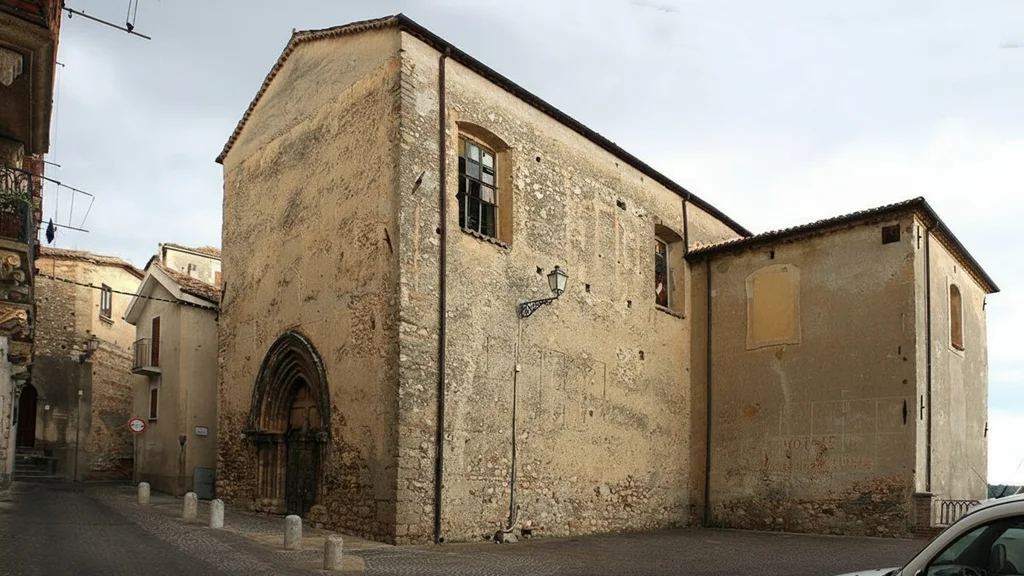
These influences demonstrate the adaptive character of the cathedral, which not only preserved its Byzantine elements but also adopted new, Western patterns. The building survived numerous cataclysms, including the devastating earthquakes of 1783 and 1908, which necessitated significant structural modifications. Today's appearance is the result of a synthesis of many eras, where the austere Angevin Gothic of the facade coexists with the richness of Neapolitan Baroque in the interior.
A Synthesis of Cultures
The cathedral is characterised by a unique blend of Eastern and Western cultural elements, serving as a bridge between traditions. Greek inscriptions and icons coexist here with later Latin additions by the Normans, making it an important symbol of the synthesis of Byzantine, Arab, and Latin cultures.
| Comparative Parameter | Cattolica di Stilo | Duomo di Stilo (Chiesa Matrice) |
|---|---|---|
| Construction chronology | 9th – 10th century | 12th – 14th century (later Baroque) |
| Dominant style | Byzantine (Greek cross) | Angevin Gothic / Baroque |
| Spatial layout | Central, 9 equal bays | Longitudinal, three-nave (Basilica) |
| Historical function | Main Byzantine parish | Episcopal cathedral (Ecclesiam Episcopi) |
Contemporary Significance
Although the cathedral no longer serves as the seat of a diocese, its symbolic status as one of the region's principal places of worship remains unchanged. Since 2006, the building has been on the UNESCO Tentative List, underscoring its significance as an exceptional example of Calabrian-Byzantine sacred architecture.
Byzantine and Norman Influences in the Architecture of Duomo di Stilo
Byzantine Architecture and Its Influences
The building's structure reflects the long-standing ties between southern Italy and the Byzantine Empire, manifested in a central plan based on the Greek cross. The main dome, raised on a tall drum, rests on pillars, a typical example of Byzantine sacred architecture. It offers visual lightness and an aspiration towards heaven, richly decorated in a manner similar to early medieval mosaics.
Changes Introduced by the Normans
After the Norman conquest of Calabria in the 11th century, the cathedral gained new architectural elements. The church facade features a monumental 14th-century portal, built from over one hundred and forty limestone elements. The portal features a pointed arch typical of Angevin Gothic, with a cluster of tortile (twisted) columns. Built into the wall are so-called spolia – reused ancient fragments, such as Roman marble feet, symbolising triumph over paganism.
Decorative Details and Iconography
Of particular value is a sandstone slab depicting two peacocks drinking from a chalice – in Christian iconography, a symbol of immortality and resurrection. Preserved fragments of frescoes and geometric ornaments testify to the complex history of the region. The true treasure of the interior is the monumental canvas of the Madonna d'Ognissanti by the outstanding painter Battistello Caracciolo, a masterpiece of Caravaggism.
The Significance of the Cathedral in the Spiritual Life of Stilo
Cultural and Religious Heart of the Town
The Cathedral of St Lawrence played a central role in the spiritual and cultural life of this small town, testifying to the deeply rooted faith of its inhabitants. Although originally dedicated to Santa Maria d'Ognissanti, it became the main religious centre around which the life of the local community gathered. It was here in 1600 that the relics of St John Theristus were solemnly transferred, the patron saint of the town, sanctioned by Church authorities.
An Icon of Spirituality and Culture
The cult of St John Theristus (the Harvester) is the foundation of Stilo's identity, linking the tradition of Byzantine monasticism with post-Tridentine popular piety. The presence of relics of St Nicholas and St Ambrose alongside the local saint indicates an effort to integrate Stilo into the broader pantheon of saints of the universal Church.
Heritage Protection
Calabria is frequently exposed to landslides and earthquakes, which have affected the cathedral's structural condition in the past. In 1927, the church was closed after part of the vaulting collapsed. A turning point was the modern restoration campaign completed in 1998, which restored the temple to its former glory and allowed it to reopen. The restoration of the Battistello Caracciolo canvas in 2014 was conducted as an open workshop, allowing the community direct insight into conservation techniques.
Practical Information
Location: Centro storico, Stilo (RC)
Hours: Open to visitors year-round (check local hours)
Tickets: Free admission
Getting there: By car from the Ionian coast, exit at Monasterace
Frequently Asked Questions
What can you see in the cathedral in Stilo?
The cathedral features a monumental 14th-century Gothic portal, Roman marble spolia in the facade, and a rich Baroque interior with family chapels. The most important movable monument is the painting "Madonna d'Ognissanti" by Battistello Caracciolo.
What is the history of Duomo di Stilo?
The cathedral's history dates back to the Byzantine period (10th century), but the most important construction phases fall during the Norman period and the 14th century. The building underwent numerous renovations after earthquakes, and its current appearance is a synthesis of Gothic and Baroque.
What works of art are in the cathedral?
The most valuable works include the 1618 painting "Madonna of All Saints" by Battistello Caracciolo, the sculpture "Madonna del Borgo," and numerous Baroque altars. The cathedral also houses the relics of St John Theristus, the town's patron saint.
Why is the cathedral in Stilo important for UNESCO?
The cathedral, together with the nearby Cattolica, constitutes a unique example of Byzantine-Basilian architecture in Italy. It is a testimony to the harmonious coexistence of Eastern and Western cultures in the Mediterranean basin.
When is the best time to visit Duomo di Stilo?
The cathedral is accessible to tourists year-round, but it is especially worth visiting during local religious festivals in honour of St John Theristus, when you can experience the living spiritual tradition of the town.