’Nduja is a soft, spicy, spreadable sausage from Spilinga in Calabria – half of it fat, about a quarter of it peperoncino chilli. In the kitchen it behaves more like a seasoning than a cured meat: two or three spoonfuls will season pasta for four, and the biggest mistake is frying it over high heat. Below are seven easy recipes with quantities, plus advice on buying and storing the ’nduja you bring back from Calabria.
Contents
What is ’nduja – in three sentences
’Nduja (say “n-DOO-ya”) is made from the fatty cuts of the pig – back fat, belly and cheek (guanciale) – minced with dried Calabrian peperoncino and salt. The paste is stuffed into a natural casing, lightly smoked and left to cure. Because of all that fat it never hardens like salami; it stays a paste that you scoop with a knife or a spoon.
The history, the production and the August festival in Spilinga are covered on our ’Nduja page. This post is about what to do with the jar that is already sitting in your fridge.
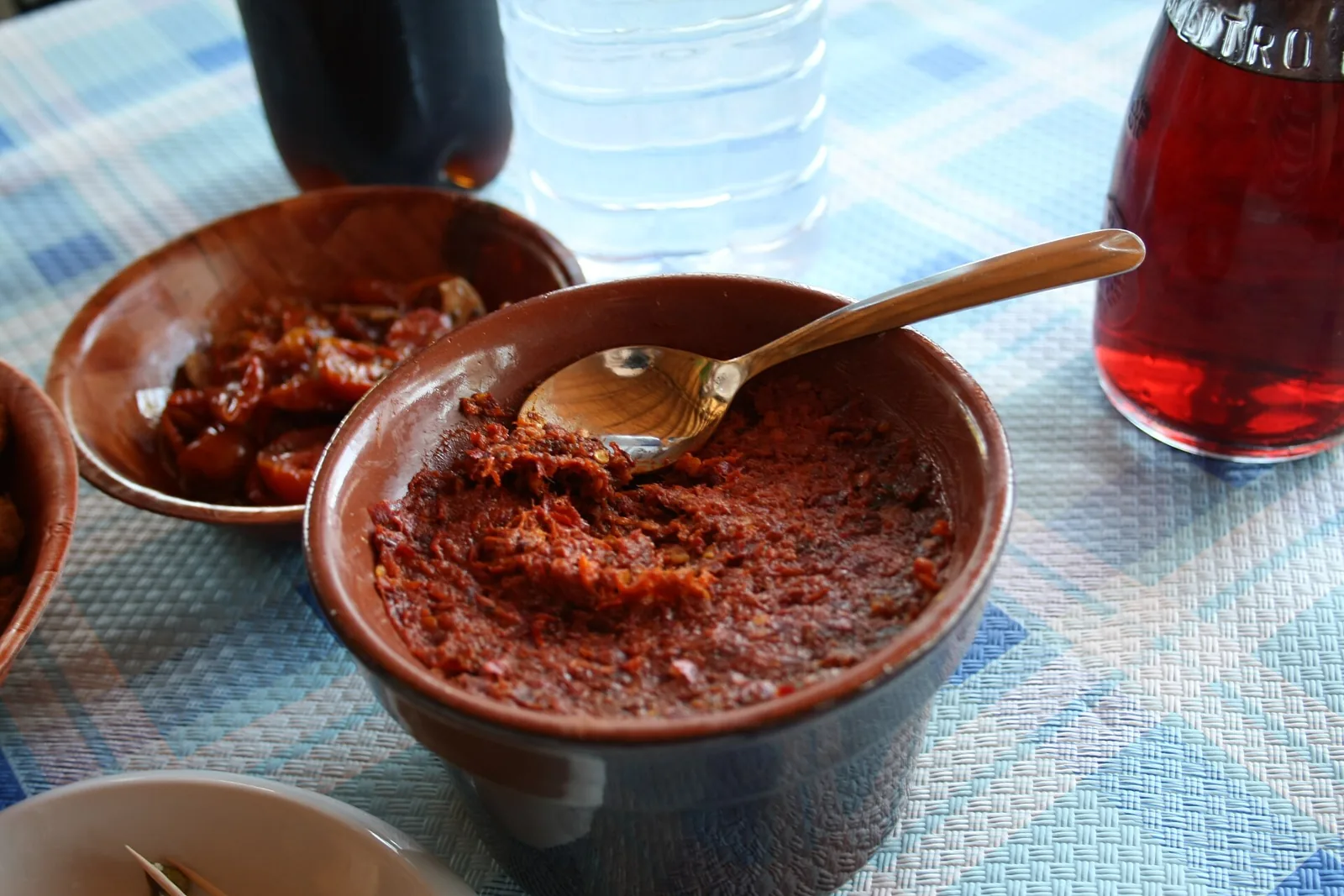
Five rules for cooking with ’nduja
- Allow 20–25 g per person at most. Italian pasta recipes usually call for 80–100 g of ’nduja for four – that is the version for people who like real heat. If you do not eat spicy food every day, start with half and add more at the end; you cannot take it out.
- Do not fry it over high heat. ’Nduja should melt, not brown. Scorched peperoncino turns bitter and the fat separates. The safest method is to stir it into a hot sauce once the pan is off the heat, or to melt it over a low flame.
- Salt at the end. ’Nduja is salty (roughly 2.5–3 g of salt per 100 g), and so are the pasta water and the cheese. Taste first, then season.
- Go easy on the oil. Half of ’nduja is fat, and it will render into the sauce. A spoonful of olive oil to soften the onion is enough.
- Dairy and starch tame the heat. With ricotta, young caciocavallo, potatoes, beans or bread, ’nduja dishes work even for people who are not used to spicy food. Sweetness – Tropea onion, honey – does not put the fire out, but it balances it well.
If you bought ’nduja in its casing, slit it open and scoop out the paste with a spoon; the casing is not eaten.
7 ’nduja recipes
All quantities serve four.
1. ’Nduja bruschetta
The simplest way to serve it – and often the way dinner starts in a Calabrian trattoria.
- 4 thick slices of sourdough bread
- 50–60 g ’nduja
- optional: 150 g ricotta and a teaspoon of honey
Toast the bread in a dry pan or a toaster. Spread a thin layer of ’nduja on the hot slices – the heat of the bread will melt it. For a milder version, spread the bread with ricotta first, add the ’nduja on top and finish with a few drops of honey. In Calabria ’nduja is also served in a small terracotta warmer with a tea light underneath (scalda ’nduja), which keeps it warm and half-melted throughout dinner.
2. Pasta with ’nduja and red onion
A classic from the Tropea and Monte Poro area. Locally it comes with hand-rolled fileja pasta, which is easiest to replace with fusilli, casarecce or rigatoni.
- 400 g pasta
- 80 g ’nduja
- 1 large red onion (about 150 g) – ideally a Tropea onion
- 400 g tinned plum tomatoes (pelati) or passata
- 2 tablespoons olive oil
- grated pecorino to serve
Slice the onion and soften it in the oil over low heat for 8–10 minutes – it should turn soft, not brown. Add the tomatoes and simmer uncovered for 15 minutes. Drain the pasta two minutes before the time on the packet, keeping a cup of the cooking water. Tip the pasta into the sauce, add a ladle of the water and stir over medium heat until the sauce coats the pasta. Take the pan off the heat and only now stir in the ’nduja – it melts into the hot sauce in seconds. Serve with pecorino.
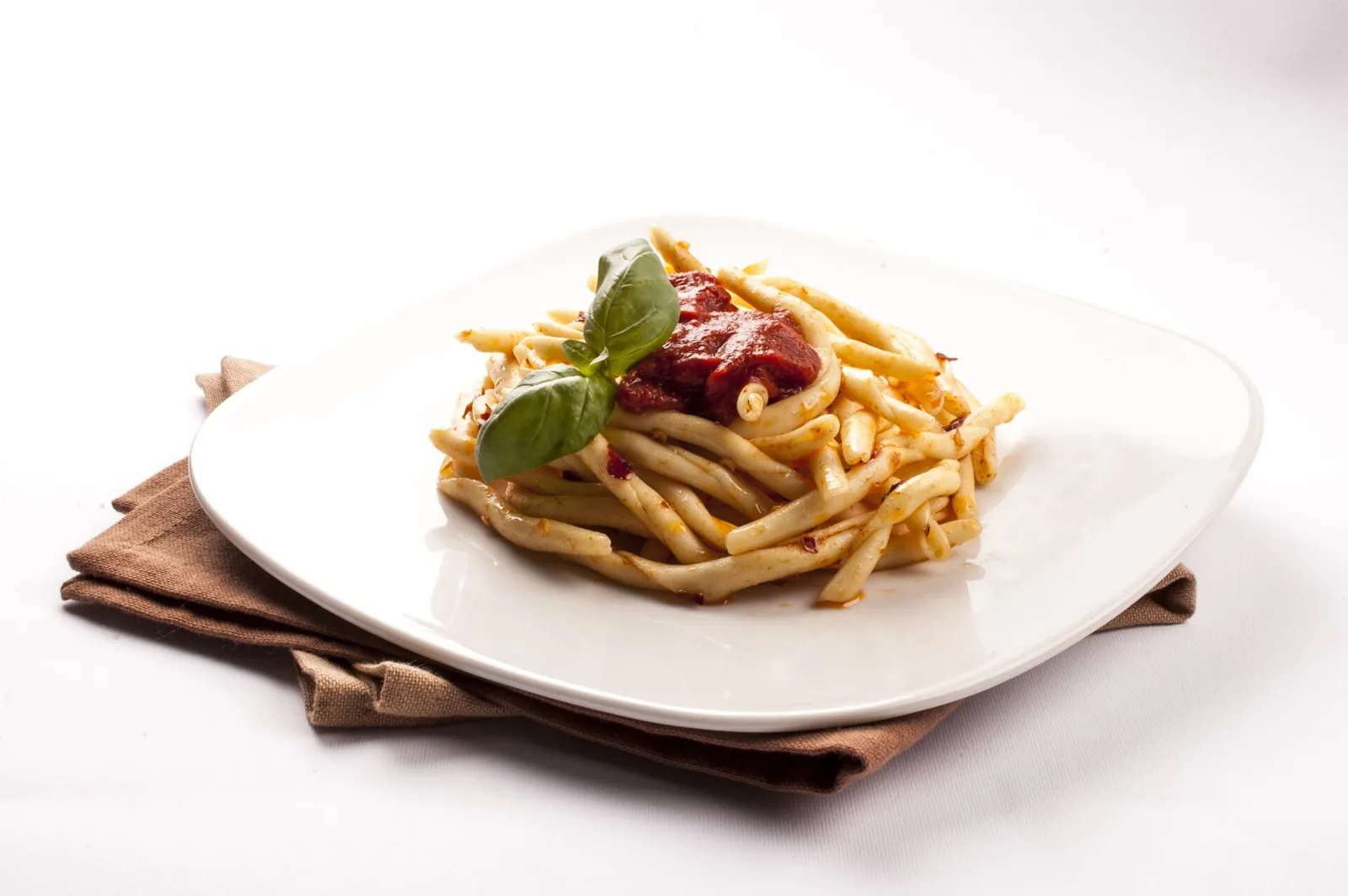
3. Rigatoni with ’nduja and ricotta
A sauce you do not cook – it comes together in a bowl while the pasta boils.
- 400 g rigatoni or penne
- 60 g ’nduja
- 250 g ricotta
- a handful of grated pecorino or Parmesan
In a large bowl, mash the ’nduja into the ricotta with a fork. Add 3–4 tablespoons of boiling pasta water and stir to a smooth, pink cream. Tip in the drained pasta, add the cheese and toss, loosening with more cooking water if needed. This is the mildest dish on the list.
4. Frittata with onion and ’nduja
- 6 eggs
- 2 red onions
- 40 g ’nduja
- 40 g grated pecorino
- 2 tablespoons olive oil
Slice the onions thinly and cook them in the oil, covered, for 10 minutes. Beat the eggs with the cheese, without salt. Pour them over the onions and dot the ’nduja on top with a teaspoon. Cook over low heat, covered, for about 8 minutes until the top has set; flip the frittata with the help of a plate and cook for 2 minutes more. It is good cold too, in a sandwich.
5. ’Nduja pizza
- dough for 2 pizzas
- 200 g tomato passata
- 250 g mozzarella (fior di latte) or sliced caciocavallo
- 50–60 g ’nduja
- sliced red onion
There are two schools. In the first, the ’nduja is loosened to a cream with a spoonful of warm water and dotted over the tomato and cheese before baking. In the second, it goes onto the pizza as it comes out of the oven, so that it only just melts. In a home oven, where a pizza bakes for longer than in a wood-fired one, the second method is safer – or add the ’nduja for the last 2–3 minutes.
6. White bean soup with ’nduja
A dish for November, in the spirit of the Calabrian pulse soups that are thickened with pasta or bread.
- 2 tins of white beans, drained (or 250 g dried beans, soaked and cooked)
- 1 onion, 1 carrot, 1 clove of garlic
- 700 ml water or vegetable stock
- 50 g ’nduja
- 2 tablespoons olive oil, croutons made from stale bread
Soften the chopped onion, garlic and finely diced carrot in the oil. Add the beans, pour in the water or stock and simmer for 15 minutes. Blend a third of the soup and stir it back in to thicken. Take the pan off the heat and melt the ’nduja into the soup. Serve with the croutons.
7. Spaghetti with clams and ’nduja
Pairing seafood with ’nduja is an idea from modern restaurants rather than old home cooking – but it has caught on all along the coast.
- 400 g spaghetti or linguine
- 1 kg clams (vongole) or mussels
- 2 heaped teaspoons ’nduja (about 40 g)
- 2 cloves of garlic, 150 ml dry white wine
- 3 tablespoons olive oil, parsley
Warm the garlic and ’nduja in the oil for a few seconds, pour in the wine and let it bubble over high heat for a minute. Add the rinsed shellfish and cover. After 3–4 minutes the shells will open; discard any that stay shut. Drain the pasta two minutes before the time on the packet and finish it in the shellfish sauce. Scatter with parsley. This dish needs no salt at all and no cheese.
How to buy real ’nduja from Spilinga
The name “’nduja” is not protected. ’Nduja from Spilinga is on Italy’s list of traditional agri-food products (PAT), but it has no EU PGI or PDO status, so anyone in any country can legally make something called “’nduja”. The best place to buy the original is at the source: Spilinga lies on the Monte Poro plateau, 12 km from Tropea and about 10 km from Capo Vaticano, and its producers supply delicatessens all over Calabria.
What to look for on the label:
- The producer’s address. Look for Spilinga or the neighbouring Monte Poro villages in the province of Vibo Valentia (abbreviated VV). The words “’nduja calabrese” alone guarantee nothing.
- A short ingredient list. Pork and pork fat, peperoncino, salt. Artisan producers in Spilinga stress that they add no colourings or preservatives. Jars sometimes include lard or olive oil to keep the paste spreadable. The longer the list of other additives, the further you are from the original.
- The share of chilli. Usually around 25–30 per cent, depending on the maker. Noticeably less means a milder, fattier product.
- Colour and texture. A deep red, even paste that is soft at room temperature.
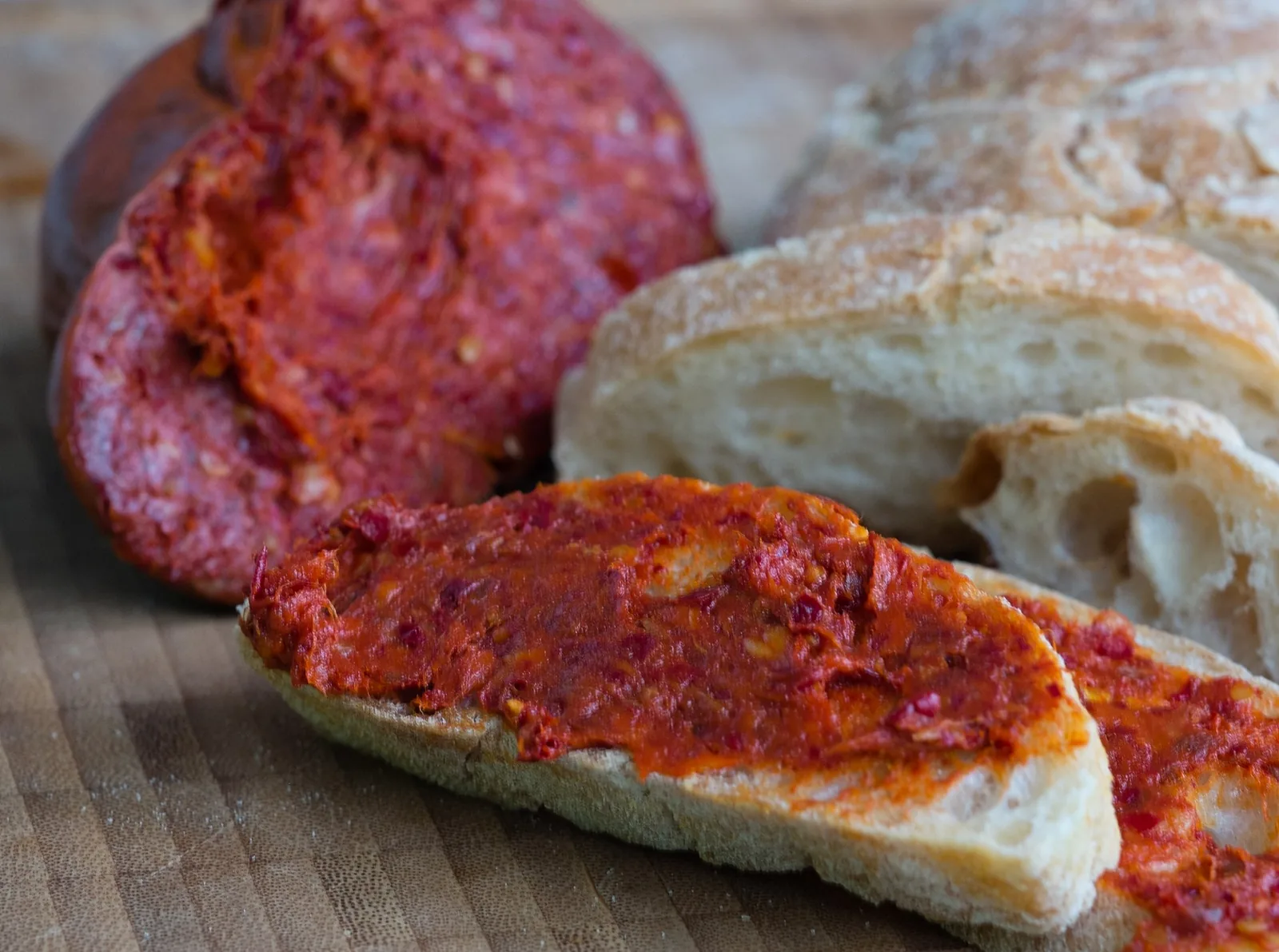
Casing or jar? In a natural casing, ’nduja is usually lightly smoked and cured for longer; it is sold in pieces of 300–500 g. A jar (most often 180–200 g) is easier to carry and to portion. Both can travel in checked luggage. In hand luggage, pastes normally fall under the same restrictions as liquids (the 100 ml limit), but since March 2024 ’nduja has been allowed on board when you depart from Calabria’s three airports: Lamezia Terme, Reggio Calabria and Crotone. The exception does not apply at connecting airports, and it is worth confirming at the airport before you fly that it is still in force. There is more on packing in our post on what to buy in Calabria.
How much does it cost? In November 2026, a 180 g jar from an artisan producer in Spilinga costs around €10 in Italian online shops. Outside Italy, look in Italian delicatessens and online shops; the label rule is the same.
How to store ’nduja
- Unopened, in its casing – in a cool, airy place or in the fridge, until the date on the label.
- Cut, in its casing – in the fridge; cover the cut end with film or paper so it does not dry out.
- An opened jar – in the fridge. Level the surface and cover it with a thin layer of olive oil to keep the air out. Producers give different shelf lives – from a few days to a few weeks – so go by the label.
- Always a clean spoon. Breadcrumbs and bits of cheese in the jar are the fastest route to mould.
’Nduja has about 530–560 kcal per 100 g, and roughly half of its weight is fat. A 20–25 g portion is 110–140 kcal – about the same as a tablespoon of olive oil.
What to drink with ’nduja
Strong tannins and high alcohol amplify the heat of the chilli, so the safest choice with ’nduja dishes is a chilled Cirò Rosato, a rosé made from the gaglioppo grape. Among Calabrian reds, Italian guides suggest a young Cirò Rosso or a magliocco from the Terre di Cosenza appellation. Grapes and appellations are covered in our guide to Calabrian wine.
If this list makes you want to try ’nduja where it comes from, our Calabrian food guide covers what else to order when you get there.
Frequently asked questions
How do you eat ’nduja?
The simplest way is to spread it thinly on hot toasted bread. In cooking it works as a seasoning: melt it into a tomato sauce for pasta, or add it to bean soup, a frittata or a pizza.
How much ’nduja should I use for pasta?
At most 20–25 g per person, or 80–100 g for 400 g of pasta. If you are not used to spicy food, start with half that amount.
Does ’nduja need to be cooked?
No. It is a cured sausage that is also eaten as it is, on bread. In hot dishes it only needs to melt; fried over high heat it turns bitter.
What is a good substitute for ’nduja?
There is no exact substitute. The closest is sobrasada from Mallorca, which is also spreadable but milder, seasoned with paprika rather than hot peperoncino – add some chilli flakes to it.
Is ’nduja very spicy?
It is distinctly hot, because chilli makes up roughly a quarter of it, but the fat softens the burn. With ricotta, bread or pasta it suits people who usually avoid spicy food as well.
How long does ’nduja keep once opened?
From a few days to a few weeks – producers give different shelf lives, so go by the label. Keep an opened jar in the fridge, with the surface covered by a thin layer of olive oil.
Sources
We verified the information in this article against the following sources:
- Dissapore – Pasta con la ’nduja – quantities and the rule of adding ’nduja off the heat
- Ricette dal Mondo – Fusilli con la ’nduja – quantities for four
- Scatti di Gusto – wines for cured meats – wine pairing for ’nduja
- Eatalian Experience – ’Nduja di Spilinga – cuts, casing, smoking
- Regione Calabria – P.A.T. – list of traditional agri-food products
- eAmbrosia – the EU register of geographical indications (as of November 2026)
- MeteoWeb – ’nduja in hand luggage – ENAC approval for Calabria’s airports, 9 March 2024
- Spaghetti & Mandolino – ’Nduja di Spilinga, Luigi Caccamo – ingredients, nutrition values and the price of a 180 g jar (November 2026)
- Open Food Facts – ’Nduja di Spilinga – nutrition values from the label