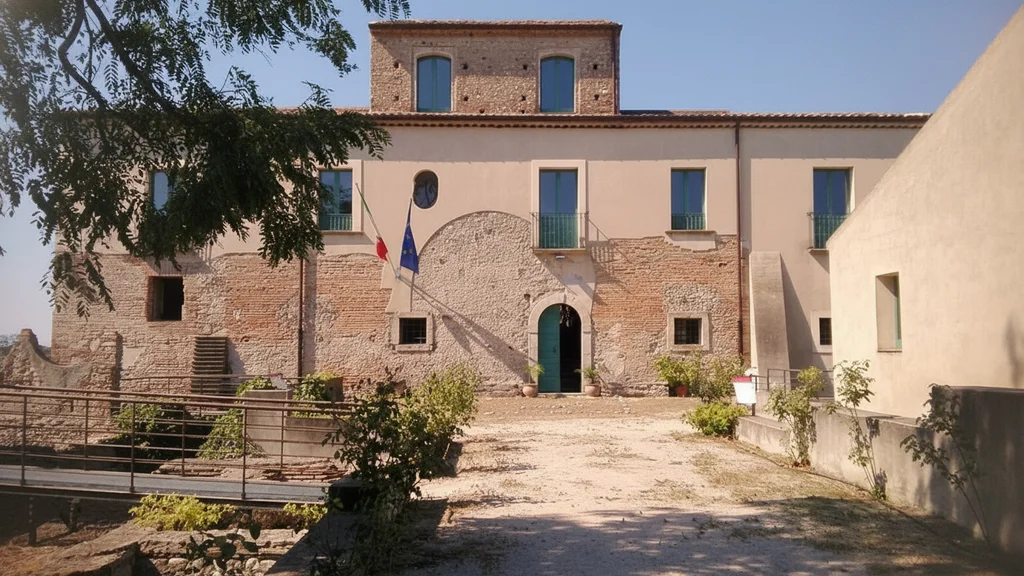
The Museo Nazionale di Locri is a place that takes you straight into the world of ancient Greece on the Ionian coast of Calabria. The museum is located in Locri, in the metropolitan area of Reggio Calabria, next to Parco archeologico di Locri Epizefiri, and presents a rich collection of artefacts connected with ancient Magna Graecia. It is one of those addresses that best show what life, religion and art looked like in a Greek colony of southern Italy.
Locri Epizefiri was a Greek colony founded by settlers from Locris in Greece, traditionally dated to the late 8th or early 7th century BC. The city was one of the most important centres of Magna Graecia on the Ionian coast of Calabria. The archaeological site includes the areas of Marasà, Mannella, Centocamere, a Greco-Roman theatre and necropolises, and the museum's collections are directly linked to excavations carried out here since the 20th century.
Table of Contents
The Heritage of Locri Epizephyrii – History and Excavations
The Locri Museum, also known as Museo Nazionale Locri, is one of the most significant sites on Calabria's cultural map. Situated next to the archaeological area of ancient Locri Epizefiri, the museum plays an important role in understanding the history and culture of this part of Italy. The archaeological complex of Locri Epizefiri allows you to trace the development of one of the most important cities of Magna Graecia on the Ionian coast of the region.
The history of the Locri Museum reaches back to discoveries connected with ancient Magna Graecia – the world of Greek colonies in southern Italy. The foundation of the polis of Locri Epizefiri is traditionally dated to the late 8th or early 7th century BC and linked with settlers from Greek Locris. Thanks to excavations carried out in the archaeological park, the museum holds artefacts that illustrate both pre-colonial phases and the development of the Greek city, as well as later Roman influences.
The archaeological museum in the park opened in 1971 as the Antiquarium di Locri, and in 1998 it gained the status of a national museum. The park also includes the Complesso museale Casino Macrì, where material from the Roman and late antique periods is displayed. The protohistory of the Locride area is presented at the Museo del Territorio di Palazzo Teotino Nieddu del Rio, opened in 2018.
The museum has an educational role and is an important stop for anyone who wants to better understand the roots of this part of southern Italy. Tradition links Locri with the lawgiver Zaleucus, often regarded as one of the earliest Greek lawgivers in the West, though the details of this story remain a matter of debate.
The museum centre focuses on showcasing the archaeological heritage of Locri and its most important settlement and cult zones. It is precisely the proximity of the site that makes a visit here so meaningful – you view the exhibits just minutes from where they were discovered. Locri was moreover not only a religious and political centre but also an important point of Greek culture: in the 3rd century BC, Nossis worked here, one of the best-known poets of the Hellenistic era.
Era |
Historical Phase |
Key Events and Finds |
|---|---|---|
9th – 8th c. BC |
Pre-colonial phase |
Necropolises of Canale Ianchina and Sant'Onofrio. |
Late 8th – early 7th c. BC |
Greek foundation |
Establishment of Locri Epizefiri as a colony of settlers from Locris. |
6th c. BC |
Consolidation |
Development of the city and its cult areas. |
5th c. BC |
Cultural apex |
Production of pinakes; cult of Persephone. |
3rd c. BC |
Late polis |
The poetess Nossis. |
From 3rd c. BC to late antiquity |
Roman period |
Romanisation of the city and continued use of buildings and necropolises. |
Watch on YouTube
The Key Finds of the Magna Graecia Collection
The Magna Graecia collection at the National Museum in Locri presents a rich array of exhibits reflecting the history and daily life of the ancient city. These collections are especially valuable because they are closely tied to specific zones of the archaeological site. In the museum's rooms you can follow the path from Iron Age materials and pre-colonial phases to artefacts of the Greek polis and the Roman period.
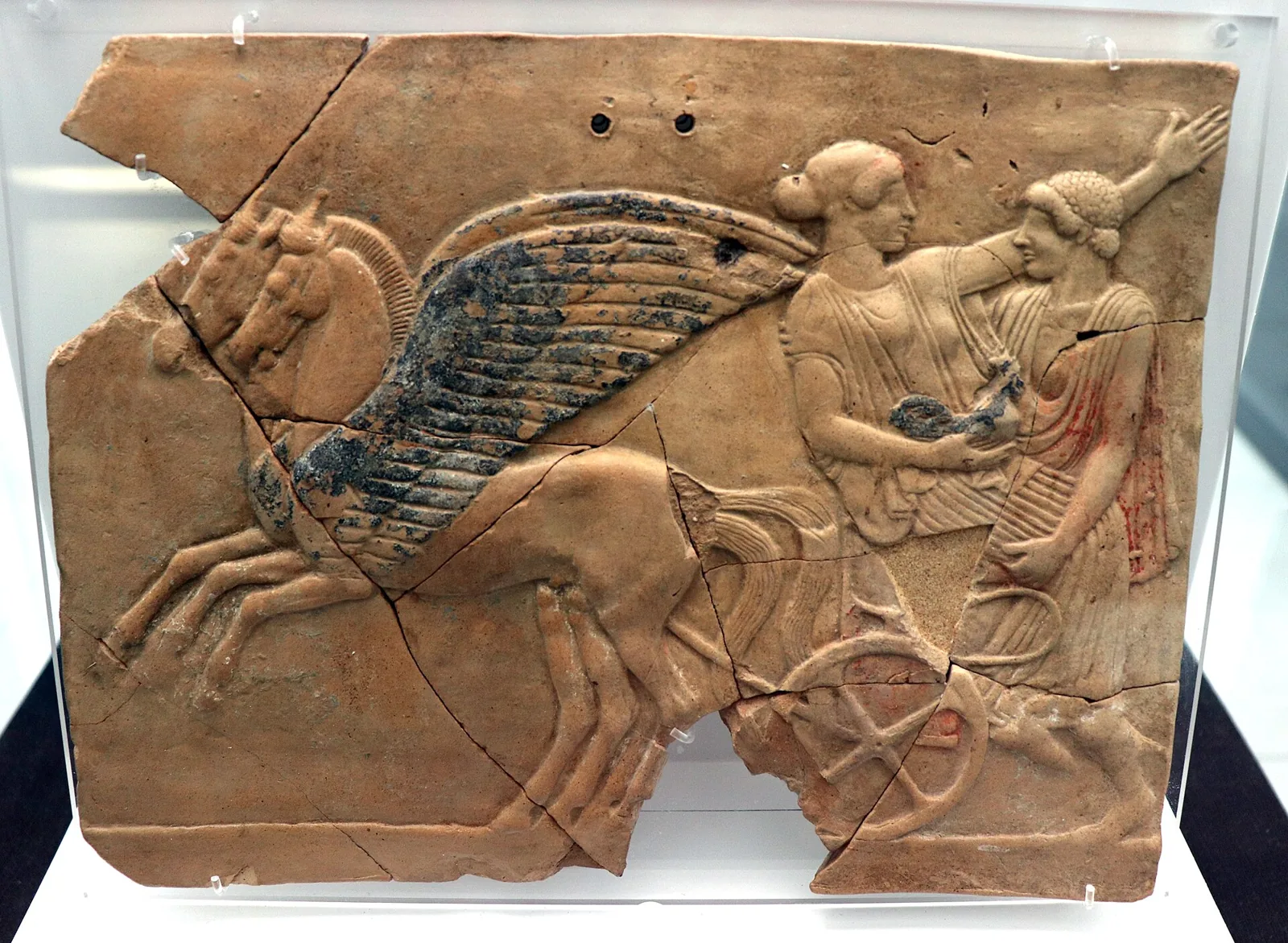
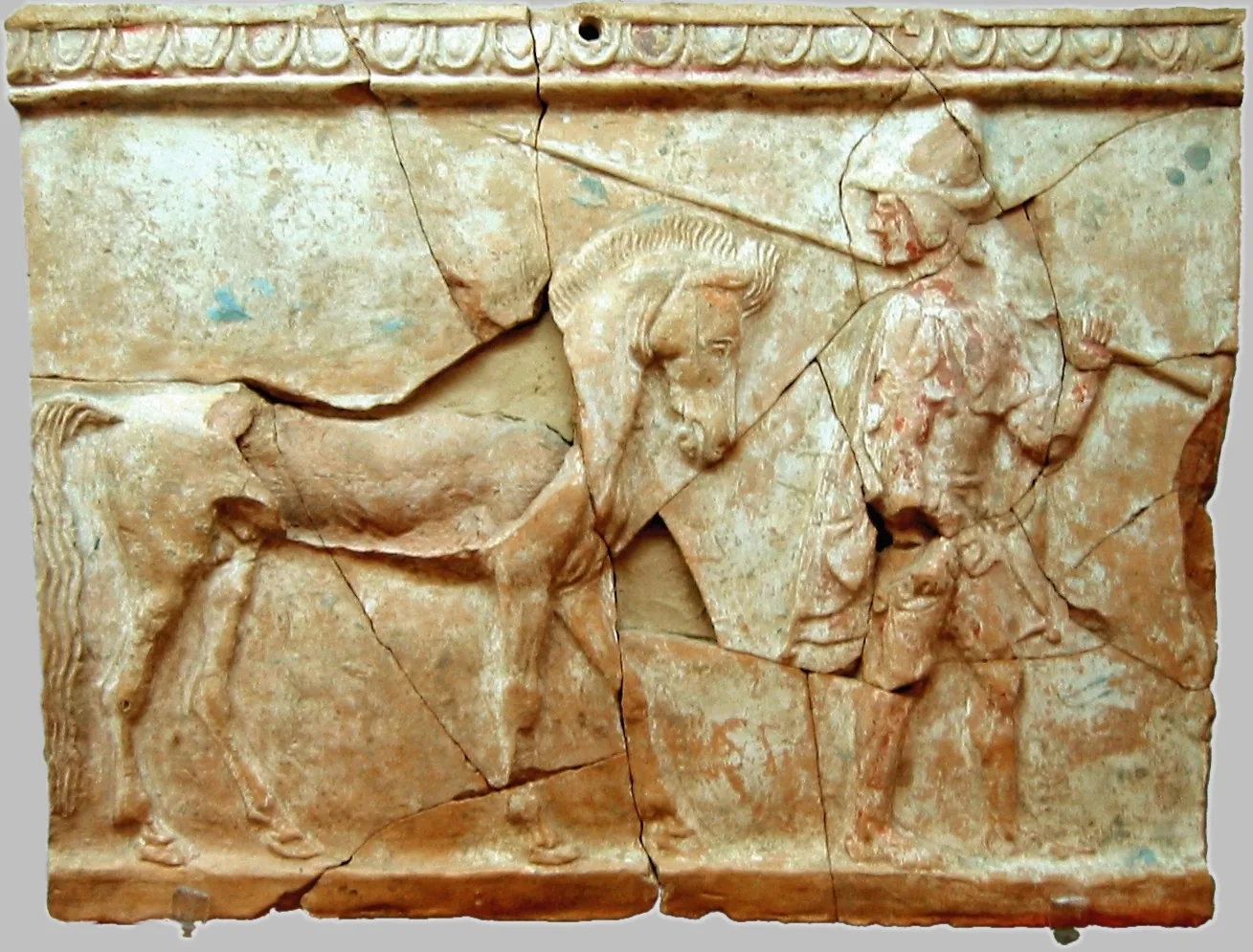
Particularly important are the pinakes from Locri, terracotta votive tablets mainly from the 5th century BC, discovered above all in the Sanctuary of Persephone in Contrada Mannella. Thousands of fragments and examples are known, and the scenes depicted relate to Kore-Persephone and Hades, marriage, the female world and rites of passage. This is one of the most characteristic coroplastic assemblages of Magna Graecia and a key to understanding the religion of Locri.
Exceptional Finds from Ancient Times
The most memorable artefacts are those connected with the city's religious cults. An especially important element of the collection is the material from the Sanctuary of Persephone in the Mannella quarter, which yielded thousands of the famous pinakes. These terracotta votive tablets depict mythological scenes and images connected with the female world, marriage and the transition to adulthood.
For interpreting the collection, the most important cult areas of Locri are also crucial, above all the Sanctuary of Persephone at Mannella and the Marasà area. The cult of Persephone held exceptional significance here and is associated with female rituals, marriage and the transition to adulthood. The archaeological material from these zones includes pinakes, terracotta figurines, architectural elements and votive deposits dated mainly to the 6th–5th century BC.
Another important element of the collection consists of diverse terracotta sculptures and artefacts from necropolises and urban areas. Thanks to these, the exhibition is not limited to sacred art but also shows everyday life, funerary rites and the changes that occurred in the city over the centuries. It is precisely this diversity that makes the museum read well together with the archaeological park.
Art and Craftsmanship of Daily Life
Within the Magna Graecia collection, you can also find a range of everyday objects, including ceramic vessels decorated with painted designs. Exhibits such as loom weights, fibulae, ornaments and bronze mirrors help describe household equipment, craft production and practices connected with the daily life of Locri's inhabitants. Alongside cult artefacts, it is precisely such objects that allow you to see the city not only as a famous sanctuary but also as a real place of daily life.
Pinakes – terracotta votive tablets connected with the cult of Persephone and female rites of passage.
Terracotta figurines – an important part of the material from cult areas and necropolises.
Architectural elements – fragments of sacred and urban buildings, helping to reconstruct the appearance of ancient Locri.
Artefacts from necropolises and the Roman period – materials showing the continuity of life in the city beyond the classical era.
Visiting the Museum and Archaeological Park in Locri
The greatest asset of a visit to Locri is the clear connection between the exhibition and the excavation area. The museum guides the visitor through successive stages of the site's history – from Iron Age materials and pre-colonial phases, through artefacts of the Greek polis, to pinakes, coroplastic art, material from necropolises and Roman-period finds. This makes it easier to understand how the city developed and where the most important objects on display were found.
The official description of the park lists four visiting routes. The first leads from the Museo della polis greca through the eastern and northern sectors, the walls, two towers, a gate, the Thesmophorion and Marasà. The second covers the southern sector with the area of Zeus saettante, Porta Portuense, Casa dei Leoni, Sacello di Afrodite, Porta di Afrodite, Centocamere and Stoà ad U.
The third route links Centocamere and Petrara, with the probable forum and a bath building. The fourth covers Dromo and Pirettina, where the Greco-Roman theatre is located. This layout helps you plan the visit in a practical way: first see the context in the museum, then choose the parts of the park that best match your time and interests.
Museum and Archaeological Site
What works best here is the combination of the museum with the archaeological site itself. After viewing the exhibits, it becomes easier to recognise names like Mannella, Marasà, Centocamere and the Greco-Roman theatre in the field, because they cease to be points on a map and become part of one story. A walk through the park organises what you have already seen in the display cases: cult areas, gates, urban buildings and later Roman traces.
Historical Context Instead of Display Cases
In Locri, what matters most is context: bringing museum objects together with the place where they were found and the topography of the ancient city. Pinakes, figurines, material from necropolises and Roman artefacts are not a detached collection here but part of a story about one city. For the visitor this is practical, because even after a brief visit it becomes easier to navigate the archaeological park afterwards.
A Fuller Visit
In the case of Locri, the point of the visit lies in combining the various places connected with the city's heritage. A visit is usually paired not only with Parco archeologico nazionale di Locri but also – when available – with Palazzo Nieddu del Rio. This arrangement lets you see Locri more broadly than through the lens of a single exhibition hall.
Transport |
Route and Details |
Travel Time |
|---|---|---|
Regional train |
Nearest station: Locri |
Depends on connection |
Car |
Reggio Calabria – Locri, SS 106 Jonica road |
approx. 1h 20–40 min |
Car |
Catanzaro Lido – Locri |
approx. 1h 40 min – 2h |
The museum and archaeological park are located by the SS 106 Jonica road, in Contrada Marasà, about 4 km south of the centre of the modern town of Locri. The official address is Strada Statale 106 Jonica – Contrada Marasà – 89044 Locri (RC). If driving, the main landmark is the SS 106 Jonica road running along the Ionian coast of Calabria.
When travelling by train, the most convenient stop is Locri station, but remember that the park is not in the strict town centre. From the station, this is not a short walk through town, but a trip out towards the outskirts, in the direction of Contrada Marasà and the SS 106 road. It is best to plan the visit from the start as a combination of the museum and the archaeological park.
Allow about 45–90 minutes for the museum alone. If you also plan to walk around Parco archeologico nazionale di Locri, set aside 2–3 hours for the whole visit. If Palazzo Nieddu del Rio is also open, a day in Locri becomes even more rewarding.
Museo Nazionale di Locri – Frequently Asked Questions
What can you see at the Museo Nazionale di Locri?
The museum houses above all pinakes, terracotta votive tablets connected with the cult of Persephone, along with terracotta figurines, material from necropolises, artefacts from pre-colonial phases and Roman-period finds. The exhibition is closely linked to the excavations at the Locri Epizefiri site.
How much does a ticket to the Locri museum cost?
According to the official MiC website, a full ticket for the Museo e Parco archeologico nazionale di Locri costs €5.00, while a reduced ticket costs €2.00. Entry to the Museo di Palazzo Nieddu is free. The information on the website is updated as of 1 July 2026; before visiting, check it again through the museum's or archaeological park's official channels.
What are the most interesting exhibits at the Locri museum?
The most characteristic are the pinakes from the Sanctuary of Persephone at Mannella, one of the key coroplastic assemblages of Magna Graecia. The terracotta figurines, architectural elements and material from necropolises and the Roman period also make a strong impression.
What are the museum's opening hours?
According to the official MiC website, the Museo e Parco archeologico nazionale di Locri is open Tuesday to Sunday from 09:00–20:00 and closed on Monday. The page shows an update from 1 July 2026, so before arriving, check the current hours on the official website or contact the institution directly.
Is the museum accessible for people with disabilities?
Before visiting, it is worth checking directly with the museum for the latest information on building and archaeological park accessibility. This is the best way to confirm conditions and any facilities available on the day.
Sources
The information in this article was verified against the following sources:
- cultura.gov.it – cultura.gov.it
- musei.calabria.beniculturali.it – musei.calabria.beniculturali.it
- Amore e morte: afrodite e persefone nei pinakes di locri - Enciclopedia - Treccani – treccani.it
- Wikipedia – Museo nazionale di Locri – it.wikipedia.org
Last updated: