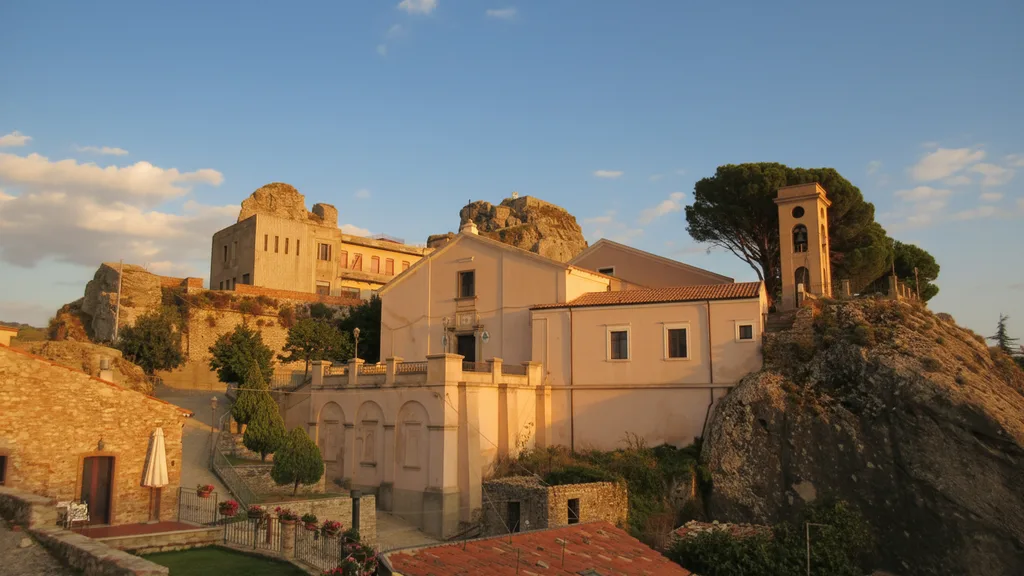
The Cathedral of Santa Maria dell'Isodia in Bova is one of the most important sacred monuments of Calabria, distinguished by its dramatic setting and centuries of history. Bova sits at about 820 metres above sea level, while the cathedral complex and the castle ruins occupy a rocky ridge towering over the town. For lovers of southern Italy and sacred architecture, this is a place where Greek and Latin traditions clearly intertwine.
Table of Contents
Historical Significance of the Cathedral in Bova for Calabria
The Cathedral of Santa Maria dell'Isodia, holding the status of a co-cathedral today, remains a key point of reference for the identity of Bova. The church developed during the Middle Ages on the remains of earlier sacred structures, linked to the Byzantine tradition. Archaeological research has revealed older building phases, though their precise dating remains a subject of scholarly debate.
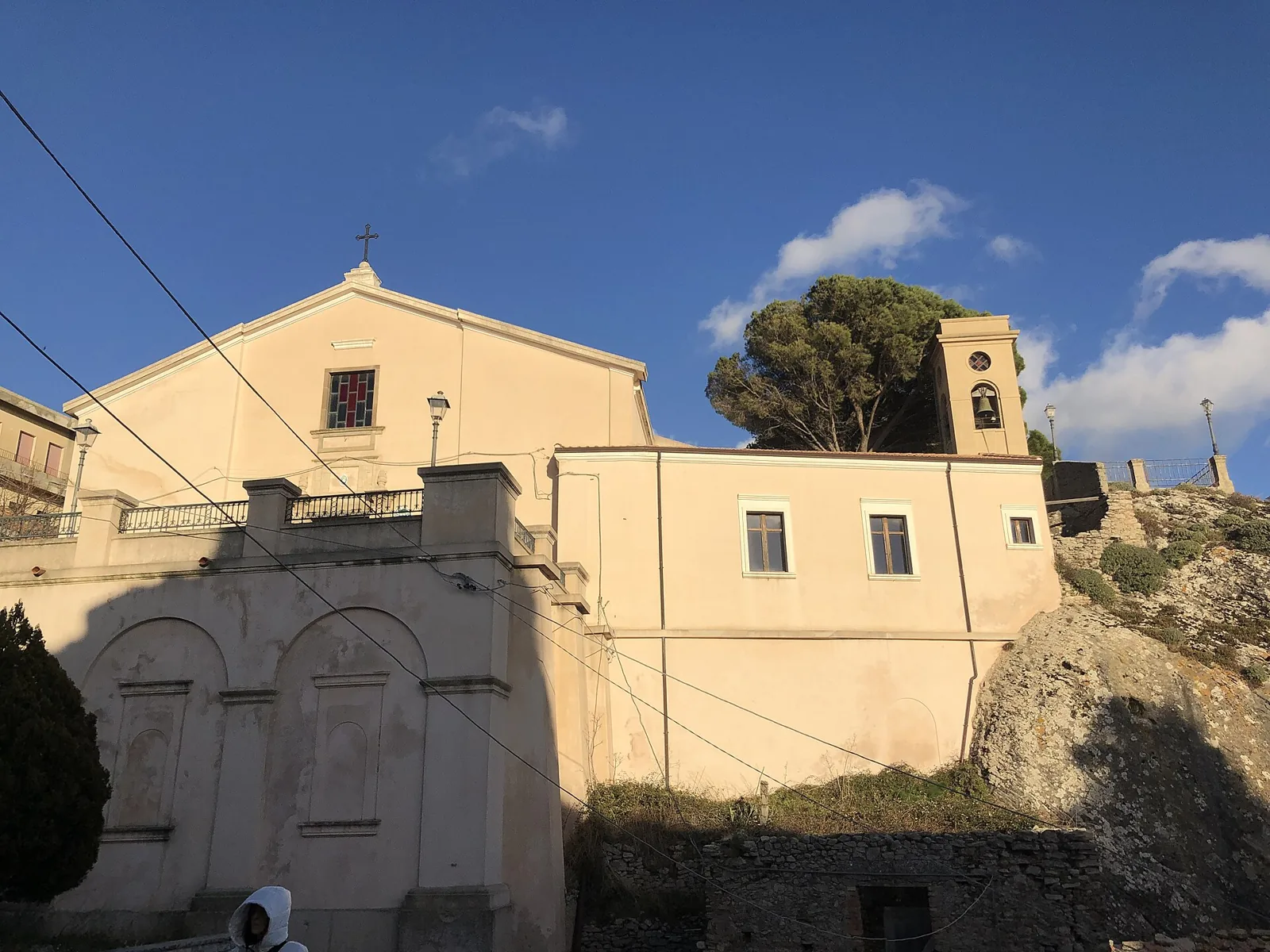
Bova was the historical seat of the local diocese, which was already joined personally with Reggio in 1940–1941. After a brief interruption, the union in persona episcopi was restored in 1973, and on 30 September 1986 the two dioceses were finally merged into the Archdiocese of Reggio Calabria-Bova. From that moment, the former cathedral in Bova has carried the title of co-cathedral.
The town belongs to the Bovesìa area (Calabria Greca), where the Greko-Calabrian language survived for centuries. Bova was an important episcopal centre and a strategic point in the Aspromonte massif, where eastern and western influences coexisted. This is key to understanding the church itself, its dedication, and the local cult.
In the Norman era, the church was woven into the settlement's defensive system, creating a natural link with the nearby castle. The name Isodia derives from the Greek word Eisodia, referring to the feast of the Presentation of the Blessed Virgin Mary at the Temple, celebrated in the Eastern tradition on 21 November.
Today's appearance of the church is the result of many phases of rebuilding, driven mainly by the destructive earthquakes that regularly struck Calabria. The co-cathedral's architecture should therefore be read as a record of successive eras, not a uniform structure from a single period.
| Era / Year | Event | Nature of Changes |
|---|---|---|
| Middle Ages | Earlier building phases | Presence of older sacred structures, linked to the Byzantine tradition and the medieval development of the settlement. |
| 1584 | Madonna sculpture | Creation of the marble figure by Rinaldo Bonanno, a central element of local devotion. |
| 1714 | Altar | Construction of the modern main altar. |
| 20th–21st century | Conservation work and research | Successive stages of archaeological research and conservation of the monument. |
Watch on YouTube
Significance of the Marian Cult for the Bova Community
Cultural and Spiritual Heritage
In the historic centre of Greek Calabria (often called Bova Superiore, to distinguish it from coastal Bova Marina), residents have for generations trusted in the Madonna's protection over their harsh, mountainous terrain. At the centre of this devotion is the marble statue of the Madonna and Child from 1584, the work of the Messina-born sculptor Rinaldo Bonanno.
The Madonna della Presentazione (dell'Isodia), carved from Carrara marble, stands 100 cm tall. The figure of Mary rests on a carved pedestal (scannello) decorated with a relief of an ox – Bova's heraldic symbol – and two adoring angels. It is this specific work, rather than a general symbol of devotion, that has bound the local community together, especially in times of seismic danger and historical upheaval.
Among the most fascinating Holy Week traditions in Bova is the Pupazze (or Persephoni) rite. These are large, anthropomorphic figures woven from young olive leaves and branches and reeds, carried in procession on Palm Sunday. Once the ceremony ends, the figures are traditionally taken apart, and residents carry fragments of the branches home as a blessing. The custom has a strong sense of identity, blending Christianity with echoes of ancient Greek agricultural cults.
Architecture and Furnishings of the Co-Cathedral – Traditions and Influences
The church's architecture is a textbook example of layered eras. It has a basilica plan with three naves, and the central nave is covered by a wooden roof truss. The interior leads to a raised presbytery, reached by wide steps. The side chapels form an important part of the layout, including the Assunta, SS. Sacramento, Madonna del Rosario, Crocifisso, and Maria Ausiliatrice chapels. The square-plan bell tower beside it stands just 7.5 m tall and holds four bells, capturing perfectly the intimate scale of this mountain church.
A Blend of Cultural Influences
Bova, once a borderland centre, preserved traces of both Christian traditions in the church. Unlike the monumental cathedrals of coastal towns, the church in Bova has a rugged, mountain character, closely tied to the topography and former defensive role of the settlement. What matters in Bova is not the church building alone, but the whole cathedral-and-castle complex, organically grown into the rocky ridge.
Culture, Cuisine, and Tourism in Bova
Bova has for centuries relied on olive and vine cultivation on steep, terraced fields. Modern tourism in the region is inseparable from this agricultural heritage and the cuisine of the province of Reggio Calabria. That means excellent first-press olive oil, bread baked using traditional methods, and the strong pastoral traditions of the Aspromonte mountains.
During a visit to the Bovesìa, it's worth paying attention to local specialities: the famous bergamot of the province of Reggio Calabria and musulupu cheese. Musulupu dell'Aspromonte is a fresh cheese made from goat's or sheep's milk, shaped in hand-carved wooden moulds called musulupare. It is traditionally prepared around Easter, and the patterns pressed into the cheese often echo religious and Greek motifs.
Bova is an ideal starting point for exploring Grecanico culture. It's worth visiting the Museo della Lingua Greco-Calabra Gerhard Rohlfs and walking the Sentiero della Civiltà Contadina (Trail of Peasant Civilisation). Palazzo Tuscano, in turn, houses the information centre of the Aspromonte National Park, making it easy to combine a visit to the historic borgo with hiking. Near the cathedral also stands the church of San Leo, the town's patron saint, home to a marble statue of the saint from 1582 likewise attributed to Rinaldo Bonanno – the same craftsman links both monuments into one coherent visit.
Bova lies about 50–55 km from Reggio Calabria. The drive usually takes between 1 hour 15 minutes and 1 hour 30 minutes. The fastest route follows the SS106 coastal road to Bova Marina, from where about 14 km of the winding, uphill SP24 road remain. For an unhurried walk through the historic centre, a visit to the cathedral and castle ruins, and enjoying the views over the Ionian Sea, allow 1.5 to 3 hours.
Frequently Asked Questions
What can you see in the Cathedral of Santa Maria dell'Isodia in Bova?
The most important furnishings are the marble statue of the Madonna dell'Isodia from 1584 by Rinaldo Bonanno and the altar from 1714. The setting of the church on a rocky hilltop, right beside the ruins of the Norman castle, is equally striking.
What does the name Isodia mean in the cathedral's name?
Isodia is the Latinised form of the Greek word Eisodia, referring to the feast of the Presentation of the Blessed Virgin Mary at the Temple. It is a clear trace of the region's Byzantine past and the roots of Greek tradition in the local church.
What are the opening hours of the cathedral in Bova?
It's best to check the co-cathedral's current opening hours on the websites of the Comune di Bova or the Archdiocese of Reggio Calabria-Bova before your visit. Even if the interior is closed, it's worth climbing up to the cathedral-and-castle hill for the architecture and the sweeping viewpoints alone.
When do the main celebrations at the cathedral take place?
The main celebrations fall on 15–17 August, honouring the Assumption of the Virgin Mary, Saint Leo, and Saint Roch. Bova's most distinctive tradition, however, is Palm Sunday, with its procession of large woven Pupazze figures.
Are there bishops' tombs in the cathedral?
The church served for centuries as the seat of the former Diocese of Bova and holds great significance for the history of the local episcopate. The exact locations of burials and older crypts, however, remain the subject of ongoing archaeological research.
Nearby
Sources
The information in this article was verified against the following sources:
- BeWeB - Cattedrale - Bova : Chiesa della Madonna della Presentazione – beweb.chiesacattolica.it
- Madonna della Presentazione (o dell'Isodia) Madonna con Bambino st – catalogo.beniculturali.it
- Bova | Turismo Reggio Calabria – turismo.reggiocal.it
- BeWeB - Diocesi : Bova – beweb.chiesacattolica.it
- Santuari di Bova, nuovo orario per le visite – ntacalabria.it
- onaf.it (PDF) – onaf.it
- Chiesa di San Leo | e-borghi – e-borghi.com
- Wikipedia – Calabria – en.wikipedia.org
Last updated: