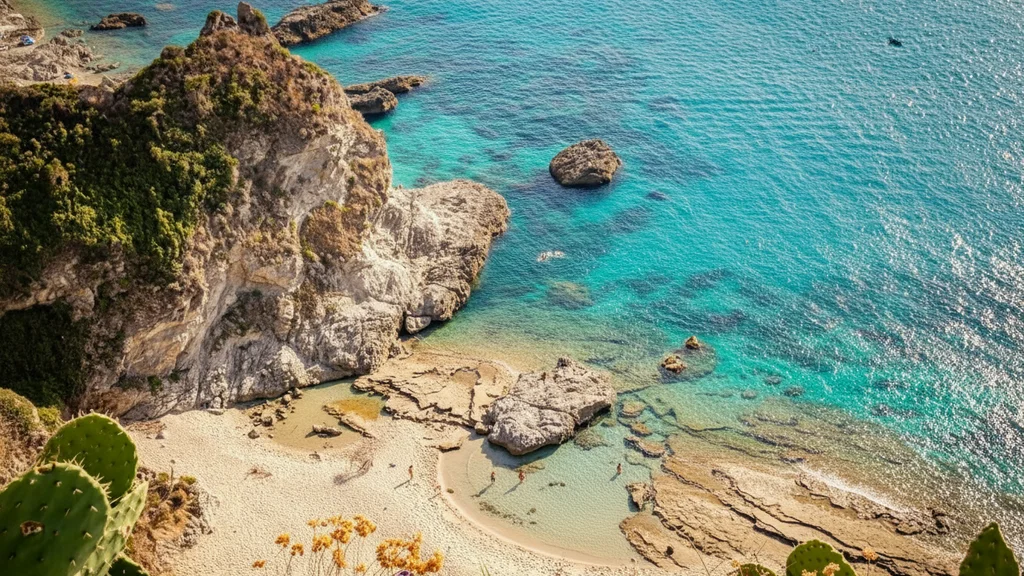
Costa degli Dei, known as the Coast of the Gods, offers exceptional beaches of unparalleled beauty stretching for approximately 55 kilometres in the province of Vibo Valentia. Turquoise waters, white sands and charming cliffs attract tourists from around the world, creating an area known as the "Calabrian horn" (il corno). Among them are gems such as Tropea, Grotticelle and Spiaggia di Michelino, which owe their name to mythology – according to legend, this is where the ancient gods came to rest. These are perfect spots for relaxation, family holidays and active pursuits, where the granite formations of Capo Vaticano meet the crystalline Tyrrhenian Sea.
Discovering the Treasures of Costa degli Dei – Tourist Attractions in the Area
Costa degli Dei is not only breathtaking beaches and picturesque landscapes but also a wealth of tourist attractions that draw visitors from across the globe. Discovering this part of the Calabrian coastline is an opportunity to understand both the natural beauty and the cultural heritage of the region. The strategic positioning of towns on cliffs means that every panorama takes your breath away.
One of the most important places on the Costa degli Dei map is Capo Vaticano. This exceptional area is characterised by beaches hidden between rocks, best accessed from the sea. Grotticelle, one of the most beautiful beaches in the area, offers spectacular views of azure waters and surrounding rock formations. It is worth visiting the belvedere behind the lighthouse, which offers views of Sicily and the Stromboli volcano.
Tropea, often called the jewel of Calabria, is a town known for the Basilica of Santa Maria dell'Isola, perched on a cliff overlooking the sea. It is the perfect place for romantic strolls and exploring charming streets full of local shops and restaurants. Tropea also makes an excellent base for Vespa scooter trips or longer routes that allow you to fully appreciate the charm of the Calabrian coast. The town's urban fabric, where houses appear to grow directly from sandstone, is unique on a European scale.
Another point worth visiting is Pizzo, known for the unique Tartufo di Pizzo dessert, best sampled at the iconic Bar Dante. The town also hides the historic Castello Murat and the mysterious Piedigrotta Church, a chapel carved in tuff by sailors in the 17th century. The town offers many activities for adventure lovers, such as snorkelling, fishing and paragliding over the coastline.
| Beach Name | Surface Characteristics | Accessibility | Infrastructure |
|---|---|---|---|
| Spiaggia della Marina | Light sand, fine gravel | Pizzo centre, easy access | Bars, lidos, promenade |
| Marinella di Zambrone | Granite formations, white sand | On foot (10-20 min descent) | Wild beach, no bars |
| Grotticelle | Fine white sand | By car or bus 236 | Full service, rentals |
| Michelino Beach | Sandy cove | 210 concrete steps | No infrastructure |
Northern and Central Coastal Segment – From Pizzo to Zambrone
Exploring the Coast of the Gods is best started from the north, where Pizzo captivates with its defensive architecture and Spiaggia della Marina beach. Near Briatico, one can admire the ruins of Saracen towers, including the famous La Rocchetta, which once guarded residents against pirates. A particularly special place is Sant'Irene, where a Roman fish-breeding pool carved in limestone can be found.
Continuing south, we reach Zambrone, which hides Marinella di Zambrone, known as Paradiso del Sub (Diver's Paradise). This is a wild cove surrounded by Mediterranean vegetation, reached via a steep path from the railway station. A distinctive landmark is Scoglio del Leone, a rock whose shape resembles a resting lion.
In Parghelia, Michelino Beach awaits – one of the most beautiful beaches in Italy, requiring a descent of over 200 steps. The absence of bars and rental facilities means blissful silence reigns here, ideal for those seeking authentic contact with nature. The waters around Parghelia abound in corals and rare fish species, making snorkelling an exceptional experience.
Water Sports – Discovering Activities on the Waters of Costa degli Dei
Costa degli Dei is a paradise for water sports enthusiasts drawn to the extraordinary combination of beautiful beaches and crystal-clear Tyrrhenian Sea waters. Beaches such as Tropea and Capo Vaticano are particularly popular among windsurfing and kitesurfing enthusiasts. Numerous sports schools, such as Tropea Surf School, offer lessons and professional equipment.
For those preferring calmer forms of activity, Parghelia and Zambrone create ideal conditions for paddleboarding (SUP) and kayaking. Ricadi and Nicotera attract sailing and parasailing enthusiasts, offering not only infrastructure but also flights above the blue expanse. Windsurfing lesson prices range from 50 to 80 euros, and underwater visibility reaching 30 metres favours diving.
The best time for water sports is the summer months between June and September, when water temperature exceeds 24°C. Safety is a priority, so always pay attention to beach flags – red means an absolute ban on entering the water. An alternative attraction is catamaran cruises with wakeboarding options and the exploration of sea caves.
Ecological Initiatives on the Coast of the Gods – Preserving Calabria's Natural Beauty
Costa degli Dei is actively engaged in various ecological initiatives aimed at protecting these exceptional environmental resources. Examples include cliff erosion prevention through planting native species that strengthen the soil. These efforts are crucial for maintaining the stability of monumental granite and sandstone formations.
Steps have also been taken to preserve marine ecosystems, promoting sustainable fishing and ecological education for tourists. Collaboration with local organisations supports waste separation, which directly benefits marine fauna. Particular emphasis is placed on monitoring water quality near Marinella di Zambrone and Tropea.
An important element of these initiatives is also the promotion of responsible tourism through the introduction of protected zones. Local authorities are developing infrastructure that minimises human impact on the environment, ensuring beaches remain clean. Thanks to this, the most beautiful corners of Calabria preserve their biodiversity and natural splendour for future generations.
Cultural Heritage and History of Costa degli Dei
The history of Costa degli Dei is rich and complex, reaching back some 8,000 years. Neolithic settlement and the influences of Greek, Roman and Norman civilisations have left indelible marks here. The region has served as a strategic control point on the Tyrrhenian Sea for centuries.
Historical Sites and Architecture
In Vibo Valentia, the central point of the coastline, medieval structures erected under Emperor Frederick II can be admired. The town is an archaeological treasure trove, and its local museum presents exhibits from ancient times. The Norman-built cathedral in Tropea houses an image of the Madonna, believed to protect the town from catastrophes.
The symbol of the region is the Santuario di Santa Maria dell'Isola, situated on a rocky island with views of the Aeolian Islands. This site constitutes an important historical and religious point of reference for the local community. Calabria's sacred architecture combines the austerity of Norman walls with the lightness of Byzantine details.
Elements of Culture and Tradition
Costa degli Dei combines maritime, religious and culinary traditions that represent the quintessence of Calabrian customs. An important element is the Iglesia de Piedigrotta near Pizzo Calabro, a church carved in rock by shipwreck survivors. The sculptures and frescoes inside the cave testify to deep faith and folk artistic craftsmanship.
The history of this region, complemented by its natural beauty like Spiaggia Paradiso del Sub, creates the unique identity of Costa degli Dei. Worth mentioning are figures such as Joachim Murat, whose fate intertwined with the castle in Pizzo, adding historical drama to the location. The region's culture is also about flavours, such as the famous red onion of Tropea or the spicy 'nduja from nearby Spilinga.
Logistics and Transport on the Coast of the Gods
Effective exploration of the region requires understanding the local transport system, where the "Regionale" train plays a key role. In the summer season it operates as the Tropea Express, connecting the most important resorts and beaches. Railway stations are often situated within a short walk of the main tourist attractions.
For those staying in Ricadi, access to Grotticelle bay is facilitated by bus line 236, connecting the station with viewpoints. Driving can be difficult due to narrow roads and paid parking zones marked with blue lines. In Tropea itself, it is best to get around on foot, despite the numerous steps connecting the town with the shore.
Frequently Asked Questions
Which beaches on Costa degli Dei are the most beautiful?
The most beautiful are considered to be Grotticelle in Capo Vaticano (the Caribbean of Calabria), Marinella di Zambrone (Paradiso del Sub) and Spiaggia di Michelino in Parghelia. Each offers crystal-clear water and unique rock formations.
What is Costa degli Dei and where does the name come from?
Costa degli Dei, meaning the Coast of the Gods, is a 55-kilometre stretch of coastline in Calabria. The name comes from mythology and refers to the supernatural beauty of the landscape, said to have enchanted the gods themselves.
How do you get to Costa degli Dei beaches from Pizzo?
The most convenient way is by the Tropea Express train, which connects Pizzo with Tropea, Zambrone and Ricadi. You can also hire a car, driving along the SS18 route, or use local bus connections.
Are the beaches on the Coast of the Gods suitable for children?
Yes, Nicotera Marina is particularly recommended due to its wide, sandy beach and gentle entry into the water. Spiaggia della Marina in Pizzo is also family-friendly thanks to easy access and infrastructure.
When is the best time to visit Costa degli Dei?
The best period is May to October. Peak season falls in July and August, when it is warmest but also most crowded. September offers optimal water temperatures and fewer tourists.