Calabria is a region full of natural treasures, and one of them is the Acconia di Curinga Thermal Baths. Located just 21 kilometres from Pizzo, these hot springs attract tourists with their wild authenticity and healing properties. It is the perfect place for nature lovers seeking relaxation, where the history of ancient Roman engineering meets the monumental landscape of the Catanzaro isthmus. Discover the evolution of this site, its unique health benefits and its impact on local tourism.
Evolution of the Acconia di Curinga Baths – From Antiquity to the Present
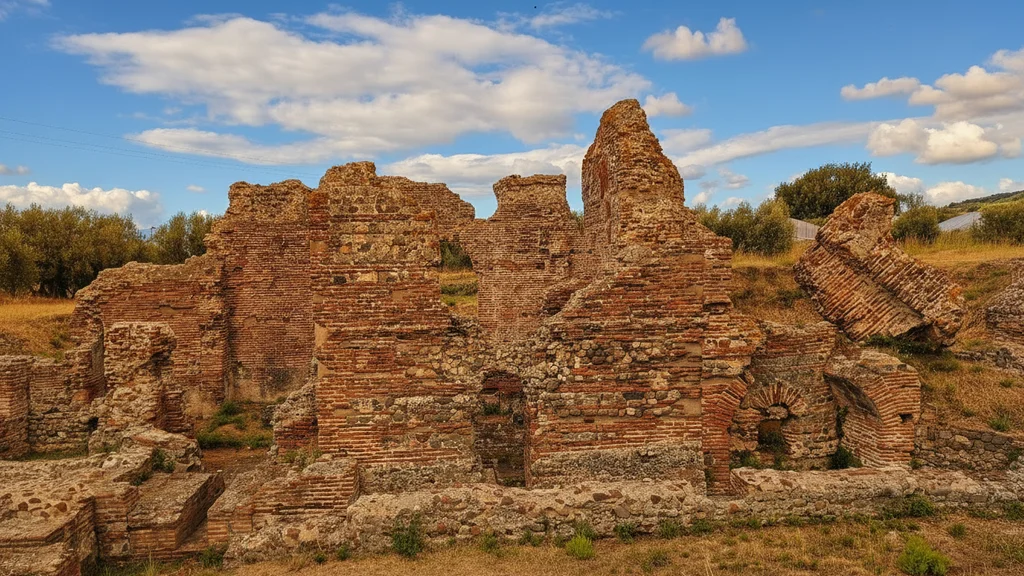
The baths at Acconia di Curinga are part of the region's rich history, whose roots reach back to the Upper Palaeolithic, as confirmed by finds in the Cirella area. The strategic importance of the area grew during the Roman era thanks to the proximity of the Via Popilia, a key artery connecting Rome with Reggio Calabria. Already then, the abundance of thermal waters led to the creation of a monumental bath complex, known today as the Terme Romane di Acconia.
The historic complex, locally called Mura degli Elleni, is a unique example of Roman sanitary architecture in southern Italy. Archaeological research and the discovery of a coin from the era of Emperor Diocletian have dated the peak of the complex's operation to the 3rd and 4th centuries AD. The builders employed masonry techniques typical of Roman North Africa, using bessali-type bricks and moisture-resistant lime mortar.
| Chronological Phase | Period | Activity Characteristics |
|---|---|---|
| Phase I | 1st – 2nd century AD | Construction of the original complex using opus latericium technique. |
| Phase II | 3rd – 4th century AD | Expansion and restoration; introduction of opus vittatum technique. |
| Christian Phase | 6th century AD | Adaptation of the frigidarium as a place of religious worship. |
Today, Acconia di Curinga is developing as a leisure-oriented tourist destination, attracting guests seeking authentic Italian experiences. Numerous all-inclusive resorts such as the Falkensteiner Club Funimation Garden Calabria offer modern amenities in the vicinity of these historic ruins. Although the archaeological site no longer serves balneological functions, its structure with a preserved hypocaustum system continues to impress engineers and historians alike.
Architecture and Engineering of the Roman Thermal Complex
The complex covers an area of approximately 700 square metres, although scientists suggest the structures may extend considerably further. The heart of the complex was a frigidarium covering 80 square metres, oriented on an east-west axis and terminating in two semicircular apses. Users would pass sequentially through rooms of varying temperatures, from the tepidarium to the hot caldaria and a dry sauna known as the laconicum.
An extremely important engineering element is the underfloor heating system, where fragments of suspensurae are still visible today. Hot air generated by furnaces circulated between small pillars, while exhaust fumes were discharged through ceramic pipes built into the walls. Such precision of execution testifies to the Romans' enormous technical knowledge, enabling them to ensure even temperature distribution in such a large public building.
Efforts are currently underway to revitalise the site as part of the Driver project, which includes the construction of a multimedia information centre. A protective fibreglass canopy is also planned to shield the ancient walls from atmospheric degradation. This will allow tourists to admire the natatio and ancient gardens without risking damage to the historic structure.
Invaluable Health Benefits of the Curinga Thermal Waters
The Acconia di Curinga baths are associated with relaxation, but it is the nearby active springs such as Terme di Caronte that offer real therapies. These waters emerge from the Reventino massif at a temperature of 39 degrees Celsius and are classified as sulphurous-saline-bromo-iodine. The abundance of minerals such as calcium, magnesium and sulphur has a direct impact on bodily regeneration and the wellbeing of visitors.
Key Health Properties
Strengthening the Circulatory System and Improving General Wellbeing
Bathing in the hot springs of the Curinga region provides relief to the circulatory system by dilating blood vessels. Better tissue oxygenation results in a reduction of chronic fatigue and deep muscular relaxation. It is worth noting that high temperatures can lower blood pressure, so individuals with cardiac problems should exercise caution when using hot baths.
Alleviating Dermatological Problems
These waters exhibit strong anti-inflammatory and antiseptic properties, supporting the treatment of psoriasis and atopic dermatitis. The high sulphur content of the Caronte springs further aids skin regeneration and provides dermocosmetic benefits. Regular sessions help reduce irritation and protect the skin from harmful free radicals.
Specialist Applications and Minerals
The minerals present in the waters are helpful in treating eczema, joint ailments and upper respiratory conditions. An important tip for tourists is to remove silver jewellery before bathing, as the sulphur in the water causes immediate tarnishing. Visits to these sites support long-term physical health improvement, combining spa tradition with natural therapy.
Diversity of Calabria's Thermal Baths – Comparison with Acconia di Curinga
Calabria offers unique thermal experiences often compared to famous Tuscan spas such as Saturnia or Bagni San Filippo. Unlike crowded Tuscany, the springs in Calabria maintain an intimate character and are free from mass tourism. Comparing Curinga with Terme Scottuzze near Crotone, one notes that both sites prioritise proximity to nature and the absence of commercial development.
| Location | Temperature | Main Properties | Characteristics |
|---|---|---|---|
| Terme di Caronte | 39°C | Sulphurous-saline-bromo-iodine | Wild pool at the foot of a mountain, surrounded by forest. |
| Saturnia (Tuscany) | 37.5°C | Sulphurous, rich in plankton | Travertine cascades, very large crowds. |
| Bagni San Filippo | up to 52°C | Limestone deposits | Rock formations resembling glaciers. |
Enjoying the bounty of nature in this region is facilitated by the proximity of the town of Pizzo, creating ideal conditions for rest. The therapeutic properties of the waters in Curinga offer a broader spectrum than many other points on Italy's map, particularly for rheumatic conditions. The authenticity of these places means that Calabria is becoming an increasingly popular destination for discerning travellers.
The Monumental Plane Tree of Curinga – A Natural Heritage
While in the Acconia area, it is impossible to miss an encounter with the Gentle Giant – the Oriental Plane Tree of Curinga. This tree was recognised as the second most beautiful tree in Europe in 2021 and is a living witness to over a thousand years of history. It was likely planted by Basilian monks around the 9th–11th century near the hermitage of Sant'Elia Vecchio, whose ruins can still be visited.
The plane tree reaches a height of 30 metres, and its circumference ranges from 15 to 20 metres, making it the largest specimen in Italy. The tree's trunk is completely hollow inside, creating a natural cave where shepherds and farmers once sheltered. From this location, a unique view extends over the Tyrrhenian Sea, and on clear days the Stromboli volcano can be spotted.
Tourism in Curinga – The Impact of Hot Springs on Local Development
Visits to Pizzo and the surrounding thermal baths form an essential element of the region's tourism strategy. Natural hot springs attract those seeking relaxation, which translates into real profits for local entrepreneurs, bars and pizzerias. The lack of commercial facilities at the springs themselves paradoxically becomes their greatest asset, attracting tourists hungry for authentic experiences.
For tourists based in Pizzo, an excursion to Acconia is logistically straightforward – the 21 km distance can be covered in approximately 22 minutes by car. Accommodation infrastructure in Acconia, such as Hotel Gullo, offers a high standard, often combining it with local heritage through their own museums. The development of tourist services goes hand in hand with care for preserving the unspoilt character of the landscape.
It is worth emphasising that tourism in this corner of Calabria has the potential to support local communities while maintaining ecological balance. The growing popularity of the Curinga baths encourages the activation of residents in the service and gastronomic sectors. The synergy between archaeology, nature and modern thermal medicine gives new meaning to holidays in southern Italy.
Frequently Asked Questions
Where are the hot springs near Pizzo?
The most well-known springs are located in Acconia di Curinga and nearby Lamezia Terme (Terme di Caronte), approximately 21 km from Pizzo.
Are the Acconia di Curinga thermal baths free to access?
Yes, the natural bathing spots in the region are generally free, while advanced treatments at SPA complexes are paid.
What is the water temperature at the Acconia baths?
The water at the active springs in this area, such as Terme di Caronte, maintains a constant temperature of approximately 39 degrees Celsius year-round.
How do you get from Pizzo to the Curinga baths?
The most convenient option is by car (approx. 22 min drive). You can also take a train to Lamezia Terme and transfer to a local bus.
What should you remember before bathing in sulphur baths?
You should definitely remove silver jewellery, as the sulphur in the water causes immediate oxidation and tarnishing.