Calabria, a region of rich history and culture, conceals one of its extraordinary archaeological attractions – the Museo dei Brettii e degli Enotri in Cosenza. This place will transport you to ancient times, presenting a fascinating collection of artefacts from the Palaeolithic to the Roman and modern periods. Archaeology and history enthusiasts will certainly appreciate the uniqueness of the finds here, as well as the museum's engagement in modern integration and multimedia projects.
The Evolution of the Museum of the Bruttians and Oenotrians – from Foundations to Modernity
The Museum of the Bruttians and Oenotrians in Cosenza is not only a testament to the ancient peoples who inhabited southern Italy but also an example of an institution that has evolved over decades. The history of this museum combines the development of archaeology, art, and historical narratives, becoming a key educational point. The official inauguration of the museum in its current, definitive location took place on 17 October 2009, crowning years of efforts to create a modern cultural centre.
Before the Museum – the Archaeological Background
The area we now know as Cosenza was known in antiquity as Consentia and served as the capital of the Bruttians. Archaeological sites from this area, such as the tombs in the Valle dei Brettii and the ruins at Roccelletta di Borgia, provided invaluable finds. Weapons, coins, and ceramics discovered at these sites later formed the basis of the museum collections, documenting the lives of the ancient inhabitants of the Crati river valley.
The Museum's Founding
The first official steps to create the museum were taken in 1978, on the initiative of local authorities and the Calabria Department of Antiquities. The institution's founding act arose from the need to protect and promote local heritage – responding to growing interest in archaeology following a series of administrative reforms in Italy. The original collection comprised approximately 500 objects, a mere fraction of today's rich holdings.
Years of Inauguration and Expansion
Opened on 18 November 1978, the museum quickly gained popularity under the leadership of its first director, Elena Lanza. After an initial period in the Palazzo Arcivescovile, the institution moved to the Monumental Complex of Sant'Agostino in the historic Massa district. This is a place of extraordinary history, which served as a monastery from the 15th century and was later converted into barracks and a prison after 1810, where the Bandiera brothers were among those held.
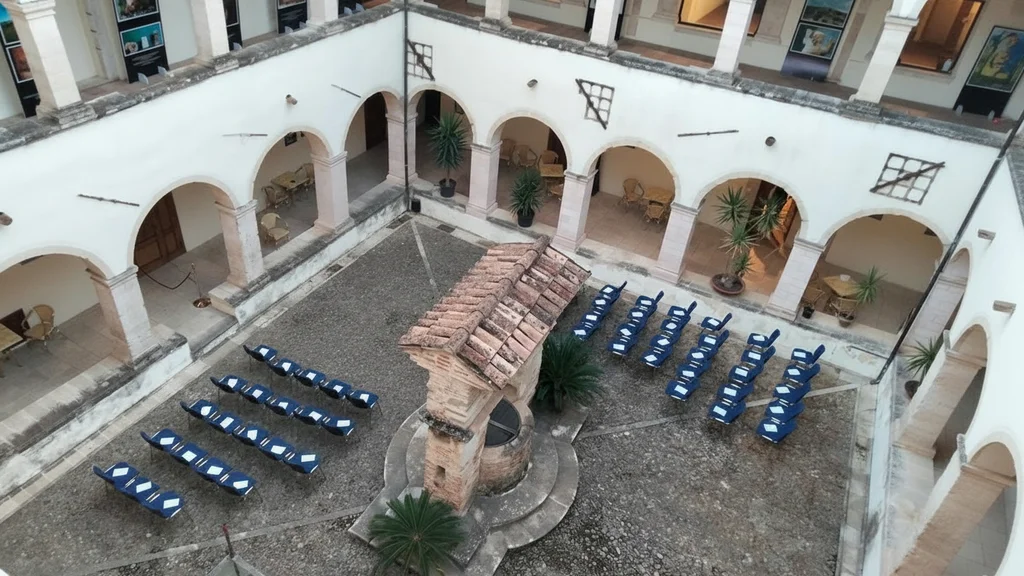
The museum's early years were a time of dynamic growth, culminating in the 1985 opening of a permanent exhibition comprising over 2,000 exhibits. Among them stands out the famous "Bruttian Head" – a terracotta sculpture from the 4th century BC. The restoration process of the Sant'Agostino complex in the 1990s created a space that today combines the austerity of a former prison with a modern archaeological exhibition.
| Historical Period | Function of the Sant'Agostino Complex | Key Events |
|---|---|---|
| 1507 – 1810 | Augustinian Monastery | Religious and architectural flourishing. |
| 1815 – 1860 | Bourbon prison | Detention of the Bandiera brothers (1844). |
| 2009 – present | Museo dei Brettii e degli Enotri | Opening of the museum's permanent home. |
Archaeological Finds – Key to Understanding Cosenza's History
The Cosenza region bears witness to multi-layered settlement dating back to ancient times. Archaeological finds shed light on the cultural development of southern Italy, showing how the Oenotrian and Bruttian civilisations shaped this part of Calabria. Excavations at the Torre del Mordillo necropolis revealed over 230 graves, documenting the technical advancement of local peoples in the Iron Age.
In Cosenza, these finds are of enormous significance, encompassing artefacts from the 5th to the 4th century BC. A particularly interesting example is the Roman oinophoros from the 3rd century AD, decorated with Dionysian motifs, found together with a set of surgical instruments. This testifies to the high social status of the ancient inhabitants and their participation in the Mediterranean cultural basin.
The exhibition offers a rich overview of discoveries from the late Palaeolithic to the Roman period, including finds from Montalto Uffugo and Luzzi. Visitors can admire unique bronze fibulae, "bombarda" type ceramics, and Greek skyphoi, which attest to intense trade contacts even before full Roman colonisation.
The Bruttian Legacy in the Cultural Landscape of Calabria
The Bruttians' Influence on the Name and Archaeology of Calabria
The history of Calabria is inseparably linked with the story of the Bruttians, an Italic tribe that around 356 BC declared their independence from the Lucanians. Their activity contributed to the development of the region's nomenclature and archaeology. The name "Calabria" derives from the word "Kalabroi", which in their language denoted the mountainous interior of the country, constituting a natural fortress for this warlike people.
Significant traces of their presence have been discovered in Cosenza itself, which served as the metropolis (capital) of the Bruttian confederation. The museum houses exhibits such as monumental bronze belts and richly decorated ceramics, testifying to the high level of craftsmanship and military pride.
Traditions and Architecture
Their influence on Calabrian tradition is visible in many folk festivals combining pagan rituals with Christian ones. The region's architecture also bears their mark – defensive systems built from limestone blocks, visible in excavations at Piazza Toscano, have withstood the test of time. The urban planning of ancient Consentia was based on the strategic use of hills, which to this day defines the panorama of the historic city centre.
Economic Legacy
The Bruttians' influence on the economy is noticeable in pastoralism and mining in the Aspromonte area. Methods of animal husbandry developed by this ancient culture are still practised today. The famous pitch from Sila, produced by the Bruttians, was a prized export commodity throughout the ancient world, used for waterproofing ships and amphorae.
Italian Museums in the Service of Integration – New Opportunities for All
The Role of Accessibility in Modern Museums
Accessibility has become a key challenge for contemporary museum practice in Italy. Institutions are increasingly taking actions aimed at attracting seniors and socially excluded groups. The V.I.S.A. project (Visualizing Innovative and Social Artworks) implemented in Cosenza is an excellent example of using technology to break down barriers in the reception of art and history.
Examples of Integration Activities
The museum in Cosenza, thanks to PNRR funding, has introduced tactile paths for blind visitors and holographic systems. In Room 4, visitors can see historical figures from the city of Thurii who "come to life" through retroprojection. Such solutions allow for a full understanding of the exhibition regardless of visitors' physical limitations.
The Importance of International Collaboration
Projects such as Erasmus+ allow for the exchange of experiences with other European institutions. Combining financial resources with expert knowledge raises the museum's scientific standing. Thanks to this, the institution becomes not only a repository of objects but a living forum for the exchange of ideas and research into the Mediterranean past.
Challenges and Future Directions
A remaining challenge is full accessibility of information about interactive programmes. In 2026, the museum underwent modernisation, installing among other things a "Time Machine" – a 3D system enabling virtual interaction with artefacts. The institution's future lies in even greater integration with the educational system, ensuring every visitor a satisfying experience of contact with history.
Practical Information
Location: Monumental Complex of Sant'Agostino, Massa district, Cosenza (centro storico)
Hours: Tue–Sun (check current hours on the museum website after 2026 modernisation)
Tickets: Check on the official museum website
Accessibility: Tactile paths, lifts, multimedia systems
Frequently Asked Questions
Who were the Bruttians and Oenotrians in ancient Calabria?
The Oenotrians were among the oldest inhabitants of Calabria (Iron Age), while the Bruttians were a warlike people who in the 4th century BC created a powerful confederation with its capital in Cosenza.
What can you see at the Museo dei Brettii e degli Enotri?
The museum offers a rich collection of ceramics, weapons, coins, and jewellery from the Palaeolithic to Roman times, as well as a unique Risorgimento section with the first tricolour banner of Cosenza from 1844.
What are the opening hours of the archaeological museum in Cosenza?
The museum is usually open from Tuesday to Sunday, but it is advisable to check the official website before visiting, especially after the 2026 modernisation.
Where exactly is the museum located?
The institution is housed in the Monumental Complex of Sant'Agostino, located in the historic heart of Cosenza, in the district known as Massa.
Is the museum accessible for visitors with disabilities?
Yes, thanks to PNRR-funded projects, the museum has tactile paths, lifts, and modern multimedia systems to facilitate visits for all guests.